
 35
/ 8
Min Read
35
/ 8
Min Read



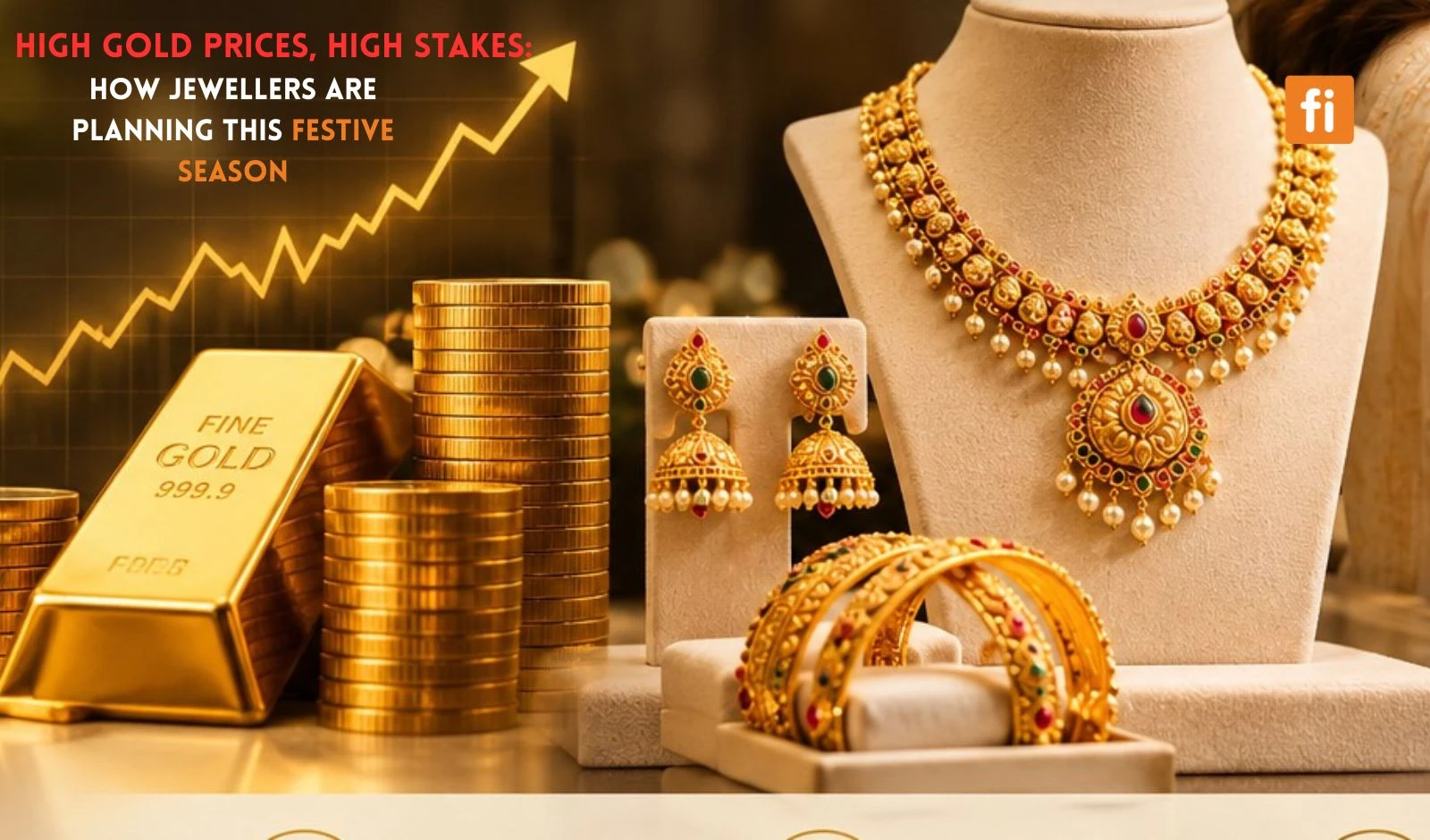
India’s festive-to-wedding season, stretching from September through February, has traditionally been the jewellery industry’s biggest opportunity of the year. This year, however, the season is beginning against a very different set of realities.
Gold prices are at historic highs. The government has renewed its appeal for consumers to exercise restraint. And a sharp increase in hallmarking fees is adding another layer of pressure on retailer margins just as the industry enters its most important selling period.
For jewellery brands, franchise partners and store operators, the question is no longer simply whether consumers will buy. The more interesting questions are: What will they buy? How much will they spend? And, increasingly, where will that gold come from?
According to Aditya Modak, CFO/COO of P. N. Gadgil & Sons: “While there has been a call to be careful on gold consumption and discretionary spending, we feel that buying gold during the festive and wedding season is closely tied to India’s cultural traditions and rituals. We may see consumers becoming more considered about the quantum and nature of their purchases, especially in the current price environment, but we do not expect the tradition of buying gold and jewellery during auspicious occasions to disappear.”
Neil Sonawala, Managing Director, Zen Diamond India, believes the current environment is making consumers more thoughtful rather than turning them away from jewellery altogether.
“The current price environment is certainly encouraging consumers to be more deliberate about jewellery purchases. However, we would not characterise the shift simply as a move away from discretionary jewellery. Instead, consumers are looking for pieces that offer versatility, personal relevance and greater value across occasions. The growing role of old-gold exchange is one clear indication of this change, indicating that exchange-led purchases have become an important source of demand in the Indian jewellery market.”
The game is shifting from stocking heavier to stocking smarter.
There is another pressure point retailers cannot ignore. The Bureau of Indian Standards (BIS) has increased the gold hallmarking fee by 67%, from ₹45 to ₹75 per article, effective mid-September. Because the fee is charged per article rather than by weight, its impact is more pronounced on lighter and lower-carat jewellery; precisely the kind of products gaining relevance as consumers become more price conscious.
Retailers that absorb the additional cost rather than passing it on to consumers will inevitably feel the pressure in their unit economics. Consumers aren’t walking away. They’re recalculating. There is, however, a more encouraging side to the story.
A World Gold Council survey of nearly 2,000 consumers across 12 metro and Tier I cities found that wedding and festival purchases are holding up better than other forms of discretionary spending.
The customer is still walking into the jewellery store. What has changed is the conversation happening before the purchase.
Consumers are comparing more. They are considering lighter pieces, exploring lower-carat options and opting for smaller ticket sizes. Financing, EMIs and savings schemes are also becoming important tools for managing the upfront cost.
Sonawala sees this as a shift in how consumers evaluate jewellery rather than a fundamental weakening of demand.
“We expect jewellery demand to remain resilient, although consumers are likely to be more considered about the value and purpose of their purchases. The current gold-price environment has already encouraged consumers to look more closely at purchase weight, exchange opportunities and flexible payment options. Jewellery volumes are declining year-on-year even as consumer spending remained strong, indicating that buyers are adapting rather than stepping away from jewellery altogether.”
That distinction matters. The emotional and cultural role of gold in Indian weddings has not disappeared. Nor has jewellery lost its place as a celebration purchase, a gift or an expression of identity.
What has changed is the route to the purchase. And that makes the current environment less a demand problem and more an execution challenge for retailers. The shift is particularly visible among younger consumers.
Senco Gold, for instance, is increasing its focus on lower-carat jewellery as it looks to broaden its appeal, particularly in smaller cities. MD and CEO Suvankar Sen, Senco Gold noted that 9-carat and 14-carat collections have helped the company engage younger customers in Tier II and Tier III markets.
Highlighting the measures taken by the brand, Modak says: “At P. N. Gadgil & Sons, we have been preparing for this shift in consumer behaviour well ahead of the current rise in gold prices. We introduced jewellery across 9Ct, 12Ct, 14Ct and 18Ct gold segments last year, even before the recent geopolitical and economic developments intensified. This was driven by our understanding that consumers, particularly women, were increasingly becoming conscious of the value proposition and gold content of the jewellery they purchase.”
For the industry, the message is fairly clear: affordability is no longer just about offering a lower price. It is increasingly about giving consumers more ways to enter the category.
Old gold is becoming new inventory
If one trend has the potential to fundamentally change jewellery retail, it is the growing importance of gold exchange.
Exchange transactions are reportedly up 10–20% among surveyed retailers, while old-gold trade-ins account for as much as 70% of sales at some outlets.
For jewellery brands and franchise networks, this is much more than a promotional offer. It is increasingly becoming part of the retail operating model.
Senco Gold offers a useful example. According to Sen, old-gold exchanges accounted for around 44% of the company’s total sales in FY26. “Old gold exchanges emerged as a significant contributor to Senco Gold’s sales during FY26 and accounted for about 44 percent of our total sales.”
The new retail blueprint: flexibility at every step. For the season ahead, the retail blueprint is becoming increasingly clear. Lighter and studded designs can help keep ticket sizes within reach. Lower-carat collections can open the category to younger and more price-conscious consumers. Exchange programmes can unlock dormant household gold. Financing and EMI options can reduce the immediate cash burden.
And behind all of this sits one increasingly important capability: inventory discipline. Gold prices can move sharply within a matter of weeks, making it risky for retailers to commit too heavily too early. Recent market movements have already encouraged retailers to replenish inventory based more on realised demand than on forecasts, while imports fell sharply after a July restocking bump.
For retailers, that represents a subtle but important change in mindset.
Where organised retail has an edge
Larger organised retailers are responding to the environment with a mix of new product launches, marketing campaigns, promotional activity and a sharper focus on fast-moving SKUs.
For franchise brands, there is another advantage: the ability to scale a good retail idea across an entire network.
A strongly structured franchise model can help create consistency across stores by aligning exchange policies, financing tie-ups, product assortments and customer communication, while retaining enough flexibility for individual outlets to cater to local preferences and demand patterns.
Zen Diamond India, for example, is focusing on making jewellery purchases more accessible through its Zen Gold Multiplier Plan, Old-Gold Exchange programme and its zero-interest, zero-cost, zero-down-payment EMI option.
As Sonawala puts it: “These offerings allow consumers to make a considered purchase while managing the overall outlay more comfortably. The festive and wedding seasons continue to be important consumption occasions, but we expect purchasing decisions to be increasingly driven by versatility, value and the ability to wear jewellery beyond a single occasion.”
The season ahead
Industry estimates cited in trade reporting suggest festive gold sales volumes could decline by 10–12% following the government’s renewed appeal for restraint. With gold prices remaining elevated, however, the impact on overall value could be considerably softer.
That points towards a season with a different definition of growth.
Volume may be lower. Value could remain resilient. And exchange-led, design-flexible and financing-supported retail is likely to become an increasingly important part of the jewellery business.
But perhaps the biggest change is more fundamental.
The jewellery industry is learning to sell differently in a high-price environment. Consumers are not necessarily abandoning gold; they are finding new ways to participate in it.
They are buying lighter. Comparing more. Financing selectively. Choosing lower carats. Reworking old jewellery. And looking for pieces that can earn their place beyond a single occasion.
The opportunity, then, hasn’t disappeared.
It now lies not just in selling another gram of freshly sourced gold, but in helping consumers unlock the value of the gold they already have and giving them compelling reasons to bring that value back into the market.
For jewellery brands and franchise operators, that could be the defining retail shift of the season.
Because the future of jewellery retail may be less about selling gold from the shelf and more about managing its entire journey, from the locker to the ledger, and back again.