 14
/ 13
Min Read
14
/ 13
Min Read



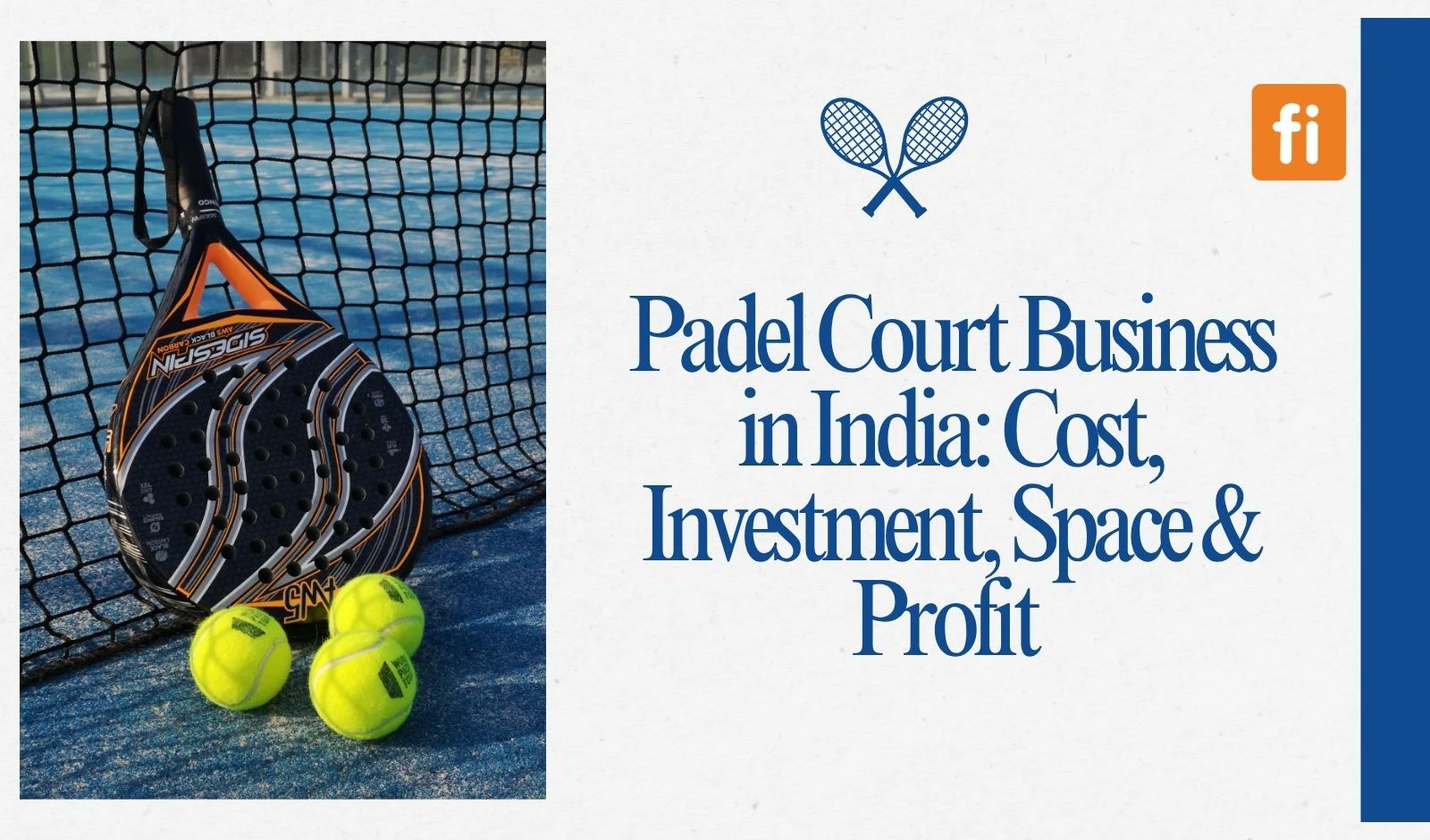
A 200-square-metre court/land sitting idle can be the starting point for a promising sports business. Padel, one of the world’s fastest-growing racket sports, is gaining its momentum in India as urban consumers look for new ways to play, socialise and stay active.
However, what exactly is the cost involved in getting into the sport? This guide covers the cost involved from building a padel court and investing in the business venture right from the cost of space and location to the profit generation capacity.
Key Takeaways
- A standard padel court measures 20 m × 10 m, while the overall facility needs additional space for access and amenities.
- The biggest costs include court construction, enclosure, turf, lighting, site development and installation.
- Total investment rises with property costs, supporting facilities and the number of courts.
- Revenue comes from court bookings, memberships, coaching, tournaments and events.
- Location, court utilisation, pricing and operating expenses largely determine profitability.
- Local business, building, fire-safety and other applicable permissions should be checked before setup.
What Is Padel and How Does the Business Work?
Padel is a racket sport played on an enclosed court, combining elements of tennis and squash. It is generally played in doubles, with the surrounding walls forming part of the game. Due to its small-sized court structure and social atmosphere, this game is appropriate for sports facilities as well as clubs and fitness centers.
For the entrepreneur, the business will be about getting the maximum from the court and creating loyal clients. This can work on an hour-by-hour basis, on the membership principle, by training courses, tournaments, and league games. The business can start with one court while several courts mean that the operator can have more players, conduct tournaments, and create a sports community.
This business can go well along with already existing gyms, clubs, hotels and multisports facilities where the padel courts become just another paid sports activity.
Padel Court Cost in India
The cost of constructing a padel court will vary according to the design of the padel court and the materials required as well as other factors such as the location of the site and the needs of installing the construction.
For the entrepreneur, the first major cost that he will incur is the cost of the padel court, the cost of preparing the ground and the cost of installation. There may be the need to have drainage for the outdoor padel court and to adapt the building where the indoor court will be placed.
| Cost Component | Estimated Cost |
|---|---|
| Court structure and enclosure | ₹8–12 lakh |
| Glass panels and fencing | ₹4–7 lakh |
| Artificial turf | ₹1.5–3 lakh |
| Lighting | ₹1–2.5 lakh |
| Net and accessories | ₹50,000–₹1 lakh |
| Site preparation and civil work | ₹2–5 lakh |
| Installation and assembly | ₹1.5–3 lakh |
Estimated court-related cost: ₹18–33.5 lakh per court, excluding land or property costs and major supporting facilities.
Actual prices vary based on the manufacturer, court specifications, material quality, location, transportation, installation and site conditions. The next section looks at the total investment required, including the expenses beyond the court itself.
Total Investment Required
Building a padel court has costs beyond the court itself. The costs of property, services for customers, technology, equipment, branding, and working capital constitute the total setup cost.
Costs for a one-court facility may be illustrated by the following:
| Investment Head | Estimated Cost |
|---|---|
| Padel court and installation | ₹18–33.5 lakh |
| Site development and electrical work | ₹3–6 lakh |
| Reception and basic interiors | ₹2–5 lakh |
| Washrooms/changing facilities | ₹2–5 lakh |
| Equipment and furniture | ₹1–2 lakh |
| Booking system, POS and CCTV | ₹50,000–₹1.5 lakh |
| Branding and initial marketing | ₹1–2 lakh |
| Initial working capital | ₹3–5 lakh |
| Total, excluding property cost | ₹30.5–60 lakh |
Thus, the investment cost of a single-court venue would be ₹30 – 60 lakh, irrespective of the land or building cost. The ultimate amount to be spent would depend upon the court type, site preparation, and other factors.
Increasing the number of courts enhances the earning potential of the venue, whereas the use of shared facilities such as reception area, washrooms, booking services, etc. helps in achieving the goal.
How to Set Up a Padel Facility
Once the investment is planned, the next step is turning the available property into a functional sports venue. The setup starts with choosing the right court specification and preparing the site for installation.
The basic process includes:
- Choose the format: Decide between a standalone court, club, academy or an addition to an existing sports facility.
- Select the property: Check accessibility, surrounding demand, parking and suitability for court construction.
- Plan the layout: Reserve space for the court along with circulation areas, reception, washrooms and other customer facilities.
- Complete site work: Prepare the foundation, flooring, drainage and electrical connections according to the selected court design.
- Install the court: Set up the structural frame, glass panels, fencing, turf, net and lighting.
- Add operating systems: Put booking, payment, CCTV and customer-management systems in place.
- Prepare for launch: Hire the required staff and introduce court bookings, memberships, coaching sessions and events.
Working with an experienced court installer helps ensure that the facility follows the required technical specifications and is ready for regular play.
How Much Space Is Needed for a Padel Court?
Space planning is among the very initial considerations that need to be decided before considering a property on lease or construction. According to the International Padel Federation guidelines, the internal playing space of a typical padel court should have a length of 20 meters and a width of 10 meters, thus making a total of 200 sq. meters.
The court should be enclosed by glass and metal net, while the court itself should have service lines and a net in between. There are FIP guidelines regarding height above the playing court as well, which become significant during indoor planning.
| Requirement | Specification |
|---|---|
| Court length | 20 m |
| Court width | 10 m |
| Playing area | 200 sq. m. |
| Service-line distance from net | 6.95 m |
| Minimum clear height | 6 m |
| Recommended height for new facilities | 8 m |
The 200 sq. m. measurement applies only to the playing surface, while additional space is needed for the movement of players, entrances, receptions, washroom facilities, seating arrangements, and so forth.
It is therefore imperative that potential business owners consider the size of the whole property, and not just focus on the measurements of the court, which is 20 m x 10 m.
Choosing the Right Location
For an effective planning of the court, there should be a convenient place that has a lot of prospective clients to patronise. The urban neighbourhoods which have active fitness and recreational groups can make an ideal starting point especially where access to sports facilities is limited.
These are some of the aspects that should be considered when deciding on the property:
- Customer catchment: Look for residential areas, offices, colleges, clubs and fitness hubs with a relevant audience.
- Accessibility: Easy road access and convenient public transport improve regular visits.
- Parking: Dedicated or nearby parking adds convenience, especially for evening and weekend sessions.
- Competition: Check existing padel courts and other racket-sport facilities in the surrounding area.
- Property suitability: Confirm that the site supports the required court dimensions, height, utilities and supporting facilities.
- Operating hours: Choose a location where the planned operating schedule fits local regulations and surrounding properties.
It is also important to mention that the proper location will help in ensuring the facility receives return business from membership and coaching programs.
Is It Profitable to Start a Padel Facility in India?
Profitability largely depends on how consistently the courts are booked and how effectively the facility builds repeat customers. A location with strong demand, sensible pricing and good court utilisation creates a stronger base for steady revenue.
Several factors influence the financial performance:
- Court utilisation: Filling more booking slots, particularly during peak hours, increases revenue from the same infrastructure.
- Pricing: Rates should reflect local demand, competition and the facility's positioning.
- Memberships: Recurring memberships provide a more predictable revenue stream.
- Coaching: Training sessions and academy programmes add income beyond regular court bookings.
- Events: Tournaments, leagues and corporate sessions create additional booking opportunities.
- Operating costs: Rent, salaries, electricity, maintenance and marketing need to remain aligned with revenue.
An establishment which integrates court bookings with members, coaching, and other events would have more sources of making money. The actual profit depends on the cost of the facility, number of courts, and other factors.
Revenue Sources
Court bookings form the core of the revenue model, but they do not have to be the only source of income. Once a regular player base develops, the same facility can support several paid offerings.
| Revenue Source | How It Works |
|---|---|
| Hourly bookings | Bring direct revenue from players who reserve a court for a fixed session. Peak-time slots, particularly evenings and weekends, are likely to attract stronger demand. |
| Memberships | Encourage players to return regularly through monthly, quarterly or annual plans. Operators could also create packages based on booking hours or access benefits. |
| Coaching programmes | Bring another layer of revenue through individual training, group sessions and structured academy programmes. |
| Tournaments and leagues | Give the venue opportunities to sell court time for organised competitions while bringing new players into the facility. |
| Corporate events and private sessions | Offer another booking format for companies, groups and special occasions. |
| Equipment and other offerings | Equipment rental, merchandise and other on-site offerings could further increase the average revenue generated from each customer visit. |
Padel Court Profit Calculation
The profit made will depend on the difference between the income earned and the operating costs per month. For one court business, court efficiency will be a major determinant since every additional paying customer earns additional income without increasing the number of courts.
An illustrative monthly calculation could look like this:
| Particular | Monthly Amount |
|---|---|
| Court bookings: 5 hours/day × ₹1,000 × 30 days | ₹1.50 lakh |
| Coaching, memberships and other revenue | ₹50,000 |
| Total Revenue | ₹2 lakh |
| Rent | ₹70,000 |
| Staff salaries | ₹30,000 |
| Electricity and utilities | ₹12,000 |
| Maintenance | ₹8,000 |
| Marketing, software and other expenses | ₹10,000 |
| Total Operating Expenses | ₹1.30 lakh |
| Estimated Operating Surplus | ₹70,000/month |
At this level of utilisation, the facility generates an indicative operating surplus of around ₹70,000 per month, before taxes, depreciation, loan repayments and property acquisition costs.
The numbers change as court usage increases. For example, stronger evening and weekend bookings, regular coaching batches and memberships raise revenue without a matching increase in fixed costs. This makes utilisation, pricing and repeat customers important factors in improving the facility's overall returns.
Licences & Registrations
The registrations and permissions required for a padel facility depend on its business structure, location and property. Before opening, entrepreneurs should check the applicable requirements with the local authorities.
Key registrations and approvals include:
| Registration / Permission | Purpose |
|---|---|
| Business registration | Register the business as a proprietorship, partnership, LLP or private limited company, depending on the chosen structure. |
| Udyam Registration | MSME registration for eligible businesses and access to applicable government benefits. |
| GST registration | Required when the business meets the applicable GST registration threshold or falls under a category where registration is otherwise mandatory. |
| Local trade licence | Check with the municipal authority for the licence applicable to operating a sports or recreational facility. |
| Building and property permissions | Confirm that the property is approved for the intended commercial or sports use and that construction or structural changes have the required permissions. |
| Fire-safety approval | Applicable requirements depend on the building, occupancy, size and local fire-safety rules. |
| Music licence, where applicable | Required where recorded music or other copyrighted music is played commercially under applicable licensing requirements. |
For larger locations, there might be other permissions depending on whether there is any construction, signage, parking, electricity, food services, or any other amenities provided at the location. It would be better to find out about the necessary permissions before leasing.
Challenges to Consider
There are various revenue sources for a padel club, but it must plan strategically in regards to property, use, and operational costs. These are the following issues:
- High initial investment: Court construction, glass enclosure, turf, lighting and site development form a significant part of the setup budget.
- Property costs: Rent or property acquisition adds to the overall investment, particularly in prime urban locations.
- Building regular demand: Padel is still an emerging sport in many Indian cities, so operators need to introduce new players to the game and encourage repeat bookings.
- Court utilisation: Empty slots directly affect revenue. Peak-hour demand needs to be balanced with weekday and off-peak bookings.
- Maintenance: Turf, glass panels, lighting, nets and other court components require regular inspection and upkeep.
- Competition: As more facilities enter the market, location, pricing, coaching quality and customer experience become important for attracting players.
- Weather and operating conditions: Outdoor courts need suitable drainage and protection from local weather conditions, while indoor venues require adequate height, ventilation and lighting.
Strong local demand, efficient operations and a well-planned revenue mix help address these challenges while building a sustainable facility.
FAQs
1. How many padel courts should I start with?
A single-court facility is suitable for testing demand with a lower initial investment. Entrepreneurs with access to a larger property and stronger local demand could consider multiple courts, which also support tournaments, coaching programmes and higher booking capacity.
2. What is the biggest expense when setting up a padel facility?
The padel court and installation form one of the largest expenses. A court, including its structure, enclosure, glass panels, turf, lighting and installation, could cost around ₹18–33.5 lakh. For a single-court facility, the overall investment is estimated at around ₹30–60 lakh, excluding land or property acquisition.
3. How long does it take to recover the investment in a padel facility?
The payback period depends on utilisation, pricing, operating costs and the initial investment. Using the article's illustrative calculation, a single-court facility generating an operating surplus of around ₹70,000 per month would take approximately 43–86 months, or about 3.6–7.1 years, to recover an initial investment of ₹30–60 lakh. This calculation excludes property acquisition, taxes, loan repayments and depreciation, so the actual payback period will vary.
4. How do I attract customers to a new padel facility?
A new facility should combine introductory offers with memberships, coaching programmes, tournaments, leagues and corporate sessions. Local digital marketing, partnerships with residential communities, gyms and sports clubs, and referral programmes also help build an initial customer base and encourage repeat bookings.
Conclusion
Padel courts represent a new business opportunity in India's organized sports and recreation industry. Entrepreneurs have many other sources of income apart from court booking, like memberships, coaching, tournaments and even corporate events.
Starting investment comes around ₹30 lakhs for one padel court, without property costs, and depends on the usage of court, pricing and operational efficiency. Well selected location, reliable court infrastructure and good customer acquisition strategy thus play a crucial role before starting investment.
In the case of sports and recreation investment search, padel courts are an interesting option with possibility of expansion into multi-padels as the demand will grow.
Interested in sports and recreation business opportunities? Explore Franchise India's latest business ideas and franchise opportunities.
Read More: Box Cricket & Turf Business: Setup Cost, Land & ROI