 91
/ 8
Min Read
91
/ 8
Min Read



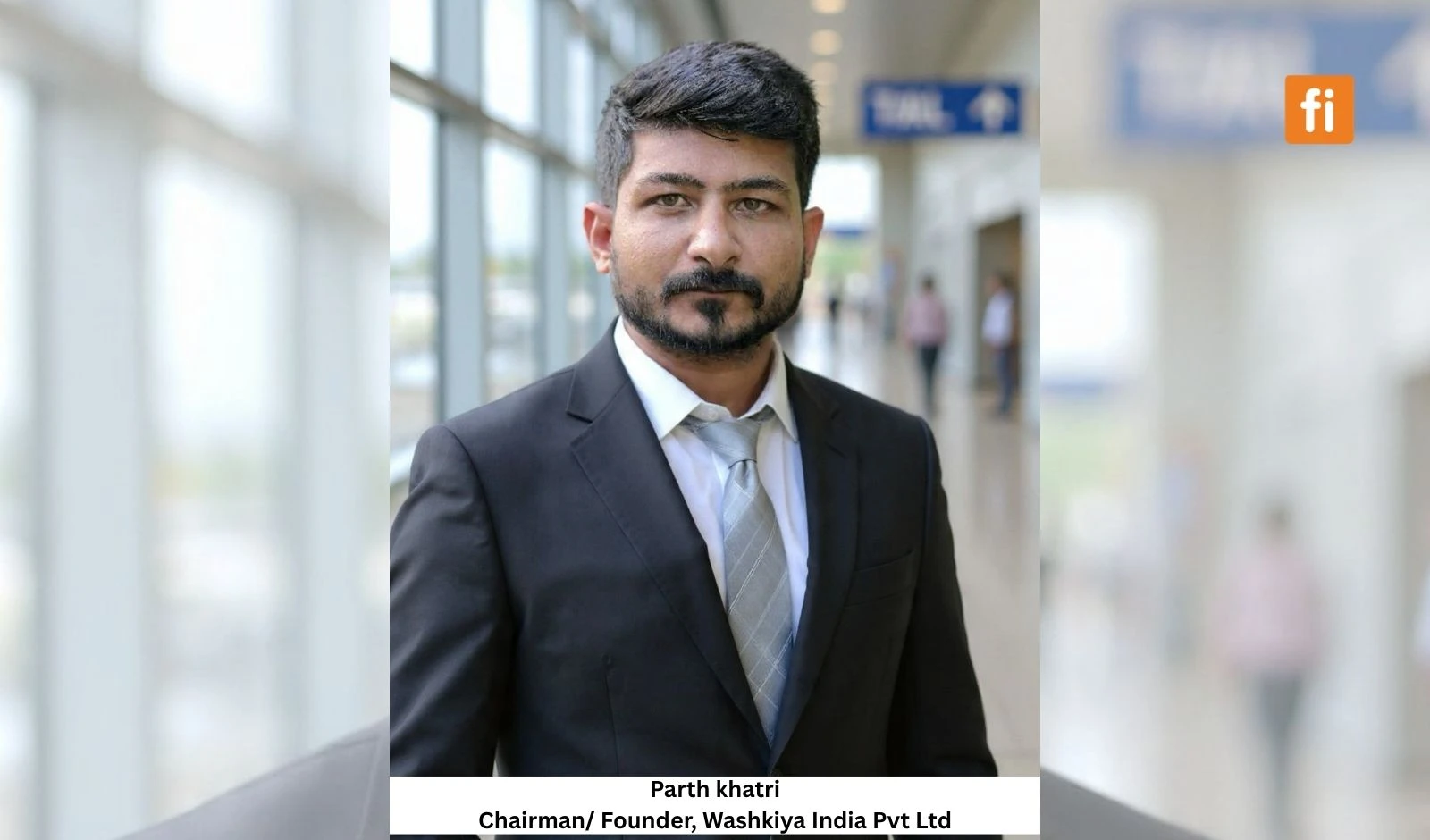
India’s laundry and garment care industry is evolving as consumers increasingly seek convenience, hygiene and professional fabric care. Washkiya India Pvt Ltd is responding with a technology-enabled, franchise-led model combining doorstep services with standardised operations. Founded by Parth Khatri, Chairman and Founder, Washkiya began franchising in 2022 and has grown to 102 franchise outlets across 42 cities. In this exclusive interaction, Parth Khatri discusses the brand’s expansion strategy, franchise model, technology adoption and pan-India growth plans.
Washkiya has expanded to 158+ outlets across 55 cities. What has driven this rapid growth?
When we started Washkiya in 2019, the idea was very simple: laundry is a basic need, but the industry in India was still highly unorganised. Customers wanted better quality, convenience, transparent pricing and reliable delivery. Instead of building Washkiya only as a laundry store, we focused on creating a repeatable business system.
Franchising became a major part of our expansion from 2022 onwards. We standardised our processes, introduced technology, expanded our service portfolio and built stronger support systems for franchise partners.
The biggest driver has been the market itself. India has a huge population, increasingly busy lifestyles and growing demand for professional garment care. We believe there is still a significant gap between the demand for organised laundry services and the number of professional operators available to serve it.
For us, 158+ outlets across 55 cities and 20 states is an important milestone, but we still see Washkiya as being at an early stage of its journey.
What makes Washkiya’s franchise model attractive to both new and experienced entrepreneurs?
We designed our franchise model around one principle: a franchise partner should not have to become a laundry expert before entering the business. A first-time entrepreneur gets access to the Washkiya brand, operating processes, technology, training, equipment guidance, store setup support, marketing systems and ongoing operational assistance.
For experienced entrepreneurs, the attraction is scalability. Once they understand the unit economics and operations, there is an opportunity to expand into multiple locations rather than being limited to a single outlet.
Laundry also has an interesting characteristic compared with many other consumer businesses: it is a repeat-need category. A satisfied customer can potentially return every week or every month.
Our objective is therefore not simply to sell franchises. It is to build successful long-term franchise partners who can grow with Washkiya.
How do you ensure consistent service quality, hygiene and customer experience across locations?
For a franchise business, opening stores is relatively easy. Maintaining the same customer experience across those stores is the real challenge. That is why standardisation is extremely important for us.
We work with defined SOPs covering garment inspection, tagging, cleaning processes, chemical usage, stain treatment, ironing, packaging, hygiene and delivery.
Technology also gives us better visibility into orders and outlet operations. At the same time, training and ongoing operational support help franchise teams understand what is expected from the brand.
As we scale further, our focus is increasingly on strengthening these systems so that whether someone visits Washkiya in one city or another, the experience should feel consistent.
What are the key economic and operational advantages of Washkiya’s asset-light model for franchise partners?
One advantage of laundry is that it can operate from a relatively compact retail space while serving customers beyond the immediate walk-in catchment through pickup and delivery.
The business also does not require large inventories of perishable products. The major investment is primarily in equipment, store infrastructure, technology, training and customer acquisition.
Once a store builds a recurring customer base, the same infrastructure can process repeat orders continuously.
Another advantage is the ability to generate revenue from several service categories through one customer relationship. A customer may initially come for laundry and later use dry cleaning, shoe cleaning, curtain cleaning or other garment and home-fabric care services.
So our focus is not only on increasing the number of customers, but also on improving repeat frequency and the lifetime value of each customer.
How are CRM, POS, mobile apps and delivery tracking improving efficiency and customer retention?
Technology is becoming the backbone of organised laundry. Our systems help manage the customer journey from order creation and garment tagging through processing, billing and delivery.
CRM helps us understand customer behaviour and maintain customer relationships. POS systems bring greater transparency to billing and outlet operations, while digital order management reduces dependence on manual processes. Pickup and delivery tracking is particularly important because convenience is one of the biggest reasons customers choose organised laundry services.
Over time, the data generated through these systems can also help us understand repeat behaviour, service preferences and outlet performance. The larger objective is simple: use technology to make laundry easier for the customer and more measurable for the franchise partner.
How does Washkiya’s wider service mix, including shoe, curtain, sofa and carpet cleaning, drive retention and revenue growth?
We don't want customers to think of Washkiya only when they have a shirt or trousers to clean. We want them to think of Washkiya whenever something in their wardrobe or home requires professional cleaning and care.
That is why we have expanded beyond traditional laundry and dry cleaning into categories such as shoes, curtains, sofas and carpets.
This creates two advantages; First, it gives customers greater convenience because multiple cleaning requirements can be handled through one trusted brand and Secondly, it allows a franchise outlet to generate additional revenue from its existing customer base rather than depending entirely on acquiring new customers.
For us, the long-term opportunity is to evolve from a laundry company into a broader fabric and garment-care brand.
What qualities do you seek in franchise partners entering new cities?
Capital is important, but mindset is more important. We are looking for entrepreneurs who understand that a franchise is not an automatic-income investment. Even with strong systems and company support, the franchise partner needs to be involved, understand customers and remain focused on execution.
We value partners who are disciplined, customer-focused, willing to follow systems and interested in building a long-term business. We are equally open to first-time entrepreneurs and experienced business owners. What matters to us is whether the person is prepared to work with the brand and maintain its standards.
Our strongest franchise relationships are the ones where both sides see themselves as partners in building the business.
Which markets will drive Washkiya’s growth as you target 150–200 stores next year and 400–500 within three years?
With 158+ outlets already operating across 55 cities and 20 states, our next phase is about going deeper as well as wider across India. We see opportunity across both metropolitan India and emerging Tier 2 and Tier 3 cities. Large cities offer density, higher adoption of convenience services and significant demand from working professionals and families.
At the same time, Tier 2 and Tier 3 cities are extremely interesting because consumer expectations are changing rapidly while organised laundry penetration remains relatively limited.
Our strategy is therefore not simply to chase the biggest cities. We want to identify markets where there is a strong combination of customer demand, suitable demographics, franchise-partner capability and room for an organised brand to grow.
Ultimately, we believe professional laundry can become a mainstream service across India rather than remaining concentrated in a handful of metros.
What steps is Washkiya taking to reduce energy use, waste and environmental impact?
Sustainability in laundry has to be practical and measurable. For us, that means continuously looking at how we can improve machine utilisation, optimise water and energy consumption, control chemical usage and reduce unnecessary packaging and operational waste.
Modern equipment and more standardised cleaning processes can also help operators use resources more efficiently compared with inconsistent manual practices.
Another important part is garment care itself. When clothes are cleaned using the appropriate process and maintained properly, customers may be able to preserve them for longer rather than replacing them prematurely.
As Washkiya grows, we want resource efficiency and responsible garment care to become increasingly integrated into our operating standards.
What is Washkiya’s larger vision, and where do you see the biggest franchising opportunities ahead?
Our vision is much bigger than simply having hundreds of laundry stores. We want to help build an organised garment-care ecosystem for India. India is a massive consumer market, but professional laundry and garment care are still developing as organised categories. That creates an opportunity for entrepreneurs, technology providers, equipment manufacturers and service brands.
For Washkiya, the next phase is about strengthening the brand, technology, franchise network, operational standards and customer experience while expanding into more cities.
Our journey so far, has demonstrated the potential we see in India's organised laundry sector. But store count alone will never be the definition of success.
The larger ambition is that when an Indian consumer thinks about professional laundry, dry cleaning or garment care, Washkiya should be one of the first brands that comes to mind.
We started with one store in 2019. Today, Washkiya has a presence across 20 states and 55 cities with 158+ outlets. And I believe the biggest opportunity for Washkiya, and for India's organised laundry industry, is still ahead of us.