
 141
/ 8
Min Read
141
/ 8
Min Read


Blue Dart Express Ltd. has built a strong position in India’s express logistics and transportation sector, supported by a network reaching more than 56,400 locations and access to DHL Group’s global network spanning over 220 countries and territories. As e-commerce, D2C, digital commerce and cross-border trade reshape the logistics scene, evolving customer expectations and technology are driving new service models.
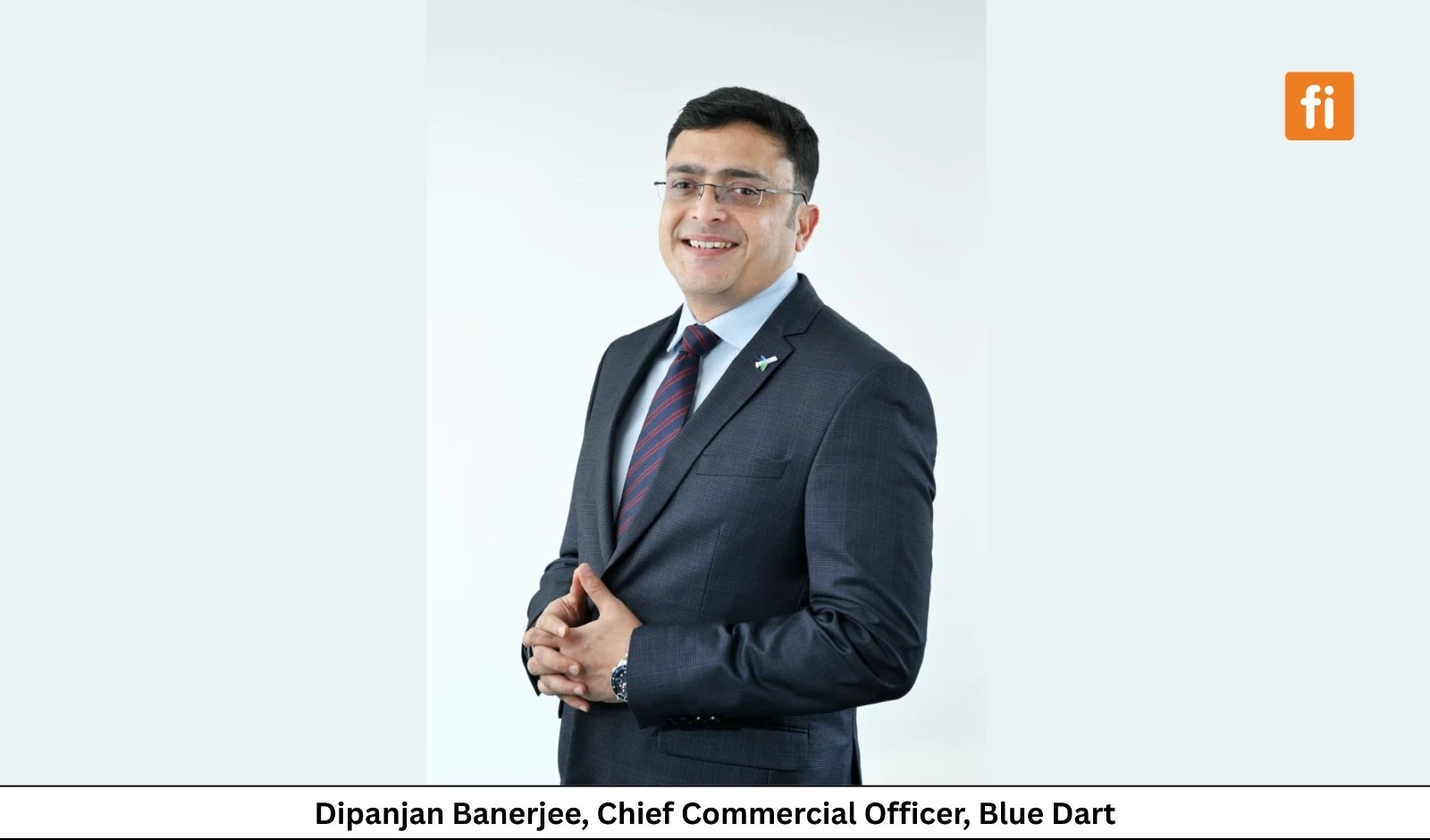
In this interaction, Dipanjan Banerjee, Chief Commercial Officer, Blue Dart, shares insights into the company’s growth journey, expansion strategy, franchise partnerships, technology adoption and emerging opportunities shaping its next phase of growth.
What vision shaped Blue Dart’s inception, and which key milestones have defined its journey into an integrated logistics leader?
Blue Dart was founded in 1983 with a clear purpose: to make time-sensitive shipments faster and more reliable for Indian businesses. Since then, we have helped shape India’s express logistics ecosystem through investments in dedicated aviation, real-time shipment tracking, an extensive ground network and technology-led solutions. What has remained constant is our focus on reliability, certainty and connectivity. Today, our integrated air-and-ground network enables businesses to move critical shipments across India and connect seamlessly to global markets.
How is India’s evolving logistics market being shaped by e-commerce, quick commerce, D2C growth and cross-border trade?
India’s express logistics market is evolving from a delivery function into an enabler of commerce. E-commerce, D2C, SMEs and cross-border trade are expanding the addressable market, while demand is becoming increasingly distributed beyond the largest metros. Unicommerce’s 2026 D2C report found that Tier-II and Tier-III cities drove 66% of incremental order volumes in FY26, underscoring how quickly demand is moving into newer markets. Over the next few years, I expect four trends to matter most: greater network density, technology-led productivity, stronger reverse and cross-border logistics capabilities, and more predictable delivery. Quick commerce will continue influencing consumer expectations around speed, but express logistics will remain differentiated by reliability, reach and time-definite performance. The opportunity is therefore not simply to move more shipments, but to build networks capable of supporting a more distributed Indian economy.
How would you describe Blue Dart’s network strength, and which segments are currently driving its growth?
Our network strength lies in the combination of reach, dedicated capacity and connectivity. Blue Dart services more than 56,400 locations and 19,000+ PIN codes in India, supported by dedicated air and ground infrastructure, while our relationship with DHL provides access to more than 220 countries and territories. The network is also diversified across customer segments. In FY2025–26, we saw sustained momentum from e-commerce and B2B surface express segments. Our dedicated aviation capability is particularly important to time-definite services; in June 2026, Blue Dart marked 30 years of aviation operations, with its dedicated fleet having supported more than 2.15 lakh flights. The advantage of this network density is flexibility: customers can scale across markets while relying on an integrated system rather than assembling logistics capabilities market by market.
What are the key pillars of Blue Dart’s expansion strategy, including market reach and capacity across air and ground networks?
Our expansion philosophy is not simply about adding locations; it is about making the network more capable, productive and responsive to where demand is emerging. The priorities are deeper penetration of existing markets, selective expansion where customer and shipment density justify it, stronger air-ground integration, additional handling and facility capacity, automation, and technology-led productivity. Our recent investments reflect that approach. Blue Dart opened a green integrated ground hub in Pataudi in 2025, while our aviation operations continue to provide dedicated capacity for time-definite express movements. The objective is to ensure that capacity is available where and when customers need it, rather than build infrastructure ahead of demand without sufficient utilisation. Going forward, expansion decisions will therefore remain closely linked to customer requirements, shipment density, network economics and service commitments. Sustainable scale comes from strengthening the entire network, not simply making it larger.
What role do franchise partners play in Blue Dart’s expansion, particularly in reaching emerging markets and smaller cities?
Partner-led reach plays an important role in making express services more accessible, particularly in markets where local knowledge and customer proximity are important. Blue Dart has historically used franchise collection centres and other partner arrangements alongside its own network. This allows the company to extend customer touchpoints while maintaining a disciplined approach to physical expansion. The opportunity is particularly relevant as e-commerce, SMEs and regional businesses expand beyond the largest cities. However, partner expansion has to be about more than adding locations. The right model is one where local market understanding is combined with Blue Dart’s processes, technology and service standards. We see scope for partner-led expansion where it improves accessibility and strengthens the network economics of an emerging market. The principle is straightforward: partners should extend Blue Dart’s service promise, not create a separate customer experience.
What qualities does Blue Dart seek in franchise partners, and how does it support them through technology and training?
We look for partners who can consistently uphold the Blue Dart service promise through strong customer orientation, operational discipline, local market understanding and compliance. Partners operate as an extension of our network and are supported by Blue Dart’s technology, operating processes, training and guidance. The objective is simple: combine local entrepreneurship with Blue Dart’s network and service standards to expand reach without compromising customer experience.
Which markets offer the biggest growth opportunities for Blue Dart, particularly Tier II, III and smaller towns?
The opportunity is increasingly defined by where economic activity and consumption are growing, rather than simply by whether a location is classified as Tier I, II or III. Smaller cities are becoming important because e-commerce, digital adoption, regional brands and MSMEs are taking products and demand deeper into the country. Unicommerce’s 2026 D2C data, for example, shows Tier-II and Tier-III cities accounting for 66% of incremental order volumes in FY26. For Blue Dart, this creates opportunities across consumer shipments, SME logistics, manufacturing clusters and regional businesses looking to access national and international markets. The strategic opportunity is to deepen network density and service relevance in these emerging economic centres while using technology and partner ecosystems to make expansion sustainable. The next phase of logistics growth will increasingly depend on how effectively networks connect India’s distributed economic geography.
What challenges does express logistics face, and how is Blue Dart addressing costs, last mile delivery, infrastructure, talent and competition?
The industry is navigating rising operating costs, last-mile complexity, demand volatility and increasing customer expectations around speed, visibility and predictability. At Blue Dart, our focus is on improving efficiency without compromising reliability. Our integrated air-and-ground network, dedicated aviation capability, technology, automation and disciplined operating processes help us manage capacity and maintain consistent service standards.
As India’s logistics infrastructure improves, the opportunity is to translate that progress into greater productivity, responsiveness and certainty for customers.
How is Blue Dart leveraging technology and AI to enhance efficiency, customer experience and meet evolving expectations?
Technology has been part of Blue Dart’s operating model for decades, from early real-time shipment tracking to today’s connected digital and operational platforms. We see technology primarily as an enabler of five outcomes: reliability, speed, visibility, productivity and convenience. Consumer expectations are also changing what service means. Customers increasingly want real-time shipment status, predictable delivery, proactive communication and easy digital interactions, rather than simply a parcel delivered at the end of the journey. As e-commerce and D2C businesses scale, these expectations become even more important. The objective is therefore not to adopt technology for its own sake, but to use it where it makes the network more responsive and the customer experience more predictable.
What are Blue Dart’s key growth priorities, markets, customer segments and services for the next three to five years?
Over the next three to five years, we see growth coming from deeper domestic penetration, evolving customer segments and greater connectivity to global trade. E-commerce and D2C will remain important, but the opportunity extends to SMEs, enterprise customers, manufacturing, retail and cross-border businesses. Tier-II and Tier-III markets will become increasingly relevant as consumption and entrepreneurship spread beyond metros. B2B surface express is another important opportunity, particularly as businesses seek reliable, time-bound movement at scale. Technology, automation and network optimisation will remain central to improving productivity as volumes grow. The priority is therefore not one market or product in isolation, but a stronger and more connected express ecosystem. Blue Dart’s domestic reach supported by our dedicated air capability and access to a strong global network provide a strong foundation to support Indian businesses as they expand across the country and increasingly participate in international commerce.