56
/ 6
Min Read



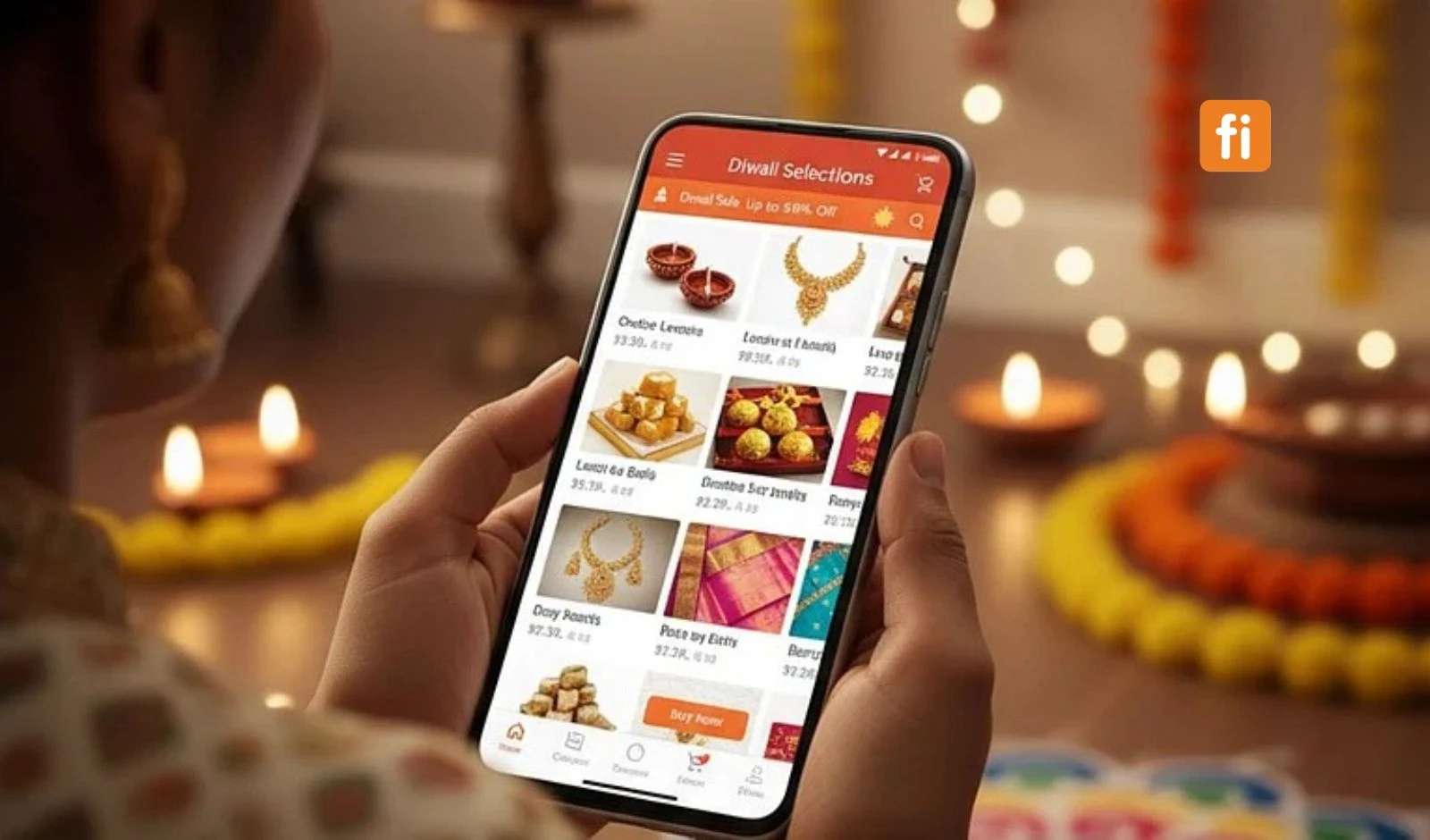
Every Diwali, Indian shoppers settle an old debate in a new way. This year, the answer is not online or offline but both. Shoppers are discovering products on their phones, comparing prices across apps and ordering festive snacks in ten minutes, while still heading to markets and showrooms to touch, try and buy. For retail brands, the festive season has become a test of how well their stores and digital channels work together.
The festive season in numbers
- The Confederation of All India Traders (CAIT) estimates that festive business from Navratri to Diwali could cross ₹7 lakh crore in 2026, around 15–18% higher than last year’s record.
- CAIT expected Dhanteras trade alone to exceed ₹1 lakh crore on 6 November, with buyers favouring lightweight jewellery, silver coins and traditional gifts.
- Redseer Strategy Consultants projects online festive sales to grow about 25% to ₹1.40–1.49 lakh crore (US$15–16 billion), the strongest festive growth in roughly five years, compared with 16% last year.
- E-commerce platforms sold goods worth around ₹24,000 crore in just the first two days of festive sales, according to Redseer.
- Quick commerce is projected to grow 110–120% this festive season and value commerce 25–30%, outpacing traditional e-commerce (Redseer).
- Offline still dominates by value. In 2025, traditional and non-corporate retailers accounted for nearly 85% of festive business, according to CAIT.
Put together, online accounts for roughly a fifth of festive spending. But its share is rising each year, and Redseer notes that quick commerce in particular is drawing shoppers away from physical stores rather than only from other apps.
What the platforms are seeing
The early numbers from the big festive sales point to record participation, much of it from outside the metros.
- Amazon’s Great Indian Festival 2026 crossed 393 crore customer visits and generated record customer savings of over ₹2,800 crore. Beauty purchases by customers in Tier 3 cities grew by more than 50% year-on-year, while fashion customers from Tier 2 and Tier 3 cities grew by up to 23%.
- Flipkart recorded 6.3 million concurrent users at the opening of The Big Billion Days 2026, its 13th edition. On the Early Access day, 51% of transacting sellers did twice their usual business.
- Of the 6–6.5 crore shoppers in the first two days of festive sales, about two-thirds came from Tier 2 and smaller towns, with value fashion standing out as these shoppers bought festive wear at accessible price points (Redseer).
- The share of mobiles and electronics in online festive sales is expected to slip below half, from 51% to 46%, as fashion, beauty, grocery and everyday purchases take a bigger slice of the basket (Redseer).
Metros or smaller cities?
Redseer says Tier 2+ markets have moved from being growth laggards to growth leaders, now outpacing metros in fashion and in beauty and personal care. But brands on the ground say the real story is not one market beating the other; it is that the two want different things.
“Festive demand is coming from both metropolitan and Tier 2 and Tier 3 markets, although the underlying consumption patterns differ. Rather than one market outperforming the other, the opportunity lies in understanding the distinct aspirations and purchasing preferences of these consumer segments,” says Abhinav Kumar, Co-founder, Brand Concepts Limited.
“In metros, demand is increasingly oriented towards minimalist, statement-making handbags and premium designs, with consumers showing a stronger inclination towards understated luxury and distinctive aesthetics. In contrast, Tier 2 and Tier 3 markets are witnessing growing aspirations for branded products, with purchasing decisions more closely influenced by the balance between quality, functionality, brand appeal and price,” he adds.
He sees rising brand consciousness in smaller cities as the most encouraging trend. “Consumers are becoming more exposed to global fashion trends and are seeking products that reflect their aspirations without compromising on value. This makes it important for brands to approach India as a collection of diverse consumption markets, rather than a single homogeneous audience.”
Online or offline? Both
For many retail brands, the festive split now reflects how consumers actually shop: discover online, experience in-store, and buy wherever it is most convenient.
“The business has a well-diversified channel mix, with online contributing approximately 40% of overall revenue and offline channels accounting for the remaining 60%. Both channels play distinct yet complementary roles in driving growth and strengthening brand engagement,” says Kumar.
“Digital platforms have expanded the geographical reach of the business, enabling brands to connect with consumers across markets beyond the reach of physical retail. At the same time, offline retail continues to be an important part of the consumer journey, particularly in categories such as handbags and luggage, where the ability to experience the product, assess its quality and understand its functionality can influence purchase decisions,” he says.
“The focus remains on building a strong omnichannel ecosystem where digital discovery and physical retail reinforce each other. This approach allows the business to widen its consumer base, improve accessibility across markets and create a more seamless brand experience.”
In malls and physical stores, the festive basket is also widening. Alongside gold and jewellery bought on Dhanteras, shoppers are picking up electronics and home appliances as festive purchases.
“Festive shopping in India is evolving, with consumers increasingly looking beyond traditional purchases to embrace products that complement their modern lifestyles. While gold and precious gems continue to hold strong cultural and emotional significance during Dhanteras and Diwali, electronics and home appliances are emerging as equally popular festive choices this season. At Korum Mall, we are seeing consumers strike a balance between auspicious traditions and contemporary lifestyle upgrades,” says Deva Jyotual, Senior Vice President, Korum Mall.
“With leading jewellery brands such as M.K. Ghare Jewellers and Turning Point Gems, alongside technology and electronics brands like Reliance Digital, Ivenus, and Samsung, we bring these diverse shopping preferences together under one roof. Our endeavour is to offer families a convenient and fulfilling festive shopping experience, where they can explore traditional purchases, discover the latest lifestyle offerings and enjoy quality time together,” he adds.
Festive Spark Ahead
Diwali 2026 shows that India’s festive shopper no longer fits one profile. A buyer in Mumbai may want a minimalist designer bag, while a first-time online shopper in a Tier 3 town wants a trusted brand at the right price. Online is growing faster and reaching further, but stores remain where most festive money is spent and where many purchase decisions are sealed.
For retail brands, the winning formula is becoming clear: reach shoppers wherever they discover, serve them wherever they buy and tailor the offer to each market rather than treating India as one.