
 137
/ 10
Min Read
137
/ 10
Min Read



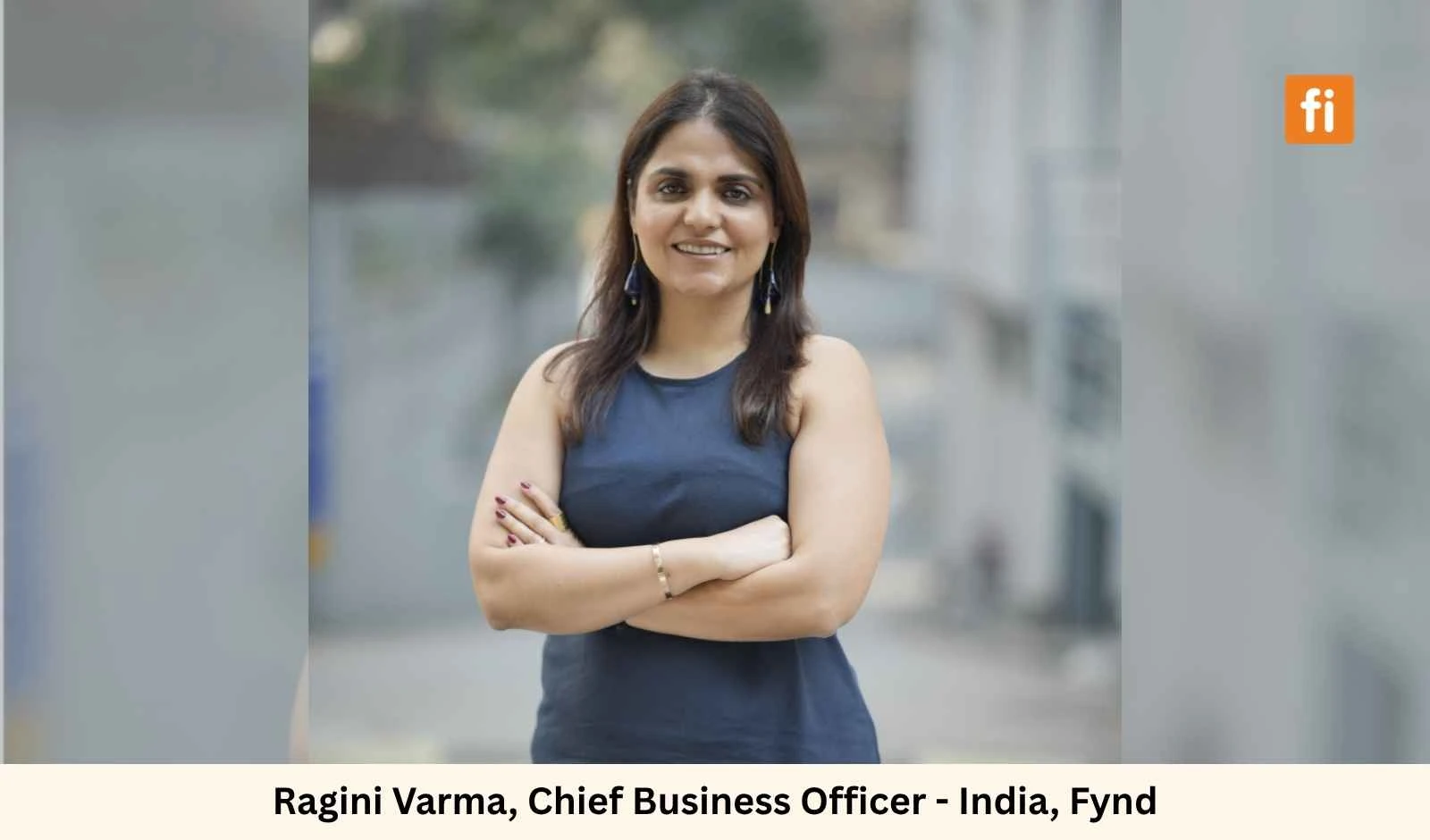
Retail is entering a new phase, with artificial intelligence increasingly influencing how consumers discover products and how brands engage with them. Fynd, an AI-native retail technology company, is helping retailers build connected, intelligent commerce ecosystems. In this conversation, Ragini Varma, Chief Business Officer – India, Fynd, discusses the company’s evolution, AI-led retail strategy, enterprise partnerships, impact on brands and consumers, global expansion plans, and how emerging technologies are shaping the future of retail and commerce.
How is AI reshaping consumer discovery, evaluation, and purchasing of fashion and lifestyle products?
Consumers today are looking for a more intuitive and relevant shopping experience, and AI is helping make that possible. Instead of navigating through endless products, shoppers can increasingly describe what they want, explore options, compare products and make decisions through more personalised interactions.
This is particularly relevant in fashion and lifestyle, where preferences and trends change quickly. AI can use intent and behaviour to personalise product discovery, recommendations, offers, content, delivery promises and customer service.
Our State of Conversation Commerce Report found that product discovery is the largest conversational shopping use case, accounting for 27.9% of all conversations. It also found that 91.8% of conversations begin on homepages or collection pages, indicating that consumers are engaging with conversational experiences early in their shopping journey.
The next shift will be towards connecting AI with live commerce data such as product catalogues, inventory, pricing, offers and delivery information. This will allow AI to go beyond answering questions and play a more active role in helping consumers discover, evaluate and make informed purchase decisions.
What inspired Fynd’s origin, and what gap in India’s retail ecosystem did it initially aim to solve?
Fynd was born out of a desire to use technology to address prominent gaps and broken workflows in retail and fashion shopping. We saw that different parts of the retail journey were often operating in silos, creating friction for both retailers and consumers.
The opportunity was to build technology that could connect these fragmented workflows and make the overall commerce experience more seamless. As the retail ecosystem evolved, so did Fynd from addressing specific operational challenges to building a more connected commerce platform with intelligence embedded across the retail journey.
That remains central to our approach today: using technology to solve real retail problems and make the experience more efficient, relevant and seamless for both businesses and consumers.
How has Fynd evolved from a retail technology platform into an AI-native commerce partner for brands?
Fynd has evolved from being a retail technology platform that addressed specific operational needs to becoming an AI-native commerce partner that works across the broader retail journey. As our relationships with retailers have deepened, the focus has shifted from solving individual problems to connecting workflows and embedding intelligence across them.
Today, AI is integrated into areas such as demand forecasting, inventory management, merchandising, pricing, fulfilment, customer service and product creation. The objective is to make AI a practical part of everyday retail operations, rather than an additional layer that retailers have to manage separately.
This evolution also means working more closely with brands to identify where technology can create measurable business impact. Whether it is improving inventory decisions, accelerating product development or making customer interactions more relevant, our role is to bring intelligence into the workflows that directly influence retail outcomes.
How has Reliance’s backing helped Fynd scale technology, capabilities, and understanding of consumer behavior across retail?
Our association with Reliance Retail Ventures Limited has added valuable depth to our experience of India’s diverse retail and consumer landscape. Working across large and varied retail environments has helped us build technology around real consumer behaviours and evolving brand requirements.
Our work with AJIO, particularly through Fynd Kaily, has given us a deeper understanding of how consumers are using conversational AI while shopping. Online shopping has traditionally been built around the assumption that customers know what to search for. But shopping often starts with a much broader intent - an occasion, a style, a budget, or simply an idea. Conversational AI allows shoppers to express what they want more naturally and discover relevant products.
The adoption we have seen on AJIO, with product discovery emerging as the leading use case, has also reinforced our understanding of how AI can become part of the decision-making process, rather than being limited to transactional or support-led interactions.
How does integrating Fynd’s commerce stack transform brands’ inventory visibility, omnichannel operations, customer experience, and growth?
I think what changes most is the ability to bring different parts of the retail operation together and make them work with greater visibility. Our association with brands such as Woodland, Being Human and Khadim, among others, has given us the opportunity to support brands across different retail requirements. Instead of treating stores, warehouses and digital channels as separate operations, brands can use Fynd’s commerce stack to coordinate inventory, orders and fulfilment across these touchpoints.
This can have a direct impact on the customer experience. Better inventory visibility can help brands make more accurate product availability and delivery commitments, while store-led fulfilment can help them serve online demand from their existing retail network.
Woodland is a good example of this in practice. Fynd’s OMS and WMS connect its 171 stores and central warehouse, with real-time inventory synchronisation across marketplaces including Myntra, AJIO, Flipkart, Nykaa and Tata Cliq. During peak periods, the integrated platform manages up to 4,500 orders a day across Woodland’s stores and warehouse. This helps reduce inventory mismatches, improve order accuracy and give the brand greater control over fulfilment as its digital commerce operations grow.
What does ZIP’s 38% discovery rate reveal about changing consumer expectations and traditional search limitations?
The 38 percent share of conversations around product discovery shows that consumers are increasingly using AI when they are still figuring out what they want to buy. Shopping does not always begin with a specific product or search term; it can start with an occasion, a style, a budget or simply an idea.
Traditional search and filters work well when the shopper already knows what they are looking for. Conversational AI makes the experience more natural by allowing shoppers to describe their intent in their own words and discover relevant products through a dialogue. The growing use of ZIP for discovery suggests that consumers are becoming more comfortable with AI playing a role earlier in the shopping journey.
Can conversational AI bridge digital discovery gaps for Tier 2 and Tier 3 consumers beyond metros?
Absolutely. The data suggests that conversational shopping is already becoming a pan-India behaviour. In our report, 58% of pre-purchase conversational shoppers come from Tier 2 and Tier 3 cities combined, with Tier 2 accounting for 40% and Tier 3 for 18%. We see a similar trend on AJIO, where 57% of shoppers using ZIP are from outside the top eight metros.
This is important because the opportunity is not simply to replicate a metro shopping experience in smaller cities. AI can make digital discovery more contextual by allowing shoppers to express what they want naturally, while taking into account factors such as product availability, local assortment, pincode-level delivery and customer intent.
Language is an equally important part of making this experience accessible. Our report found that 77.1% of Indian-language conversations use Indian languages written in English characters rather than native scripts. This tells us that conversational experiences need to adapt to how Indians naturally communicate, rather than expecting consumers to conform to a particular language or interface.
The larger opportunity for conversational AI, therefore, is to make digital commerce more inclusive - allowing consumers across geographies to discover and evaluate products in a way that feels natural to them, while helping retailers serve a much broader market.
How will conversational AI evolve from answering queries to shaping inspiration, discovery, consideration, and purchase decisions?
We see conversational AI moving from a support function to becoming part of the shopping experience itself. Traditionally, chatbots have been used largely to answer questions or resolve issues after a customer has already made a decision. The bigger opportunity is to engage much earlier, when the customer is still exploring what to buy.
Kaily can support this journey by helping shoppers articulate what they are looking for, navigate a large catalogue, evaluate options and make a more confident choice. The AJIO experience is a good example of this shift: product discovery has emerged as the leading use case for ZIP, powered by Kaily, accounting for 38% of conversations.
Over time, we see conversational AI becoming a more continuous layer across the journey — helping with inspiration and discovery at the start, supporting consideration and comparison in the middle, and assisting with purchase and post-purchase interactions. That is what makes the digital store associate analogy relevant: the technology is not simply responding to a customer; it is helping them navigate the process of deciding what to buy.
How will Fynd balance global expansion with adapting its retail technology to each market’s unique needs?
Our approach is a combination of taking the capabilities we have built in India and adapting them to the requirements of each market. India has given us the experience of building for a highly diverse and complex retail environment, which provides a strong foundation as we enter new geographies.
The stable layer is the commerce infrastructure: product, inventory, orders, stores, fulfilment and customer context. The implementation above that layer must reflect each market’s payment methods, taxation, marketplaces, logistics networks, regulations, languages and shopping habits. A retailer in the GCC, the UK, South Africa or Southeast Asia may share the same need for connected commerce, but the way that need is solved will differ.
Therefore, our strategy is not to simply export an India-built product, but to take the underlying technology and learnings we have developed here and tailor them to local market realities. Through local operations and partnerships, we establish strong entry points, and then deepen those relationships through repeatable enterprise deployments. The long-term opportunity is not to count the number of countries in which Fynd is present. It is to become a meaningful commerce infrastructure partner in each market, with technology that retains a common core while adapting to how the retailer actually operates.
Where does Fynd see its biggest growth opportunities: AI, global expansion, enterprise partnerships, or omnichannel retail?
We see the next phase of growth being driven by the convergence of these opportunities rather than any one of them in isolation. AI will remain a major growth engine as retailers move from experimenting with AI to embedding intelligence more deeply into areas such as discovery, merchandising, inventory, fulfillment and customer engagement.
International expansion is another significant opportunity for us. We are now taking the capabilities we have developed in India to markets across the UK, GCC, Africa and Southeast Asia, while adapting them to the requirements of each geography.
There is also considerable opportunity to deepen our relationships with enterprise retailers. As brands look to bring more of their commerce operations onto technology platforms that can work across stores, digital channels and fulfilment, we see scope to expand the breadth of solutions we provide to existing and new customers.
Ultimately, the larger opportunity lies in how these trends come together. Retail is no longer neatly divided into online and offline, and AI is increasingly becoming part of how both operate. Our focus will be on helping retailers navigate this convergence while using technology to make commerce more intelligent, responsive and accessible.