32
/ 7
Min Read
32
/ 7
Min Read



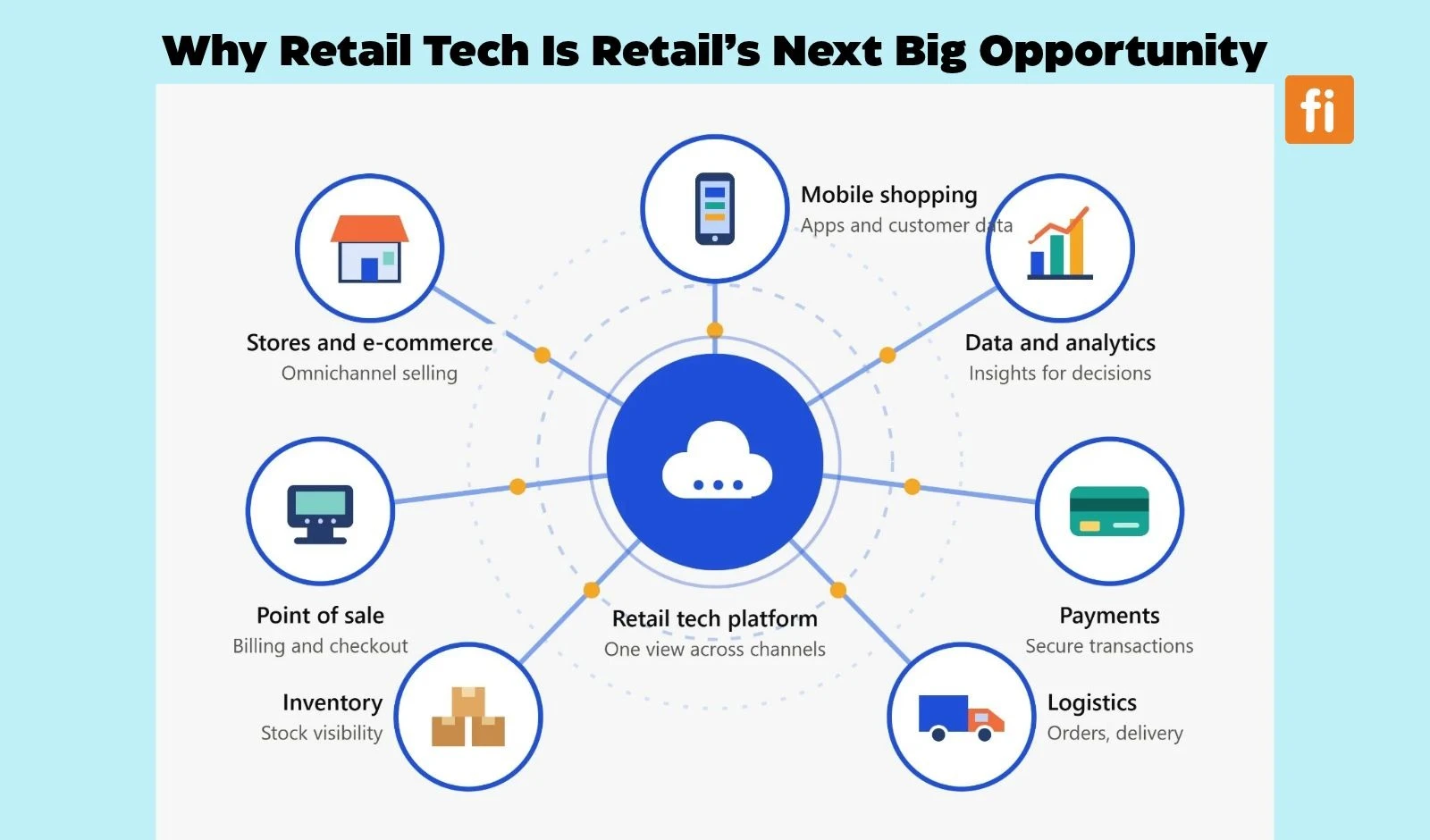
Walk into a contemporary retail store and there is far more happening behind the scenes than meets the eye. Technology now touches almost every aspect of retail, from analysing what is selling and where, to managing inventory, understanding customer preferences, tracking orders and enhancing the shopping experience.
As retailers expand across physical stores, e-commerce, marketplaces, quick commerce and digital platforms, connecting operations is becoming critical. Fragmented systems across POS, inventory, payments, customer data, logistics and accounting create gaps in visibility and complicate decision-making. This is creating a growing opportunity for technology providers offering integrated platforms, specialised solutions and services.
Building the Connective Layer
According to Arani Chaudhuri, Co-Founder, AI Library, technology providers increasingly act as a connective layer for retailers. “As a retail technology provider, we solve the above problem by building the connective layer: integration middleware, unified inventory and customer data services, and automated reconciliation. These connect to existing systems. In cases where decisions need to be taken, we have trained AI agents to automate such decision-making flows as well.”
The shift is visible across the market, with companies such as Fynd, Ginesys, Pine Labs and Capillary Technologies offering solutions spanning unified commerce, POS, inventory, payments, loyalty, customer engagement and analytics. Speaking on Fynd’s evolution into an AI-native commerce partner for brands, Ragini Varma, Chief Business Officer – India, Fynd, said, “Fynd has evolved from being a retail technology platform that addressed specific operational needs to becoming an AI-native commerce partner that works across the broader retail journey. As our relationships with retailers have deepened, the focus has shifted from solving individual problems to connecting workflows and embedding intelligence across them.”
A similar journey is visible in logistics. Dipanjan Banerjee, Chief Commercial Officer, Blue Dart, says technology has been central to the company’s operating model for decades, evolving from real-time shipment tracking to connected digital and operational platforms.
“We see technology primarily as an enabler of five outcomes: reliability, speed, visibility, productivity and convenience,” he said.
From Data to Better Retail Decisions
For retailers, technology is ultimately valuable when it improves business decisions. Nidhi Gupta, Director, Crossword Bookstores, points to the growing importance of data. “We are becoming increasingly data-led in the way we run the business. Technology helps us understand what is selling, where it is selling and how customer preferences differ across markets, which in turn improves assortment and inventory decisions,” she said. For a bookseller, this can mean understanding regional preferences and ensuring the right products are available at the right locations.
At Nexus Select Malls, insights from footfall, engagement, billing and consumer behaviour help the company make decisions around tenant mix, campaigns and consumer engagement. “It is however important to note that the purpose of collecting data is to drive better experiences and insights. As consumers continue to become more discerning, the capability to respond to their preferences becomes critical to success,” said Nishank Joshi, Chief Marketing Officer, Nexus Select Malls.
Demand forecasting and replenishment are also gaining attention, since retailers already have years of sales data to improve inventory decisions. “Even modest accuracy gains translate directly into fewer stockouts and less dead inventory. Seasonality, festivals and regional variation make this especially valuable in India,” Chaudhuri said.
A More Connected Customer Journey
Technology is also changing how consumers move between digital discovery and physical retail. “Technology has evolved the process of consumer journeys from being linear in nature to being much more interconnected,” Joshi said. Consumers may discover a brand through social media or digital advertising before visiting a store, while malls are becoming experience and discovery destinations rather than simply places to shop. Nexus Select Malls uses digital installations such as PRISMOX in Hyderabad, CURV in Chennai and AAYAM in Navi Mumbai to give brands high-impact communication opportunities, while the NexusONE app offers navigation, parking assistance, offers and loyalty-led engagement.
The journey continues well after the purchase. Customers increasingly want real-time shipment status, predictable delivery, proactive communication and convenient digital interactions rather than simply receiving a parcel. “As e-commerce and D2C businesses scale, these expectations become even more important. The objective is therefore not to adopt technology for its own sake, but to use it where it makes the network more responsive and the customer experience more predictable,” Banerjee said. Inventory visibility, order management, fulfilment and last-mile tracking increasingly need to work together to deliver the experience consumers expect.
AI Finds Practical Retail Applications
AI is emerging as another major opportunity, particularly as retailers accumulate larger volumes of customer and transaction data. Chaudhuri says adoption is strongest where retailers already have usable data and can measure the commercial impact. “Adoption is strongest where the data already exists and the payoff is easy to measure. Customer engagement is the biggest winner of generative AI, particularly on WhatsApp. AI-driven segmentation, personalised offers and conversational commerce in regional languages are moving from pilots into daily operations, because WhatsApp is where Indian customers already are.”
Varma sees AI becoming more deeply embedded across the business. “AI will remain a major growth engine as retailers move from experimenting with AI to embedding intelligence more deeply into areas such as discovery, merchandising, inventory, fulfillment and customer engagement,” she said.
Gupta believes AI could further expand possibilities through forecasting, recommendations, training and customer insights, but stresses that technology must complement the human side of bookselling. “Bookselling is ultimately a very human business. Technology should make our teams better informed and more responsive; it should not replace the judgement, conversation and personal recommendation that make a good bookstore special,” she said. This balance is becoming important across retail formats as businesses seek efficiency without losing the experience that differentiates physical retail.
The opportunity is moving from AI as a reporting tool towards AI supporting actual business decisions: what to stock, where to replenish, which customer to target and how to respond to demand.
Technology With a Business Purpose
India’s expanding organised retail market, D2C growth, digital payments, quick commerce and omnichannel adoption are widening the addressable market, from large retailers seeking enterprise platforms to smaller businesses looking for affordable cloud-based POS, inventory, payments and customer engagement tools.
Asked where Fynd sees its biggest growth opportunities, whether in AI, global expansion, enterprise partnerships or omnichannel retail, Varma said, “We see the next phase of growth being driven by the convergence of these opportunities rather than any one of them in isolation.” She added, “Retail is no longer neatly divided into online and offline, and AI is increasingly becoming part of how both operate. Our focus will be on helping retailers navigate this convergence while using technology to make commerce more intelligent, responsive and accessible.”
The next phase could also see greater use of agentic commerce, where AI systems discover products, compare options and potentially facilitate transactions on behalf of consumers.
But the larger opportunity is not technology for technology’s sake. Across bookstores, malls, retail stores and logistics, the industry view is consistent: technology needs to solve a business problem. Whether it is helping Crossword understand customer preferences, helping Nexus Select Malls improve engagement or allowing Blue Dart to make deliveries more predictable, technology is valuable when it produces measurable business and customer outcomes.
As Indian retail becomes more connected, technology providers are moving closer to the heart of the retail business, helping companies make better decisions, operate more efficiently and build stronger relationships with customers.