 125
/ 9
Min Read
125
/ 9
Min Read


India’s retail real estate is at an inflection point: malls that once relied on location and brand count are losing relevance as consumer demand destinations that offer full-day experiences, social engagement and lifestyle value. For developers, the imperative is clear, move beyond transactional retail to experiential, mixed-use ecosystems that create emotional connections, sustain footfall across dayparts and future-proof assets against rising competition and costs.
Creating the need: why “just retail” no longer works
- Consumer expectations have shifted: Over 70% of Indian shoppers now prefer immersive, lifestyle-led formats over purely transactional visits, with Millennials, Gen Z and Alpha driving demand for engagement-driven destinations.
- Experience over products: Nearly 78% of consumers say they’d rather spend on experiences than goods, pushing brands to invest in activations, entertainment and F&B-led journeys.
- Rising costs and supply pressure: With land prices surging (up to 100% in some corridors) and construction costs climbing, standalone malls struggle to justify ROI without diversified revenue streams.
- High streets gaining share: Limited premium mall inventory and the appeal of flexible, mid-sized formats (1,000–5,000 sq ft) have accelerated high-street leasing, forcing malls to differentiate through experience and integration.
Factors shaping the new retail blueprint
Developers and investors must account for a converging set of market forces:
- Mixed-use economics: Integrating residential, office, hospitality, retail and entertainment creates diversified cash flows; upfront sales from homes, annuity income from commercial/retail, and risk mitigation if one segment underperforms.
- Continuous footfall: Office workers, hotel guests, residents and shoppers activate the same destination at different times, improving retailer performance and asset valuation.
- Placemaking as a differentiator: Pedestrian-friendly streets, plazas, cultural programming and public art turn commercial projects into places people visit even without a shopping intent, boosting dwell time and repeat visits.
- Luxury and premium brand adjacency: Global luxury brands seek destinations with sophisticated architecture, curated tenant mixes and affluent catchments, creating a supply gap that premium mixed-use projects can fill.
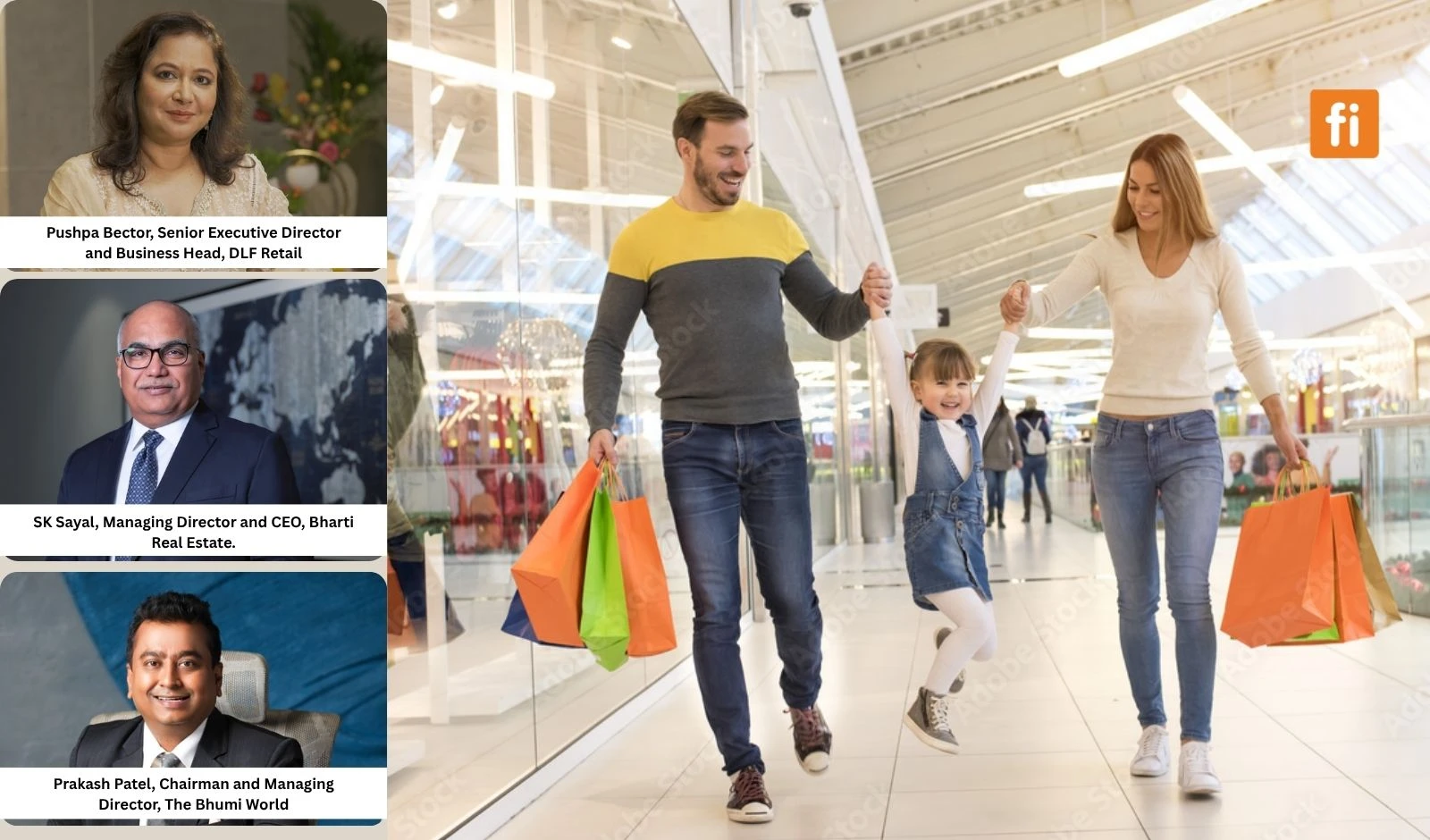
“The global luxury brands increasingly view India as a high growth market. However, there remains a shortage of retail destinations that meet international standards of design, operations and customer experience. This presents a significant opportunity for developers to create future ready retail spaces with world class infrastructure, a well curated brand mix, strong accessibility and the right consumer catchment,” highlights SK Sayal, Managing Director and CEO, Bharti Real Estate.
- Omnichannel reinforcement: D2C and digital-native brands are expanding offline via flagship stores and experience centres to build trust and loyalty, increasing demand for premium physical destinations.
Supporting the above Sayal said, “While it's true that digital channels can increase exposure, many brands that started out online have come to recognise the value of brick-and-mortar locations for fostering customer loyalty, personalisation, and trust. Offline shopping is now an integral aspect of multichannel strategies, not a replacement for it. Brands can connect consumers on a much deeper level via flagship locations, experiential centers, and immersive retail formats.”
Current trends: what’s already moving the market
Experiential entertainment is gaining strong traction, with over 70% of consumers favouring participatory activities like bowling, escape rooms, climbing walls and kids’ zones over passive options; and 65% wanting these integrated with F&B. At the same time, retailers are gravitating toward mid-sized formats of 1,000–5,000 sq. ft for better visibility and operational efficiency, a trend that is fuelling high-street growth and pushing malls to reconfigure their tenant mixes. These shifts are being reinforced by robust institutional capital inflows into mixed-use assets, drawn by their resilient income profiles and the ‘hotelification’ of workspaces, which is encouraging developers to pivot toward integrated hubs. Compounding this momentum, the return-to-office movement, driven by hybrid and in-office models, has revived office demand, which in turn is supporting retail absorption within mixed-use projects and creating a mutually beneficial cycle of footfall and revenue.
Consumer behaviour: what shoppers actually want
As shared by Sayal, “People now expect more from their shopping mall experiences than just a place to do their shopping. This is one of the most noticeable changes in recent years. Discovering new brands, enjoying fine dining, attending curated events, or just spending quality time with family and friends ought to constitute the focus of every visit, not just transactions.”
- Day-long destinations: Consumers want to work, meet, dine, shop, exercise and socialise in one place; convenience and time-saving are key drivers.
- Social and community value: Shopping centres are increasingly viewed as social infrastructure; people seek spaces for interaction, events and shared experiences.
- Premiumisation of experience: ‘Premium’ now means thoughtful design, seamless digital integration, personalised services and curated entertainment, not just luxury labels.
- Willingness to spend on experiences: Nearly 90% are ready to spend up to ₹4,000/month on entertainment, with ₹1,000–2,000 being the most common range, highlighting monetisable demand for F&B and entertainment.
Keeping pace with evolving consumer behaviour and the shift from transactional shopping to experience-led engagement, DLF Mall of India presented ‘The BeYoutiful Edit’ from 21–31 July 2026—a ten-day beauty festival designed to showcase the mall’s curated beauty ecosystem through exclusive launches, expert-led masterclasses, personalised consultations, product discovery experiences and interactive brand activations. More than a promotional event, the festival offered an immersive programme centred on education, interaction and self-expression, featuring curated experiences across leading beauty brands and two exclusive masterclasses by industry experts: Dr Geetika Mittal Gupta on evidence-based skincare and aesthetic wellness, and celebrated makeup artist Shivangi Dutt on contemporary techniques and emerging beauty trends.
Speaking on the occasion, Pushpa Bector, Senior Executive Director and Business Head, DLF Retail, said: "The evolution of our beauty portfolio reflects a clear strategic vision to build an unparalleled destination that responds to the changing expectations of today's consumer. As beauty increasingly becomes a catalyst for customer engagement and lifestyle-led retail, our focus has been on curating a portfolio that brings together globally celebrated brands, emerging innovators and immersive experiences within a single destination. The BeYoutiful Edit is a celebration of this journey. It showcases the strength and diversity of our expanded beauty offering while reinforcing DLF Mall of India's position as North India's preferred destination for beauty discovery, innovation and premium retail experiences."
Reinforcing its commitment to creating meaningful community experiences, Korum Mall, Mumbai partnered with Bestseller Books to host a 10-day book fair from July 17 to July 27, 2026, at the mall’s Main Atrium. The initiative underscores Korum Mall’s broader strategy to offer experiences that extend beyond shopping by fostering culture, learning and community engagement.
Commenting on the initiative, Deva Jyotula, Senior Vice President, Korum Mall, said, “At Korum Mall, we believe that creating meaningful community experiences goes beyond retail. Through this book fair, we want to inspire people of all ages to rediscover the joy of books and we hope to spark a stronger culture of reading within the community.”
The need of the hour for developers
The window to compete on location alone has closed. To win, developers must:
- Design for experience first: Prioritise dwell time, engagement and emotional connection over sheer store count.
- Integrate multiple uses: Combine offices, hotels, residences, retail and public realms to ensure all-day activation and diversified revenue.
- Curate, don’t just lease: Build tenant ecosystems where fashion, wellness, dining, hospitality and entertainment complement each other to create seamless customer journeys.
- Invest in placemaking: Allocate meaningful space to public realms, programming and community events that make the destination a habit, not just a stop.
According to Prakash Patel, Chairman and Managing Director, The Bhumi World, “Retail today is no longer just about transactions, it’s about experiences, engagement, and emotional connection. ‘Retailtainment’ plays a critical role in transforming a mall from a shopping destination into a place where consumers choose to spend their time. Features like amphitheatres, flea markets, and experiential zones are designed to create dynamic, ever-evolving environments that encourage repeat visits. In the outlet format specifically, this becomes even more important. While value drives the first visit, experience drives frequency and loyalty. At the Outlet Mall of India, we have consciously integrated retail with entertainment and culture to ensure that the destination remains relevant beyond shopping. It is about creating a space where families, communities, and consumers can engage, discover, and connect, making it a year-round attraction.”
Suggestions for developers: a practical playbook
Masterplan for mixed-use from day one: Structure projects with residential, office, hospitality and retail components to balance cash flows and risk. Use shared infrastructure (parking, utilities, security) to improve cost efficiency and land utilisation.
Anchor with experience and F&B: Allocate significant GLA to participatory entertainment and F&B clusters; these drive footfall and increase average spend. Design flexible event spaces for seasonal festivals, live performances and brand activations to sustain repeat visits.
Curate tenant adjacency deliberately: Group complementary categories (e.g., premium fashion + wellness + gourmet dining) to create natural customer flows and longer dwell times. Prioritise mid-sized flagship and experience-store formats that enable immersive brand storytelling.
Build for omnichannel brands:Offer tech-enabled stores (click-and-collect, in-store pickup, digital kiosks) to support D2C and omnichannel strategies. Provide data-sharing frameworks (footfall analytics, loyalty integrations) to help retailers optimise offline performance.
Elevate design and operations to global standards: Invest in architecture, wayfinding, comfort and service quality that meet luxury brand expectations—addressing India’s current supply gap. Implement premium operations (concierge, valet, membership programmes) to reinforce a high-end experience.
Embed community and public realm: Create pedestrian-friendly streets, plazas and green spaces that encourage lingering and social interaction. Program regular cultural and community events to build emotional attachment and local identity.
Diversify revenue beyond rent: Explore revenue-share leases, experience ticketing, F&B revenue pools and hospitality-linked packages to capture more value per visitor. Consider co-working and serviced apartments within the same ecosystem to stabilise occupancy and income
Future Ahead; Building destinations that go beyond shopping
The future of retail in India will not be won by bigger malls, but by smarter destinations. As consumers increasingly prioritise experiences, convenience and community, developers who embed experiential retail within mixed-use ecosystems will create assets that outperform on footfall, dwell time and long-term value. The opportunity is clear: design for day-long engagement, curate tenant mixes that tell a cohesive lifestyle story, and invest in placemaking that turns commercial projects into beloved urban places. For those who execute well, the reward is not just higher rents, but resilient, future-proof destinations that remain relevant as Indian lifestyles continue to evolve.