 46
/ 13
Min Read
46
/ 13
Min Read



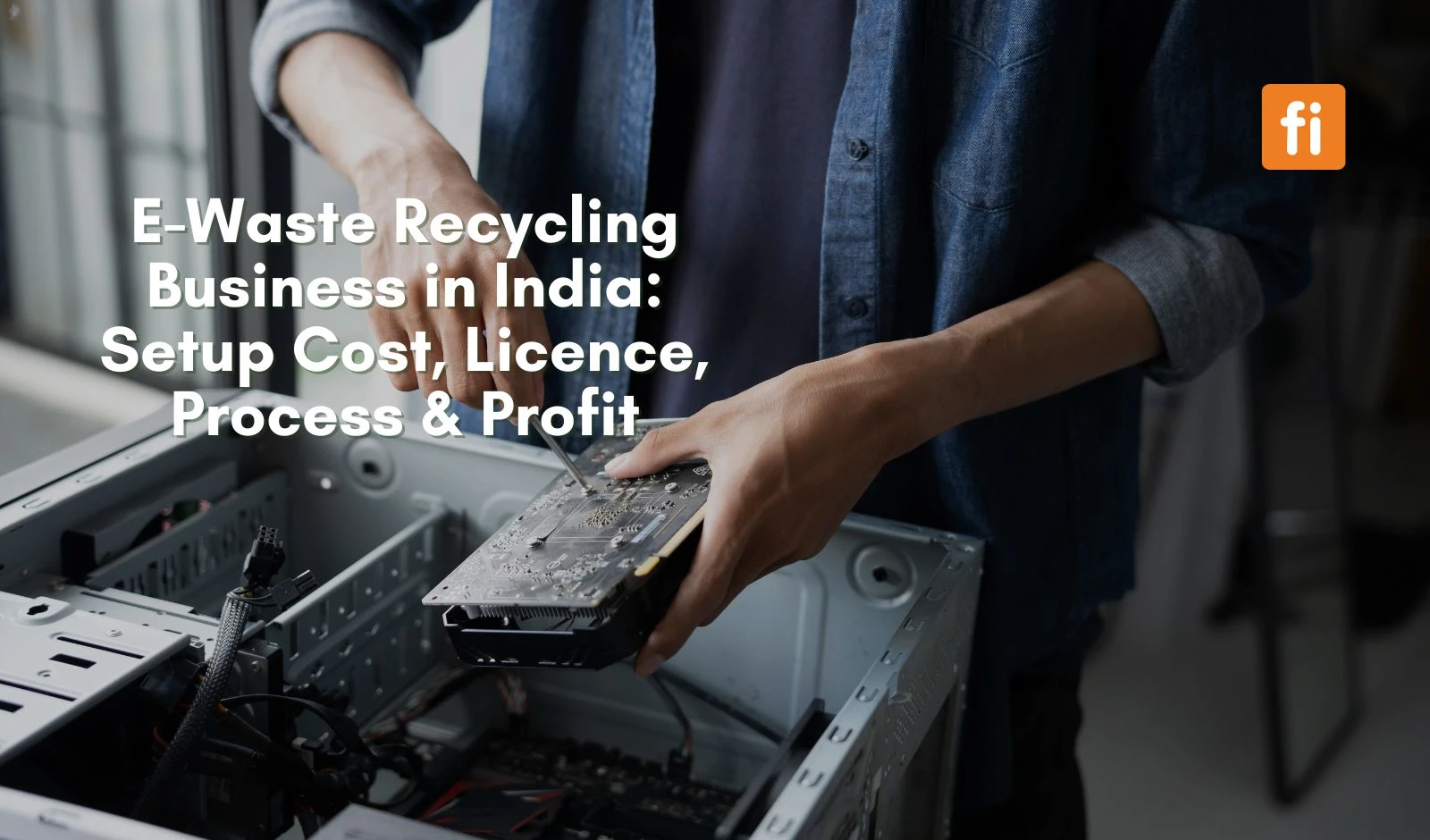
Discarded smart phones, laptops and other devices usually contain metal, components and materials which can be reused as ‘recoverable’ ones. India generates a huge amount of such electronics. Therefore, we need a systematic way of collection, sorting and recycling them systematically.
While you may think about how you will collect these items, there are several things to consider if you want to start your own e-Waste Recycling Business. From Setup Cost & Licences to Recycling Process, here’s everything you need to know to launch your own e-Waste Recycling business.
Key Takeaways
- E-waste recycling entails collection, sorting, dismantling and recovery of usable materials from discarded electronics.
- Investment varies depending upon business model, processing capacity, machinery and facility requirement.
- Compliance with CPCB (Central Pollution Control Board) and State Pollution Control Board Requirements plays a significant role while establishing a compliant recycling operation.
- A stable supply of discarded electronics and an efficient material recovery system are necessary elements for successful e-Waste recycling businesses.
- Revenue would depend upon the nature of materials recovered, magnitude of processing, operating expenses and EPR related revenue streams.
What Is an E-Waste Recycling Business?
An E-Waste Recycling Business collects discarded electrical/electronic equipment & processes them into reusable/recyclable material. According to E-Waste (Management) Rules, 2022, Electrical/Electronic equipment – which include Solar Photovoltaic Modules, Panels or Cells – that have been discarded as Waste are included in the category of e-waste. This covers all types of rejection during its Manufacturing Process, Refurbishment and Repairing Process.
The business involves: collection, sorting, dismantling, material segregation and recycling. Depending on the setup, an entrepreneur focuses on collection and aggregation, dismantling, refurbishment or operating a recycling facility for material recovery.
E-waste contains economically valuable materials such as iron, copper, aluminium, plastics, glass and precious metals, while some components also contain hazardous substances: lead, mercury and cadmium. This makes proper handling and scientific processing an essential part of the business.
Why Start This Business in India
With increased use of electronics, a huge amount of Electrical & Electronic Equipment(E-Equipment) have been thrown away by India’s consumers leading to large volumes of E-waste which can be systematically collected and processed to recover various valuable raw materials like iron, copper, aluminum and precious metals for re-use into new goods.
The Regulatory Framework plays an important role in ensuring that organized recyclers collect and recycle these materials. The E-Waste (Management) Rules, 2022 came into effect from April 1, 2023 requiring all Producers to fulfill their Extended Producer Responsibility (EPR) obligation to registered e-waste recyclers and issue EPR certificates in case of eligibility of recycled end products.
Entrepreneurs are able to set up different types of businesses ranging from collection/dismantling to complete facility providing various kinds of recycling services to fulfill the growing demand of Extended Producer Responsibility (EPR) Obligation mandated under law.
E-Waste Recycling Business Models
| Business Model | What You Do | Main Requirement |
|---|---|---|
| Collection & Aggregation | Collect e-waste from households, offices, retailers and other sources and channel it to authorised recyclers. | Collection network, storage space and transportation |
| Dismantling | Separate discarded electronics into components and different material streams for further processing. | Dismantling tools, trained workers and suitable premises |
| Refurbishing | Repair and test usable electronic equipment so it can be put back into use. | Repair infrastructure, testing equipment and skilled technicians |
| Recycling | Process e-waste to recover materials and other eligible outputs. | Processing machinery, facility infrastructure and regulatory compliance |
| Integrated Recycling Facility | Handle multiple stages such as collection, storage, dismantling, segregation, recycling and residue management. | Larger facility, specialised machinery and a stronger compliance system |
Business Setup Cost in India
The amount required to start an e-waste recycling business depends largely on how much material the facility intends to handle and how far the recycling process goes. A collection and dismantling unit requires a very different setup from a facility equipped for material recovery.
| Expense | Indicative Cost |
|---|---|
| Industrial space and basic setup | ₹5–15 lakh |
| Dismantling and sorting equipment | ₹3–10 lakh |
| Recycling machinery | ₹15–40 lakh+ |
| Electrical and utility setup | ₹3–8 lakh |
| Safety and pollution-control systems | ₹2–8 lakh |
| Storage, handling and weighing equipment | ₹2–5 lakh |
| Registrations and compliance | ₹50,000–₹2 lakh* |
| Initial working capital | ₹5–15 lakh |
| Approximate Setup Range | ₹35–100 lakh+ |
*Actual compliance costs vary according to the facility, location and permissions required. CPCB's current fee schedule lists ₹15,000 for first-time recycler registration, valid for five years, along with annual maintenance charges of ₹5,000.
These figures are indicative rather than a fixed project cost. Machinery capacity, the type of e-waste handled, land or rental rates and the level of material recovery planned will have the biggest impact on the final investment.
Licence and Registrations Required
Running an e-waste recycling unit involves both business registrations and environmental permissions. The exact approvals depend on the location, facility and activities carried out at the premises.
- Business registration: Choose a suitable legal structure such as proprietorship, partnership, LLP or private limited company.
- GST registration: Required where the business meets the applicable GST registration conditions.
- Udyam Registration: An optional MSME registration that provides formal recognition to the enterprise.
- State Pollution Control Board approvals: The facility needs to meet the applicable pollution-control requirements before starting operations.
- CPCB EPR portal registration: Under the E-Waste (Management) Rules, 2022, recyclers are required to register with CPCB on the E-Waste EPR portal.
- Local and facility-level permissions: Depending on the premises and state, additional approvals relating to fire safety, factory operations, electricity and local authorities may apply.
The environmental approvals are particularly important because the recycling facility has to operate within its permitted capacity and follow the prescribed procedures for handling e-waste and recycling residues. CPCB also requires registered recyclers to maintain records of material collected, dismantled and recycled.
EPR for E-Waste: What Does a Recycler Need to Know?
Extended Producer Responsibility (EPR) is an important part of India's current e-waste framework. Under the E-Waste (Management) Rules, 2022, producers have recycling obligations, while recyclers form part of the system through which those obligations are fulfilled. Manufacturers, producers, refurbishers and recyclers covered by the rules are required to register on the E-Waste EPR portal.
For a recycler, EPR is linked to the quantity of e-waste processed and the material recovered from it. CPCB's framework provides for EPR certificates against specified recovered metals, including gold, copper, aluminium and iron. These certificates are generated through the prescribed system and transferred to producers for meeting their EPR obligations.
This makes proper record-keeping a key part of the operation. A recycler needs records covering procurement of e-waste, processing, recovered output and EPR certificate transactions.
E-Waste Recycling Process: Step-by-Step
E-waste does not go directly from a collection point to a recycling machine. CPCB's framework covers activities including collection, storage, segregation, dismantling, recycling and disposal.
| Stage | What Happens |
|---|---|
| 1. Collection | E-waste is sourced from households, businesses, institutions, retailers and other permitted channels. |
| 2. Sorting | Incoming material is separated according to equipment type, condition and material composition. |
| 3. Dismantling | Devices are opened and components such as circuit boards, wires, plastics, metals and other parts are separated. |
| 4. Segregation | Similar materials and components are grouped for the appropriate recovery or recycling process. |
| 5. Processing | Recyclable fractions undergo mechanical or other suitable processing to recover usable materials. |
| 6. Material Recovery | Recovered outputs such as metals and other materials are prepared for further use or sale. |
| 7. Residue Management | Materials that cannot be recovered are handled and channelled according to the applicable waste-management requirements. |
The exact process depends on the type of e-waste and the technology installed at the facility. CPCB also requires registered recyclers to maintain records of e-waste handled and recycled.
Machinery & Equipment Required for E-Waste Recycling
The machinery requirement depends on how much processing the unit plans to undertake. A collection or dismantling operation needs a relatively basic setup, while a recycling facility requires equipment for size reduction, separation, material recovery and pollution control.
| Equipment | Purpose |
|---|---|
| Dismantling tools and workstations | Separate electronic devices and components before further processing |
| Weighing equipment | Measure incoming e-waste and maintain material records |
| Shredder | Reduce selected e-waste fractions into smaller pieces |
| Ball mill | Further size reduction of suitable material |
| Magnetic separator | Separate ferrous metals from processed material |
| Eddy-current/electrostatic separators | Separate different material fractions during processing |
| Material handling equipment | Move e-waste, recovered materials and residues within the facility |
| Storage systems | Keep incoming e-waste, recovered products and non-recyclable fractions separately |
| Pollution-control equipment | Control dust, emissions and other pollutants generated during processing |
| Data destruction equipment | Permanently erase or destroy data-bearing devices such as hard drives where required |
CPCB also specifies that recycling facilities need adequate areas for raw-material storage, recovered products, non-recyclables and hazardous waste, along with appropriate pollution-control systems.
The final equipment list should therefore be prepared according to the types of e-waste handled, processing capacity and recovery method rather than purchasing every machine at the outset.
How to Source E-Waste for Recycling
An e-waste recycling unit needs a dependable inflow of discarded electronics to keep its operations running. Entrepreneurs should not rely on a single supplier but build channels across other sources.
| Source | Examples |
|---|---|
| Households | Old phones, computers, televisions, appliances and other electronic devices |
| Corporate offices | Computers, monitors, printers, networking equipment and IT hardware |
| Electronics retailers | Returned, damaged, exchanged or end-of-life electronic products |
| Manufacturers | Production rejects and other eligible discarded electronic equipment |
| Repair centres | Non-repairable devices and replaced electronic components |
| Educational institutions | Computers, laboratory equipment and other electronic devices |
| Hospitals and institutions | Eligible electronic equipment reaching the end of its usable life |
| Collection partners | Local collection agencies and other businesses supplying e-waste to registered recyclers |
The recycler should also maintain proper records of the material entering the facility. CPCB's guidance calls for details of e-waste procured or collected, processed or recycled and the end products produced and sold, supported by relevant invoices and records.
Building these collection channels early helps the business maintain regular feedstock, traceability and better control over procurement costs.
Is E-Waste Recycling Business Profitable in India?
Profitability in e-waste recycling depends less on the amount of waste collected and more on what the business is able to recover from it. Two facilities processing the same quantity of e-waste could have different results because of differences in procurement costs, technology, recovery rates and selling prices.
The main factors that influence earnings include:
- Lower cost of sourcing: Lower costs associated with procuring and collecting e-waste will allow us to spend on operating expenses and/or maintain higher margins.
- Type & quantity of recoverable materials: Type and quantity of metal/materials that can be recycled from each batch affects its overall value.
- Higher processing capacity utilisation: As we use our processing facilities at a greater rate, we’ll be able to disperse fixed costs over a much greater amount of materials processed.
- Operating expenses: Labour, electricity, transportation, maintenance and compliance add to the cost of every tonne processed.
- EPR-linked revenue: A registered recycler generates an EPR certificate depending upon eligible recycling output (based on CPCB framework & with required documentation).
So if you’re thinking about entering this space, make sure to track your cost per tonne, recovery value, processing cost, and selling price periodically. Your profit figures will also depend on your actual business model and facility capacity – don’t assume industry margins.
How Does an E-Waste Recycling Business Make Money?
An e-waste recycler earns by turning discarded electronics into materials or services that have commercial value. The income mix depends on the type of equipment processed and the depth of recycling carried out at the facility.
| Revenue Stream | How It Works |
|---|---|
| Recovered metals | Copper, aluminium, iron and other recovered metals are separated, processed and sold to suitable buyers. |
| Recovered components | Usable components and parts from selected equipment can be sold separately, depending on their condition and permitted business activity. |
| Recycled materials | Processed plastics and other recyclable fractions can form an additional sales stream. |
| Recycling services | Businesses and institutions can engage recyclers to handle their discarded electronic equipment through compliant channels. |
| EPR certificates | Registered recyclers can generate EPR certificates through the CPCB system based on eligible recycling output. Producers use these certificates to meet their EPR obligations. |
The actual earnings depend on how much e-waste enters the facility, the material recovered from it, processing expenses and the prices received for the recovered output. A steady supply of suitable e-waste is therefore as important as the recycling equipment itself.
Challenges to be Ready For
- Steady e-waste supply: Maintaining enough material to keep the facility running.
- Regulatory compliance: Managing registrations, records, reporting and EPR-related requirements.
- Residue management: Sending unrecovered materials and processing residues to appropriate authorised facilities.
- Operating costs: Control labour, electricity, transport, maintenance and storage expenses.
- Material prices: Fluctuation of recovered metal prices will influence our revenue.
- Record Keeping: It is important to keep a proper record of purchases, processing & sale for complying with the law.
FAQs
1. Can an e-waste recycler pick up e-waste directly from consumers?
Yes. Registered recyclers can collect e-waste directly from consumers, subject to relevant requirements. A business can create its own collection network or work with collection partners to bring material to the recycling facility.
2. What happens to e-waste a recycler can’t process?
The recyclers are unable to just throw away all these leftovers as general waste. All the un-recycled fractions must go through some registered/authorised facilities depending on their nature under proper waste management rules.
3. How long will it take for you to establish your e-waste recycling business?
Setting up a small scale unit might involve approx. 3-6 month time whereas if we want to build a bigger plant (medium scale) then its 6-12 months. A big scale plant with infrastructure needs much more time.
4. Is it possible for a small entrepreneur to initiate an e-waste recycling business without setting up a big size recycling plant?
Yes, starting with activities like collection/aggregation or performing certain types of specific dismantling activity can be considered as an alternative option than setting up an entire recycling plant. However one should check out the relevant registrations and compliance requirements based on nature and scale of operations.
Conclusion
An e-waste recycling business requires careful planning at every stage, from sourcing discarded electronics and choosing the right operating model to setting up processing equipment and meeting regulatory requirements. The investment and earning potential depend on the scale of operations, recovery process, material prices and operating costs. Entrepreneurs who build reliable collection channels and maintain efficient, compliant operations can develop a sustainable recycling business in India.
Explore more business and franchise opportunities with Franchise India.
Read More: How to Start a Waste Management Business in India?