


 1487
/ 10
Min Read
1487
/ 10
Min Read


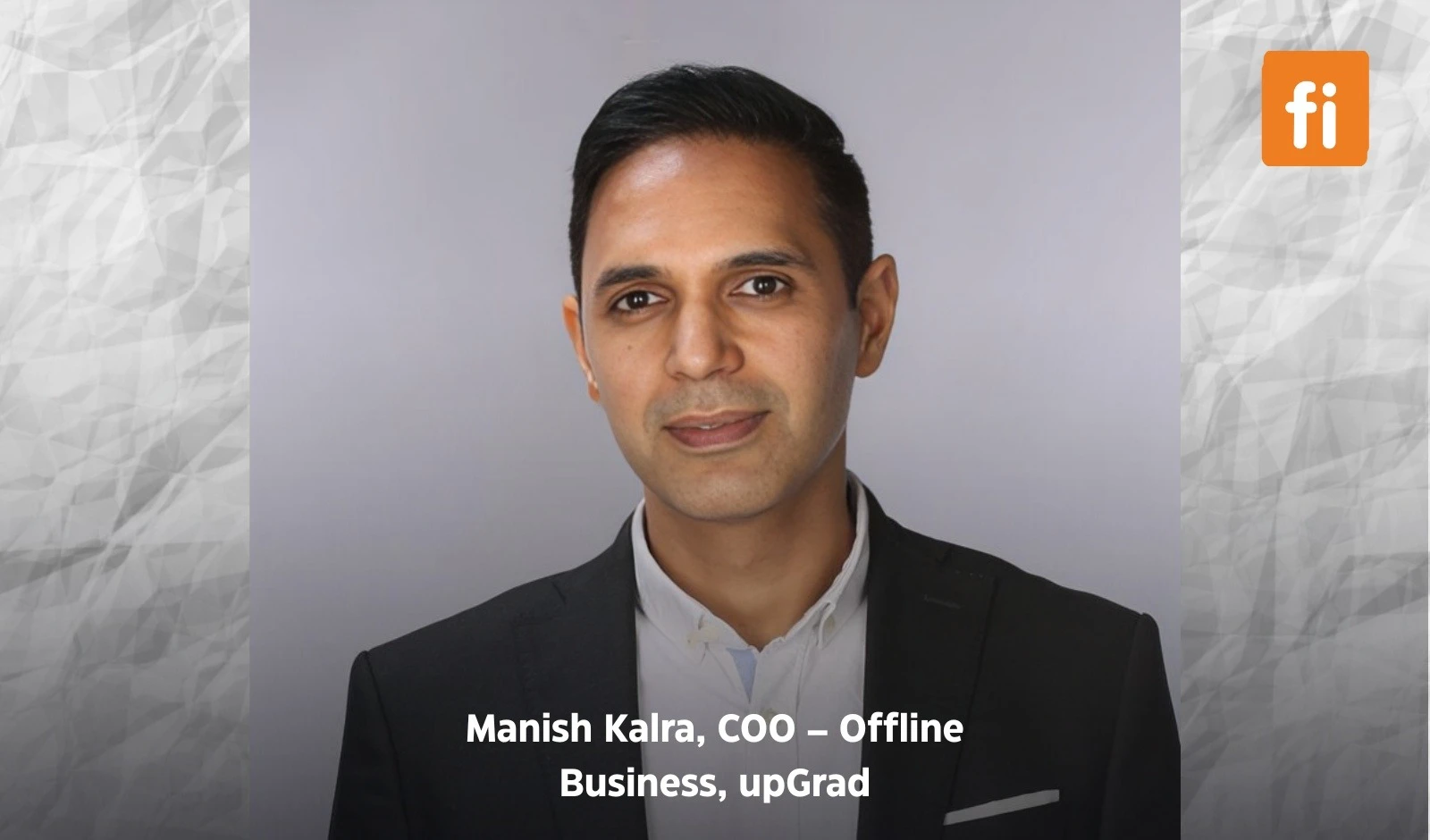
As upGrad sharpens its transition from a digital-first EdTech platform to a hybrid, outcome-led skilling ecosystem, offline expansion and partner-led models are emerging as key growth drivers. In this interaction, Manish Kalra, COO – Offline Business, upGrad, shares how the company is building learning support centres across India’s Tier 2 and Tier 3 cities, scaling through a calibrated franchise-first approach, and aligning programs closely with employability outcomes. He also outlines upGrad’s 3–5 year roadmap across India and global markets, the rationale behind its hybrid strategy, and how the brand is enabling sustainable education entrepreneurship while addressing India’s widening skills gap.
upGrad is expanding beyond online education into hybrid formats and global presence. What is your 3–5 year expansion roadmap, especially in markets like India, SEA, and the Middle East?
Our expansion over the next 3–5 years is being driven by what we’re seeing on the ground. We entered offline in a very calibrated manner to complement our online strengths, and the early results validated the need for a hybrid approach, especially for early-career learners. In India, we’re seeing strong demand from the 21–24 age group—graduates who are technically qualified but still need an additional layer of skilling, mentoring, and employability support.
To address this, we’ve expanded into learning support centres (LSCs) that combine structured programs, in-person guidance, and strong industry alignment. Having successfully piloted the model, we now operate 15 centres across cities such as Pune, Kolkata, Indore, Bhopal, Bengaluru, Hyderabad, and Mangalore, and are on track to scale this to 40 centres by March 2026. This expansion allows us to serve both metro and Tier-II markets, while also creating a sustainable and scalable franchise-led economic model.
Globally, markets like SEA and the Middle East are at different stages of maturity, so our approach there remains demand-first. We continue to evaluate hybrid formats where employability, trust, and outcomes matter most, and we’ll expand selectively—only where the model demonstrates clear learner pull and partner viability. Overall, the roadmap is to deepen trust through physical presence where it adds value, unlock new learner segments, and scale responsibly with outcomes at the centre of the model.
How significant are partner-led models in your growth strategy? Do you see franchising as a scalable channel for market penetration?
Partner-led models are central to how we scale offline with local expertise and insights. For a brand like upGrad, trust is non-negotiable, especially when you move closer to the learner through physical presence. Franchising allows us to combine a strong national brand and curriculum backbone with deep local ownership. Many of our partners come from Tier-II and Tier-III towns; they understand local aspirations, price sensitivity, and employability gaps in their cities. That local insight is critical when we are working with first-job seekers and early-career learners across Bharat.
At the same time, upGrad brings structure, outcomes-driven programs, faculty frameworks, and placement-linked skilling, ensuring consistency and quality across centres. This balance is what makes the model scalable without diluting the brand.
Importantly, this is also about enabling entrepreneurship. These partners are operators with a frugal, execution-led mindset, and our role is to back them with technology, curriculum, marketing, and credibility so they can build sustainable education businesses in their regions. Franchising for us isn’t just a distribution channel; it’s a strategic enabler that helps us expand responsibly, build local trust faster, and create a nationally aligned skilling ecosystem that serves Bharat at scale.
What’s the blueprint for launching upGrad learning hubs across India’s Tier 2/3 cities?
We have carefully thought through the design and blueprint of these centres. These are high-involvement skilling centres designed for early-career learners who need guidance, confidence, and employability outcomes—not just content. The core focus is on partner-led, short-format 4–6 month programs in high-demand domains like AI, Data Science, Full Stack Development, and Digital Marketing, where learners typically seek face-to-face counselling before committing.
Offline engagement helps address trust gaps, improves conversions, and drives better learning outcomes—something we validated early through pilots. Our typical learner is between 21 and 26 years old: final-year students uncertain about placements, or graduates a couple of years out of college who haven’t landed the role they aspired to. For this cohort, we combine local faculty, subject-matter experts, and industry practitioners with guided internships, where learners work on real, project-based assignments with corporates.
Alongside this, we invest heavily in interview readiness—mock interviews, communication structuring, and professional confidence building—areas that are often under-served in Tier 2 and 3 markets.
Geographically, the rollout is pragmatic. We’ve seen strong traction in cities like Pune and Indore, which are already among our top-performing centres, alongside Bengaluru. The next phase prioritises southern India, followed by the west, before expanding further north and east. We’re very comfortable going into cities like Belgaum or Hubli, because if employability demand exists locally, learners shouldn’t have to migrate to metros and absorb higher living costs.
From a partner perspective, the model works because it blends the efficiency of online delivery with the effectiveness of offline mentorship and placement support. Standardised program design and lean staffing allow partners to operate sustainably, while strong learner outcomes continue to fuel demand. At its core, the strategy around these learning support centres is about taking outcome-led skilling closer to where India’s talent actually lives.
With emerging demand in AI, cybersecurity and data science, how does upGrad identify future skills and build employment-focused programs?
Identifying the right skills has been upGrad’s core strength from day one. Over the last decade, we’ve built a lifelong learning ecosystem that serves learners from 18 to 60, across short-, mid-, and long-format programs, always anchored in industry demand. We continuously track signals from learner counselling, enterprise partners, recruiters, job data, and evolving role definitions to understand which skills are actually being hired for, and at what scale.
Only when there is clear, sustained demand do we build programs—whether in AI, data science, cybersecurity, or emerging tech roles.
What has also evolved is the pace and spread of disruption. AI is now impacting every sector, including non-IT roles, BFSI, and media. Employers today are no longer looking at freshers as blank slates; they expect early-career talent to come in with hands-on exposure to tools, workflows, and real business use cases. Our curated partner-led programs are therefore designed so that even first-time job seekers graduate having worked on corporate simulations, live projects, and AI-enabled problem statements that mirror real workplace environments.
As per reports, India produces nearly 1.5 million engineering graduates each year, yet only about 45% are considered industry-ready. That gap is exactly where upGrad creates value. We don’t push courses into the market; we align training tightly to employable roles, ensuring learners invest in outcomes. This discipline allows us to operate confidently across online, hybrid, and offline formats while keeping our learning support centres outcome-led.
EdTech competition is intensifying. What will be upGrad’s core differentiators to capture market share?
Competition exists everywhere, but our approach has always been to remain category-creating, not category-competing. We’ve built a differentiated model that rests on depth of learning design, university partnerships, and a strong technology backbone.
Our programs are engineered for career outcomes, not just credentials. We collaborate with globally reputed universities to ensure academic credibility and credit transferability, and our proprietary learning engine personalises engagement based on individual capability and skill application, enabling outcomes at scale.
What further strengthens this model is our hybrid delivery approach. In high-involvement programs—especially for early-career learnersour offline learning support centres add face-to-face counselling, mentorship, interview preparation, and guided project work, significantly improving learner confidence and job readiness.
As we expand globally, our strategy is to align in-market programs with regional priorities and cultural contexts. Our consumer portfolio continues to evolve with industry mentorships, campus immersions, thesis support, and simulation labs, preparing learners for real-world complexity. What sets upGrad apart is not just scale, but depthour ability to design adaptive, outcome-led learning ecosystems for an AI-shaped future.
Partnerships with universities and corporates have been central to upGrad’s growth. What new alliance models are you exploring?
Partnerships have always been about relevance and outcomes for us, and the next phase is about going deeper, not just wider. With universities, we’re supporting curriculum evolution, assessments, and applied learning to reflect how roles are changing, especially in AI-first domains. We’re also building modular and stackable alliance models that allow learners to move seamlessly from short credentials to advanced degrees, including global pathways.
On the enterprise side, partnerships are shifting from one-time interventions to long-term capability building. We’re co-creating role-specific learning, simulations, and labs that mirror real business environments. Across both universities and corporates, the common thread is application at scale—ensuring learning translates into measurable impact.
Franchise operations require strong quality control. How do you ensure consistent learning experience and student support across locations?
Quality and consistency are at the core of what we have built with our offline learning support centres. We ensure strong interventions across curriculum, assessment design, technology delivery, and learner support, ensuring every centre, whether in a metro or Tier-2 city offers the same high standard. We also follow a structured governance framework, reviewing learner engagement, project work, mentorship support, and placement guidance to ensure centres are aligned with expected outcomes. Offline learning hubs are supported with hands-on guidance, interview preparation, and project exposure, helping learners gain confidence and practical skills. This approach safeguards learner outcomes and brand trust, while enabling us and our franchise partners to focus on efficient centre operations, local engagement, and profitability.
As upGrad scales offline and hybrid formats, what talent capabilities are critical and how is People & Culture supporting this transformation?
Scaling offline and hybrid formats requires a different talent mindset than pure online delivery. At upGrad, we are building capabilities that go beyond teaching content, they are about converting enrolments into enhancing employability outcomes. This includes:
Career counsellors who can guide learners on pathways and help them navigate job readiness
Industry Mentors and faculty with industry experience who can combine practical insights with blended teaching techniques
Centre operations teams trained in learner engagement, on-ground facilitation, and lifecycle management
People & Culture plays a central role in this transformation, recruiting the right talent, upskilling them in our pedagogy, embedding outcome-focused processes, and creating performance frameworks that align to learner success.
How is upGrad balancing profitable growth with rapid expansion?
Our franchise-first expansion is capital-efficient, allowing scale without heavy upfront investment. Early pilots validated both learning impact and business viability. Each new centre is assessed for learner demand, operational readiness, and local engagement, ensuring healthy unit economics within a predictable timeline. Our recent and upcoming centres in Hyderabad, Bengaluru, Coimbatore, and Mangalore reflect sustained demand and strategic expansion.

