


 2850
/ 9
Min Read
2850
/ 9
Min Read


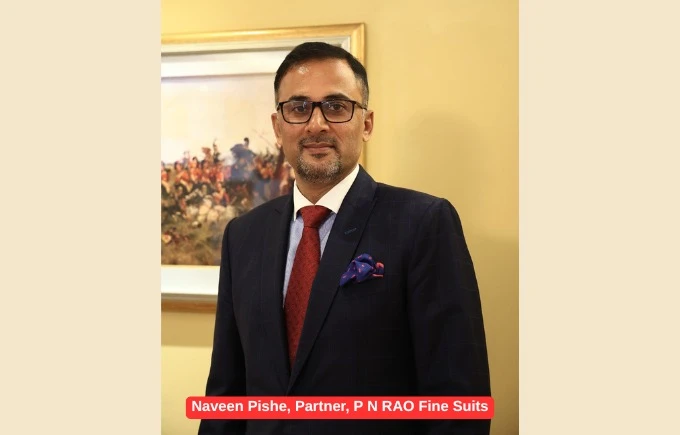
- Tell us a bit about your entrepreneurial journey. When did you formally join PN Rao Fine Suits, and how has the experience been?
I joined the family business at 21, right after graduation, determined to bring structure and focus to what was then a cluttered operation. At the time, P N RAO sold everything—men’s and women’s wear, blankets, shawls—without a clear identity. Over two years, we streamlined the business to focus exclusively on men’s formal and business wear.
In 1995, we demolished the old store and launched a modern retail space, marking the official creation of P N RAO Menswear—our first major rebranding. Around the same time, several key family members passed away, leading to internal restructuring that was fully resolved by 2003.
A key milestone came in 1998 when we partnered with Van Heusen, opening our first franchise store on Brigade Road. That 20-year association helped us professionalise retail operations and implement our first digital inventory management system, moving away from manual processes and improving efficiency.
Tailoring—always a crucial vertical for us—took centre stage after the loss of a key family member. I personally learned the craft from our senior master tailor, Pir Saab, and later brought in expert tailors to scale the division as demand for suits soared during the IT boom.
Between 2006 and 2008, with Ketan joining the business, we rebranded as P N RAO Fine Suits – Since 1923, opening our first store under the new identity in Jayanagar. That set the stage for our expansion to Chennai, Hyderabad, and now Hubballi.
What began as a fragmented family business has evolved into a focused, modern menswear brand known for its quality, craftsmanship, and timeless style—built on a foundation of structure, innovation, and heritage.
- Why did you choose franchising as the mode of expansion?
We realised we needed to grow faster. The industry and the country were evolving rapidly, and we knew that if we didn’t scale at a similar pace, we might lose our competitive edge.
Given that our business is operationally intensive, we understood that partnering with local entrepreneurs would make expansion more efficient. A local franchisee understands the market better, shares our values, and brings personal relationships that help build a loyal customer base from day one.
Franchising also made sense financially—our partners invest in and operate the stores, enabling us to expand without shouldering the entire capital and operational load ourselves.
Our first franchise store opened in Hyderabad, and the experience was excellent. The local franchisee’s community ties proved invaluable, helping us establish the store quickly and effectively. Having been franchisees ourselves for nearly two decades, we knew how to create a model that was fair and mutually rewarding.
Each franchise store carries a bit of local flavour, helping us build deeper regional connections. The success in Hyderabad reaffirmed that franchising was the right path for our growth.
- What are the brand’s expansion plans for FY26?
This year, we plan to open four stores. The first is already operational, and the second launches this Sunday in Hubballi. The third store, in Coimbatore, is under development with a target launch in January.
The fourth was initially planned in Whitefield, Bengaluru, but due to infrastructure and power issues at the property, we decided not to proceed.
For FY 2025–26, our goal is to open another four stores. While we haven’t finalised locations yet, we’ll begin scouting from January onward.
- What is your management mantra?
Our philosophy rests on two core principles: Customer First and People First. Earlier, we focused on customers, but over time we realised that to take care of customers, we must first take care of our people. Today, both are equally important.
Another key mantra is innovation—whether in design, fabric, or product experience. For example, traditional tailored jackets can weigh up to 1,000 grams, but ours range from 550 to 750 grams, designed specifically for Indian weather conditions.
While business wear slowed post-COVID, we compensated through strong growth in wedding and occasion wear. We were also among the first to introduce wool-silk, linen, and bamboo blends—long before they became mainstream.
From a management standpoint, the last few years have focused on strengthening our backend. During COVID, we decided to scale via franchising, but before expansion, we needed robust systems. We set up a new factory in Hoskote with modern infrastructure and digital inventory management.
We even brought in Paul, a third-generation international tailor, to help us implement global best practices. With that foundation in place, our new mantra is clear—growth, growth, and growth.
- Where do you see the brand five years from now?
Five years from now, we see P N RAO as a stronger aspirational brand with a growing global footprint. We already serve customers from around the world who travel to India for our bespoke suits and jackets, and we intend to build on that international appeal.
We want to be a brand that people aspire to own—not necessarily accessible to everyone, but admired by all. That aspirational value is key to our identity.
In terms of scale, we aim to reach 30–35 stores in the next five years and more than double our current business, while maintaining our premium positioning and sustainable growth model.
- What is the USP of P N RAO? What makes it stand out in a competitive market?
Our USP rests on four pillars: premium fabrics, fine tailoring, exceptional service, and constant innovation. Customers trust our craftsmanship and the elevated experience we provide.
Whether it’s a lightweight jacket engineered for Indian climates or a full-canvas suit crafted with precision, our garments combine sophistication with comfort.
We don’t compete on price. While others may cut corners, we focus on delivering true value—premium quality at a fair price. For instance, when global disruptions doubled linen costs, we worked directly with mills to maintain quality without burdening our customers.
Another differentiator is our proactive expansion into Tier-2 markets. Instead of waiting for customers to find us, we’re taking the brand closer to them.
- How has the formal menswear market evolved over the past five years, and where do you see it heading?
The last five years—especially post-COVID—have reshaped the formal menswear landscape. Business wear volumes have declined as offices embraced casual or hybrid dress codes, but the value per purchase has increased. Those who still wear formals now invest in higher-quality, bespoke garments.
Meanwhile, occasion wear—for weddings, parties, and events—has exploded, growing nearly 50–60%. During peak wedding seasons, demand often exceeds supply. Customers are spending more, waiting longer, and expecting greater craftsmanship.
Sustainability has also taken centre stage. Customers now prefer natural fibres, timeless pieces, and better “cost per wear.” We often tell customers: you might spend ₹10,000 elsewhere and wear it twice, or ₹40,000 with us and wear it 80 times—that’s real value.
Looking ahead, we expect occasion wear to keep growing, driven by celebrations and lifestyle shifts. Business wear will rebound eventually, but perhaps over a longer cycle—around five years.
- How has technology supported the brand’s growth and expansion?
We’ve experimented with several tech innovations to enhance both operations and the customer experience. One example was the “magic mirror”, which allowed customers to visualise fabrics virtually. While promising, colour mismatches made it less practical for precision tailoring, so we’ve paused active use for now.
The real transformation has come through backend systems. Our ERP platform enables seamless inventory management, order tracking, and data-driven decision-making across locations—critical for scaling efficiently through franchising.
We’re also developing new digital projects aimed at enhancing the customer journey, from consultation to delivery. While details are still under wraps, these initiatives will raise the benchmark for our industry once launched.
- What markets are you focusing on and why?
Our immediate focus is South India, where P N RAO enjoys strong brand recognition and operational expertise. We believe in consolidating our base before moving nationwide.
Upcoming target cities include Kochi, Coimbatore, Mysore, Mangalore, Vijayawada, Vizag, and Pune, along with expanding our footprint in Chennai, where we currently have two stores.
The goal is to build a solid foundation in the South, then move into new territories, especially Tier-2 and Tier-3 cities, where demand for premium menswear is rising rapidly.
- What are three key trends shaping western menswear right now?
- Tuxedo as a Core Offering:
Once seen as strictly occasion wear, the tuxedo is now a core category for us. Over the past decade, we’ve reinvented it through innovations in fit, detailing, and styling—making it a wardrobe essential for modern Indian men. - Natural Fibre Blends:
Fabric innovation is redefining menswear. Blends like wool-silk and wool-silk-bamboo are gaining popularity for their luxurious feel, breathability, and versatility. We’ve collaborated closely with mills to create these exclusive blends. - Textured Fabrics:
Textured weaves—subtle patterns woven into the fabric rather than printed—are trending strongly. They offer sophistication and depth, appealing to customers who prefer understated elegance.
A bonus trend is the resurgence of bandhgalas and achkans. Just as we modernised the tuxedo a decade ago, we’re now giving Indian formalwear a global, contemporary touch.
- How do you select franchise partners?
We follow a highly selective onboarding process with three core criteria:
- Active Involvement:
We prefer owner-operators who are hands-on with daily store operations. Passive investors aren’t a fit for our model. - Financial Strength:
The franchisee must have sufficient financial bandwidth to handle setup and sustain operations effectively. - Customer-Centric Mindset:
Alignment with our “customer first” philosophy is non-negotiable. Without that, the partnership won’t work.
Out of roughly 50 franchise requests we’ve received recently, we selected only four—which shows how carefully we choose our partners.

