


 1984
/ 10
Min Read
1984
/ 10
Min Read


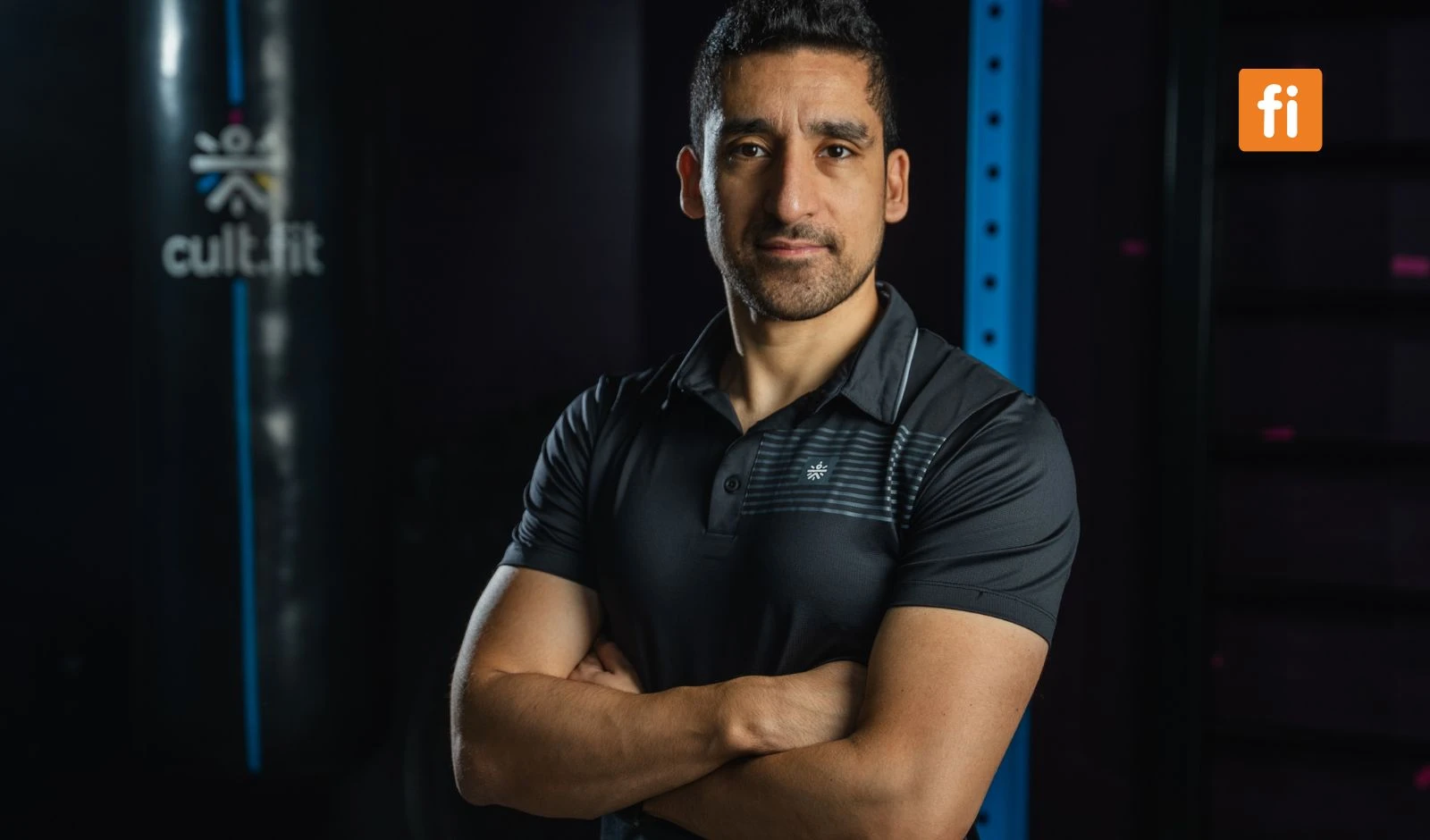
As India’s fitness market expands beyond metropolitan hubs, cult.fit is strengthening its presence in emerging cities through a franchise-led expansion strategy. In this interview, Mujtabha Magrey, COO and Head of Fitness Services at cult.fit, shares insights into the brand’s shift towards Tier 2 and Tier 3 markets, its “gym-in-a-box” franchise model, and how technology and operational standardisation are enabling consistent fitness experiences while scaling across more than 60 cities.
For years, cult.fit was largely a metro-centric brand. What strategic shift prompted the move into Tier 2 and Tier 3 markets and what early signals indicated that demand had matured beyond metros?
We have always known that in order to significantly improve fitness penetration in India, we must go beyond the metros. This is quite evident from the current market numbers, where 55 percent of the fitness market operates outside the top four cities. Not only is the market large but the dynamics of fitness consumption are also quite similar across markets in terms of price points and the products consumers prefer. Consumers everywhere are looking for good equipment, competent trainers, hygiene and a comfortable workout environment.
Additionally, several consumer retail brands have already demonstrated that markets beyond metros are equally promising. There are multiple examples, from brands like Zudio and Starbucks to quick commerce players, all of whom have expanded meaningfully into these cities.
While we are currently present in over 60 cities, we believe we now have the right combination of product and operating model to focus on depth and not just breadth across 100 cities in India. Hence our focus will be on increasing penetration.
What structural challenges did you face while expanding into smaller cities and how did the franchise model emerge as the most viable solution?
Two key challenges became evident when we started thinking about deeper expansion beyond metros. The first was operating expertise. In India, the number of people experienced in running organised fitness centres at scale is relatively limited. When you move beyond the larger cities that pool becomes even smaller.
The second challenge was talent availability, particularly trainers. Fitness training is a specialised skill and in many of these markets the supply of trained professionals is still evolving. This makes operating a high-quality fitness centre more challenging.
These realities pushed us to rethink the traditional franchise model. Instead of expecting partners to figure out operations themselves we decided to build a fully developed “gym-in-a-box” franchise solution.
Through this model we cover the entire scope of setting up a centre. This includes location identification based on demand potential, centre design, layout development, equipment sourcing, delivery and installation. We also take responsibility for hiring and training the talent required to staff these gyms. The idea is to make it possible for budding entrepreneurs or non-operators to invest in fitness without requiring prior operating experience.
Traditional gym franchises often require partners to manage operations themselves. How is cult.fit’s franchise model structurally different from conventional fitness franchising in India?
In most traditional gym franchise models the brand largely provides the name and some basic guidance while the franchise partner is responsible for everything else. This includes designing the facility, hiring trainers, running programming and managing daily operations.
Our model is designed quite differently. As mentioned earlier, with our “gym-in-a-box” approach almost the entire operating backbone is created centrally. Site planning, layout design, equipment configuration and programming are standardised and developed by our internal teams. In many cases we also offer FOCO (Franchise Owned Company Operated) operations as the preferred choice, where centre managers and trainers are hired, trained and managed by cult.fit. This ensures that the experience for members remains consistent irrespective of the operational capability of the partner.
The intent is to enable young as well as serial entrepreneurs, even those who may not have operated gyms before, to participate in the fitness category while we ensure that the consumer experience remains consistent.
In your model what responsibilities lie with the franchise partner and what remains centrally controlled by cult.fit?
The idea of our model is to enable young as well as serial entrepreneurs who may or may not have experience operating gyms to view fitness as an investment opportunity. Therefore the key expectations from our franchise partners are a passion for health and fitness, maintaining a high bar for quality and customer experience and actively evangelising the product in their markets.
Most of our partners have deep roots in the territories where they operate. This makes them extremely valuable in helping us understand the right configuration of product and pricing for those markets. We also work closely with them to ensure smart localisation of our offerings to better fit consumer preferences in each city.
On our side we manage the entire operating backbone. This includes centre design, equipment sourcing, programming, trainer hiring and training and the technology stack that powers the centres.
Through our in-house developed tools franchise partners can monitor centre operations daily including service quality, financial performance and settlements which ensures reliability and transparency in franchise operations.
cult.fit is known for delivering a science-backed premium fitness experience. How do you ensure standardisation of trainer quality, programming and service across franchise-led centres?
We have designed our systems and processes to ensure that we deliver the same standards of experience irrespective of whether the centre is company owned or franchise operated. Our NPS (Net Promoter Score) which measures relationship quality and Product Rating which is a transactional metric remain consistent across both types of centres. A large part of this comes from standardised design.
All our centres from site planning to layout and equipment are designed completely in-house ensuring they look and feel the same. We also support project execution including equipment sourcing so that all centres are equally equipped. We also offer FOCO services as a preferred option where centre managers and trainers are hired, trained and managed by us.
These controls enable us to deliver the same standard of experience across both COCO and franchise stores. In addition the cult.fit app, through which memberships are sold and managed, continuously captures customer feedback allowing us to closely monitor the experience across all our centres.
What role does technology play in maintaining consistency from member onboarding and retention to day-to-day centre operations?
Technology is a foundational enabler for us in delivering a consistently high-quality and predictable experience across our network of fitness centres.
The cult.fit app acts as the single point of contact for purchasing and managing memberships. It also generates high-quality customer feedback which helps us continuously improve the experience and drive long-term retention.
We have created structured journeys on the app and at centres to welcome new customers through onboarding programmes with trainers. This extends to all our group formats as well. We track the new member experience as a separate metric so that we can focus deeply on how customers feel during the early stages of their journey.
The app also supports members through motivational nudges, a Smart Workout Planner powered by AI and customer support through chat if there are interruptions in their workout journey. On the operations side we leverage AI-driven and IoT-based systems to ensure safety, standardisation and ambience management at scale.
Operational metrics across centres are monitored centrally through what we call an AI Control Tower. Issues are tracked and resolved within defined SLAs using our in-house issue management tool Odin.
How do consumer expectations in Tier 2 and Tier 3 cities differ from metros and has that influenced pricing, formats or programming?
From our early interactions and experiences with customers in Tier 1 and Tier 2 cities what we have observed is that the core product matters the most.
Consumers tend to be value conscious rather than purely price conscious. If the experience is of high quality they are willing to travel longer distances to access a good fitness centre especially since traffic and commute times are generally lower than in metros.
At the same time the fundamental expectations remain very similar. Consumers look for space, hygiene, competent trainers, good equipment and a comfortable workout environment.
Where we do see some variation is in local flavour. For example the music played in the gym or the language spoken on the floor can influence how comfortable customers feel.
From a unit economics perspective how does the franchise-led model improve speed to market and capital efficiency compared to company-owned expansion?
Partner payback is one of the key metrics we track very closely. Our full-stack solution which covers everything from demand generation to centre setup and operating support helps ensure that we deliver the financial outcomes we commit to our partners.
This creates a virtuous cycle. Today one in four of our partners operates multiple centres with us and we also see strong word of mouth among entrepreneurs interested in entering the fitness category. Currently two out of three new centres we add are funded through franchise partner capital. This asset-light expansion model will continue to be an important part of our growth strategy.
As you scale how do you safeguard brand equity and prevent dilution of experience across geographies?
There are three fundamental factors we focus on to ensure that the brand experience remains consistent as we scale. The first is selecting the right partners. We have a robust process to ensure that we work with partners who maintain a high bar for customer experience and are genuinely passionate about fitness.
The second is technology-led oversight. Operational metrics across centres are monitored in real time through our AI Control Tower and we use AI-driven and IoT-based systems to ensure safety, standardisation and ambience management at scale.
The third is customer feedback loops via the cult.fit app. Since all customers whether they visit a COCO or franchise gym are cultpass members and access their membership through our app we proactively track feedback to identify and correct any experience gaps across our network.
Looking ahead how central will franchising be to cult.fit’s growth strategy over the next five years and your vision for the brand for 2030?
Franchising will remain central to our growth strategy going forward. Over the last few years around two thirds of the new centres we have added have come through franchising and we expect this share to increase further.
As we work towards deepening our presence across 100 cities in India franchise partners will play a critical role. Their local knowledge of the markets they operate in and their ability to evangelise the product locally make them extremely important to our expansion strategy.
With the operating controls, brand governance and quality standards we have built we are confident that this model will allow us to expand responsibly.

