 73
/ 9
Min Read



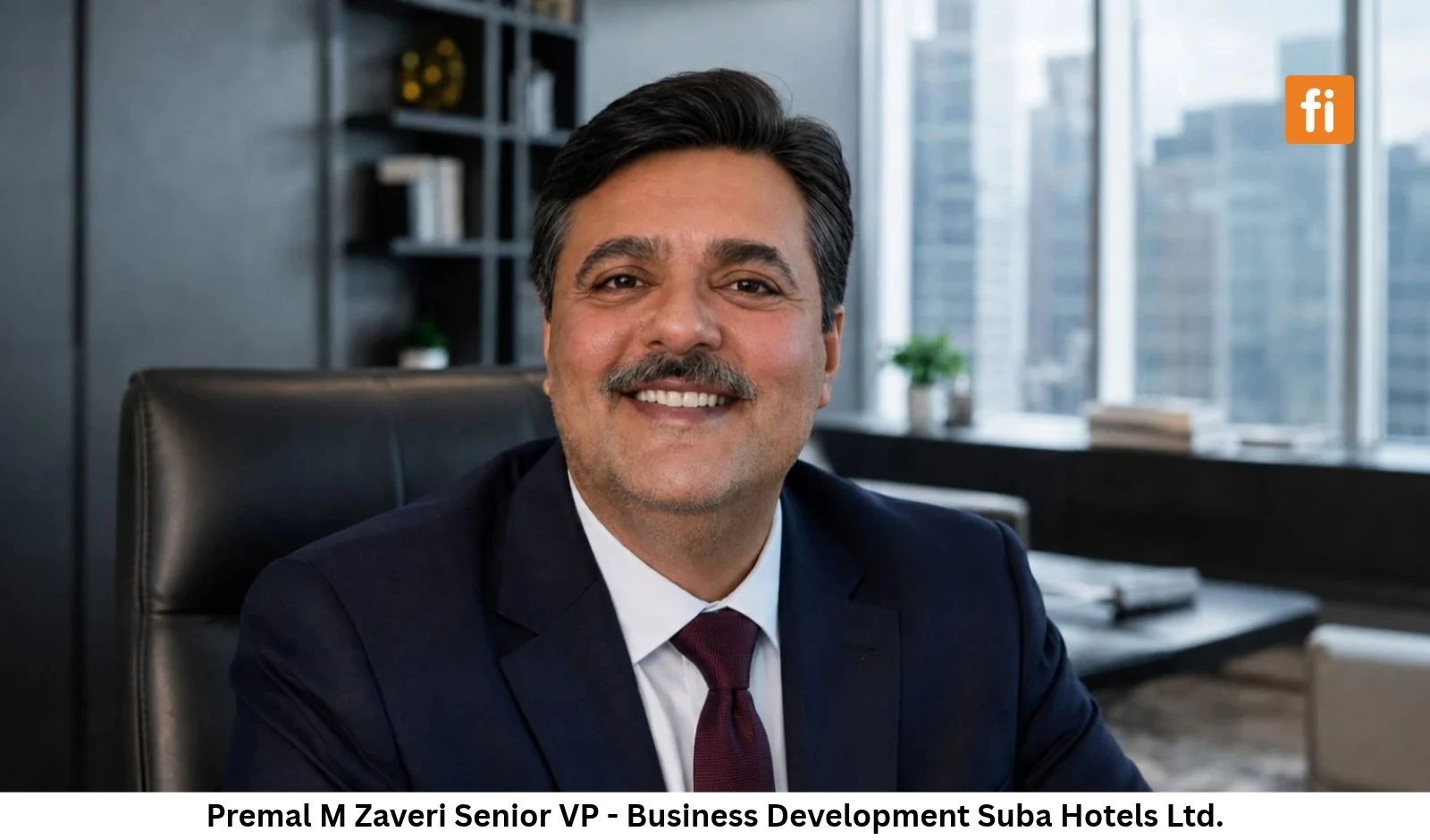
Suba Hotels Ltd’s portfolio of domestic and international brands caters to varied traveller segments, while an asset-light model enables the company to expand through partnerships and franchise-led growth. In this exclusive interaction Premal M. Zaveri, Senior Vice President – Business Development at Suba Hotels Ltd, elaborates on how the company is shaping its next phase of growth through brand diversification and strategic expansion.
What inspired Suba Hotels, and how has its business model evolved?
Suba Hotels was founded by Abubaker Mehta, the father of seasoned hotelier Mansur Mehta. The company’s journey began in 1994 with modest origins as a 10-room guest house in Mumbai, established specifically to serve long-term medical tourists visiting from the Middle East and Africa. Recognizing the growing demand for quality hospitality, the founders acquired the entire building and redeveloped it into Suba’s flagship property, Suba Palace, in Mumbai’s Colaba area.
Over time, and through the visionary leadership of Mansur Mehta and his son, Mubeen Mehta, Suba Hotels transitioned from an asset-heavy single-hotel operator into India’s 9th largest hotel chain and a highly scalable, asset-light hospitality platform. The business model evolved to combine proprietary domestic brands with licensed global brands (through its Master Franchise partnership with Choice Hotels) across a flexible commercial structure – spanning owned, leased, revenue-share, managed, and franchised properties. Today, Suba operates 104 properties comprising almost 4,900 operational keys across 74+ locations, serving upscale & midscale market segments.
What differentiates Suba Hotels in India’s competitive hospitality market?
Suba Hotels differentiates itself through a dual-brand architecture and flexible, asset-light operating model. Its portfolio combines proprietary brands such as Suba, Click, GenX and RnB with international Choice Hotels brands, including Clarion, Quality Inn and Comfort Inn. Around 91% of its portfolio operates through non-owned arrangements, supporting capital-efficient expansion. The company offers property owners flexible franchise, lease, revenue-share and management models. With nearly 65% of its portfolio in Tier-II and Tier-III cities and pilgrimage destinations, Suba targets underserved regional markets. It is also strengthening its technology capabilities through AI-driven pricing, direct corporate bookings and loyalty platforms.
How are Suba’s domestic and Choice Hotels brands positioned across different customer segments?
Suba Hotels’ multi-brand portfolio caters to different customer segments and price points. Clarion targets premium business and leisure travellers, offering upscale amenities and services. Suba Hotels serves corporate and leisure guests seeking full-service comfort, while Click Hotels & Resorts focuses on tech-savvy professionals and modern travellers with contemporary facilities and work-friendly spaces. Quality Inn offers reliable midscale accommodation for business travellers and families, while Comfort Inn caters to business guests, tourist groups and value-conscious families. GenX Hotels operates in the budget segment, targeting corporate executives and transit travellers with essential amenities at competitive prices. RnB Hotels focuses on affordable stays for leisure travellers and backpackers.
Brand selection depends on location, property profile and customer demand. Suba typically proposes international Choice Hotels brands where global brand recognition is valuable, while its domestic brands offer a cost-effective option for emerging markets and Tier-III cities.
How many operational properties and room keys does each brand have across ownership models?
Suba’s operational estate stands at 104 properties comprising 4,895 operational keys across 74+ locations.
Brand Breakdown of operational hotels:
- Click Hotels: 37 properties | 1,598 keys (~33% of total keys)
- Comfort Inn: 33 properties | 1,304 keys (~27% of total keys)
- Quality Inn: 15 properties | 841 keys (~17% of total keys)
- Clarion: 12 properties | 840 keys (~17% of total keys)
- Suba Hotels: 5 properties | 265 keys (~5% of total keys)
- GenX Hotels: 1 property | 23 keys (~0.5% of total keys)
- RnB Hotels: 1 property | 24 keys (~0.5% of total keys) Operating Model Mix:
- Franchise: 53 properties | 2,624 keys (~54% key share)
- Lease / Revenue Share: 25 properties | 1,080 keys (~22% key share)
- Managed: 17 properties | 753 keys (~15% key share)
- Owned: 9 properties | 438 keys (~9% key share)
How is Suba’s franchise model structured, and what proportion of its portfolio operates under this model?
Franchising opportunities are available across both licensed Choice Hotels brands (Clarion, Quality Inn, Comfort Inn) and Suba’s proprietary domestic brands (Click Hotels, GenX, RnB). Franchised hotels currently account for around 54% of Suba’s operational keys.
Under the franchise model, the operational control remains with the owner/investor, retains real estate ownership and directly manages day-to-day property operations. Simultaneously, they get Turnkey Platform Access. The property plugs into Suba’s and Choice’s central reservation systems (CRS), global distribution channels (OTAs and GDS) and receives the benefit of AI dynamic pricing engines, and corporate sales networks. Franchised properties also gain immediate access to Suba Rewards, enabling owners to drive direct repeat bookings, lower third-party OTA commissions, and increase Average Room Rates. The way it benefits the operator is that it requires no Capital Expenditure deployment, providing immediate fee income, while delivering enhanced operational yields and asset valuation for property owners.
How does franchising support Suba Hotels’ expansion and partner strategy?
Franchising is central to Suba’s capital-efficient expansion strategy, enabling rapid growth without significant real estate investment or debt. The model limits property-level risks and fixed lease liabilities while generating recurring revenue through 10–15-year franchise agreements. The company seeks independent hotel owners, real estate developers and asset owners with standalone, underperforming or stalled properties. Through its brand portfolio, technology platforms and distribution network, Suba aims to improve property performance, maximise asset yields and expand its presence across India.
What sets Suba apart from competitors in India’s mid-market hospitality segment?
Suba competes effectively by combining the global brand recognition and global distribution of Choice Hotels with the low overheads, operational speed, and local market expertise of Suba Hotels.
Competitive Advantages for Hotel Owners:
Commercial Flexibility: Owners can choose from Franchise, Management, Lease, or Revenue Share agreements depending on their risk appetite.
Turnaround Expertise: Suba specializes in brownfield conversions (~60% of the current pipeline) and offers last-mile funding or renovation assistance to revive distressed assets in certain cases.
Lower Cost of Distribution: Strong corporate relationships (15–20% direct corporate bookings at 0% commission) and direct digital booking initiatives reduce reliance on costly OTAs.
Competitive Advantages for Guests:
High-Value Quality Stays: Consistent quality, modern technology, and tailored full-service amenities.
Global Loyalty Benefits: Guests earn and redeem rewards seamlessly across Suba Rewards networks.
What are Suba Hotels’ expansion targets, priority markets and growth plans?
Suba has a committed pipeline of 32 to 41 hotels, which will expand operational keys by over 50% and a longterm vision of becoming India’s largest asset-light hotel chain.
Our priority markets & regions are Tier-II & Tier-III Corridors. Incidentally, that is also where around 65% of the portfolio currently resides. We continue to focus on key Tier 1 markets, pilgrimage circuits (Ayodhya, Varanasi, Katra, Ujjain), industrial corridors (Pithampur, Chakan, Vadodara, etc.), UDAN-connected regional airport towns, and leisure destinations.
How are evolving traveller preferences shaping Suba’s hotel formats and services?
Suba adapts its business model to meet shifting traveller behaviours across four core pillars:
Format Customization: Aligning brand concepts directly with target needs – Click Hotels caters to digital-first corporate travellers ("Bed, Breakfast, Bathroom, Broadband"); Clarion focuses on upscale leisure and wellness; GenX and RnB provide essential budget comfort.
Tech-Enabled Guest Journeys: We constantly look at upgrading our hotels through the implementation of mobile app platforms supporting digital check-in, keyless room access, high-speed Wi-Fi, and in-room workspaces.
AI Dynamic Pricing: We are in the process of utilizing AI-driven revenue management engines to dynamically calibrate room rates based on hyper-local demand forecasting, while offering off-season domestic leisure packages.
Direct Channel Engagement & Personalization: We try to influence a direct channel engagement by driving direct digital bookings (targeting a 70% direct booking share) through Suba Rewards, offering personalized perks and exclusive offers that drive a high repeat customer rate.
How does Suba evaluate locations, market demand and brand suitability?
Suba’s business development team conducts thorough micro-market assessments evaluating location visibility, proximity to transport hubs (airports, highways, expressways), SEZs, commercial districts, pilgrimage monuments and other demand generating nodes, alongside competitive supply density, physical asset quality, and operating model fit.
Most importantly, Suba Hotels' strength lies in the partners it works with. Apart from the demand and supply analysis, owner and partner relationships form the keystone for our business growth. We continuously strive to achieve the highest possible value creation for them.
How does Suba maintain consistency across its franchise properties?
To maintain brand integrity and operational consistency across a rapidly scaling franchise network, Suba implements strict governance frameworks:
We implement Standardized Operating Manuals through uniform SOPs covering front-office operations, housekeeping, food and safety standards, and service protocols across all franchised properties.
We also conduct centralized & regional training by running ongoing staff onboarding and service skill development programs led by regional management teams and central hospitality trainers.
There are regular Choice Hotels international audits creating brand quality assurance by carrying out inspections for Clarion, Quality, and Comfort properties according to Choice Hotels’ global benchmarks.
Of course, none of this will make any sense if it doesn't translate to guest satisfaction. Hence, we carry out real-time customer sentiment tracking by monitoring online guest feedback across OTA platforms to address operational gaps immediately.
How does Suba select franchise partners and support their operations?
Suba Hotels selects franchise partners based on financial stability, operational capabilities and commitment to brand standards. Property assessments consider structural quality, location, room capacity and financial viability, covering both new developments and existing hotels. The company provides end-to-end support, including design guidance, renovation assistance and integration with its technology platforms, central reservation system and AI-driven pricing tools. Franchisees also gain access to marketing, OTA channels, corporate contracts and loyalty networks. Structured staff training and standardised operating procedures help maintain service quality, operational consistency and guest experience across the network.
What growth opportunities lie ahead for India’s mid-market hospitality sector?
India’s branded midscale hotel segment presents significant growth opportunities over the next five years, particularly beyond major metropolitan markets. Suba Hotels plans to focus on Tier-II and Tier-III cities, regional business centres, pilgrimage destinations and select leisure markets. Key growth drivers include rising manufacturing and infrastructure investment, domestic leisure and religious travel, and increasing demand for branded accommodation. The company will prioritise asset-light expansion through franchise conversions and management contracts. Its market selection will depend on identifiable room-night demand, limited branded supply, viable room rates and financially capable property partners to support sustainable expansion.