19
/ 4
Min Read



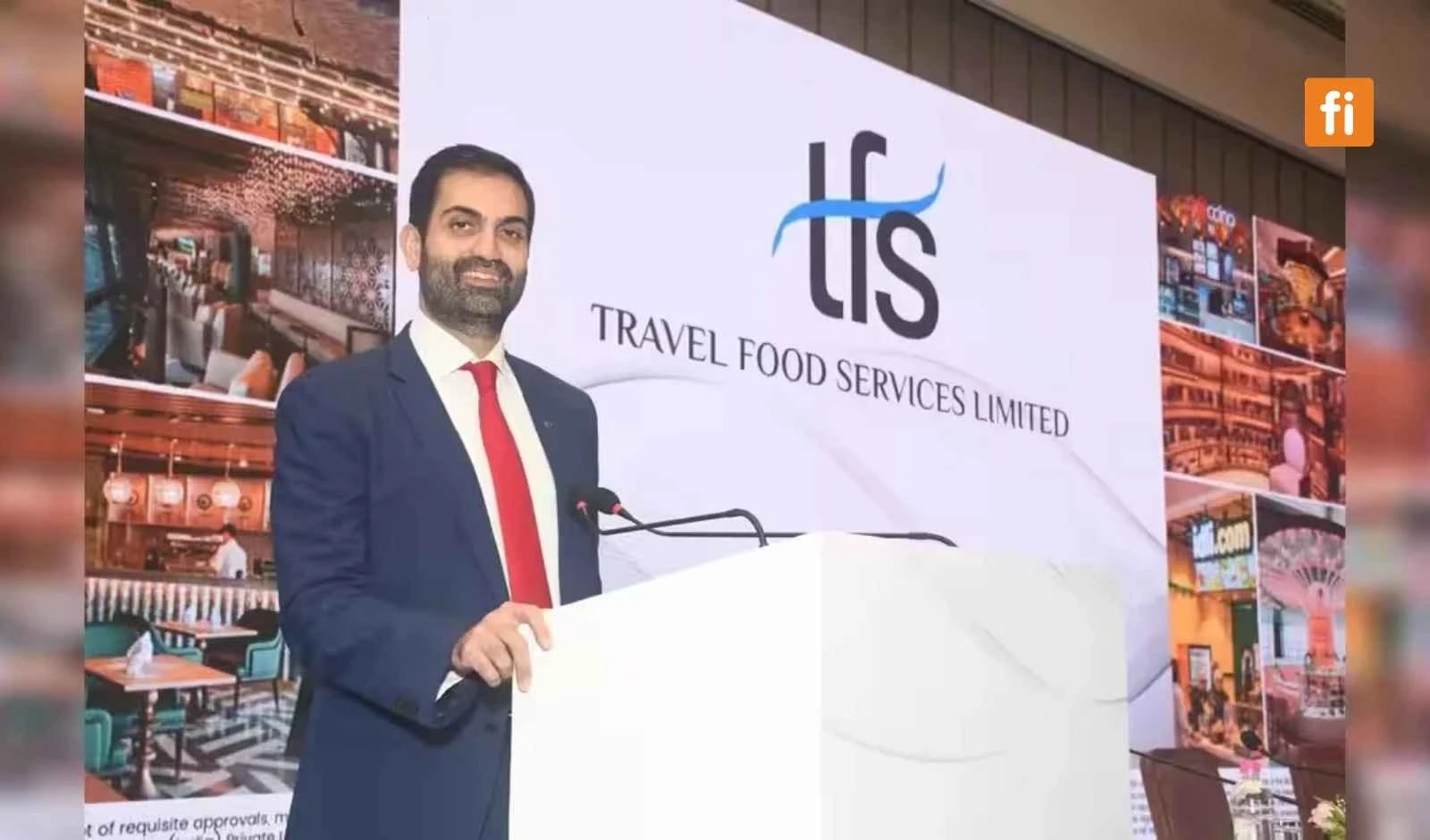
Travel Food Services Limited (TFS) posted a 50.5% year-on-year rise in consolidated profit after tax (PAT) to Rs 1,473 million in Q2 FY27, supported by new outlet additions, airport contract expansion and improved operational performance. The travel QSR and airport lounge operator reported a 19.5% increase in consolidated sales to Rs 4,253 million for the quarter ended September 30, 2026, despite declining passenger traffic.
For the first half of FY27, consolidated sales stood at Rs 8,775 million, up 20.1% from the corresponding period last year, as shared in media reports. Consolidated PAT grew 43.2% to Rs 2,761 million. System-wide sales increased 18.8% to Rs 8,654 million in Q2 FY27 and 18.4% to Rs 17,090 million in H1 FY27.
Business growth was driven by new outlet mobilisation, additional airport contracts and improved performance at existing locations. Net contract gains accounted for 11.1% of system-wide sales growth in Q2 FY27 and 13.5% in H1 FY27. TFS mobilised more than 70 units over the past 12 months, primarily across New Delhi, Cochin, Navi Mumbai, Noida and Bhogapuram airports.
However, existing outlets faced pressure from reduced passenger movement. System-wide like-for-like (LFL) sales grew 3.5% in Q2 FY27 and 2.2% in H1 FY27, while passenger traffic across TFS-managed airports declined 4.8% and 2.2%, respectively. The company attributed the slowdown to geopolitical developments in West Asia, higher airfares and changes in airline schedules and capacity.
On a consolidated basis, net contract gains contributed 11.0% to sales growth in Q2 FY27 and 15.7% in H1 FY27. Existing outlet LFL sales increased 6.6% and 5.3%, respectively, supported by menu optimisation and premiumisation initiatives.
TFS also reported an improvement in its consolidated PAT margin, which rose to 34.6% in Q2 FY27 from 27.5% in the year-ago quarter. For H1 FY27, the margin stood at 31.5%, compared with 26.4% in H1 FY26. The company clarified that profitability included a net-of-tax write-back of provisions of approximately Rs 468 million in Q2 FY27 and Rs 566 million in H1 FY27. The first-half figure also includes a partial GST provision write-back of approximately Rs 98 million recognised in Q1 FY27.
As of September 30, 2026, TFS operated across 22 airports, compared with 18 a year earlier. Its Travel QSR network expanded to 535 outlets from 464, while its lounge portfolio stood at 35 compared with 37 in the previous year. The decline in lounge numbers was primarily due to terminal transitions and airport infrastructure renovations.
The company also expanded its system-wide brand portfolio to 156, adding 21 in-house, regional and international brands over the past 12 months. New outlet mobilisation included operations at Delhi Airport's Terminals 1 and 2, Cochin Airport's Domestic Terminal 1 and the recently opened Noida Airport. TFS also commenced operations at Alluri Sitarama Raju International Airport in Bhogapuram.
Beyond its restaurant and lounge operations, TFS is strengthening its passenger service business through Elite Assist Technology and Services Private Ltd. (EATS). The focus is on expanding lounge access distribution beyond traditional banking and card-network channels.
Meanwhile, its Kyra Lounge at Hong Kong International Airport was named Asia's Leading Airport Lounge at the World Travel Awards 2026 for the second consecutive year.
Varun Kapur, Managing Director and CEO, TFS, said, “It was one of the most challenging quarters for passenger traffic in recent periods, amid an unusually volatile operating environment. Despite these headwinds, TFS' system-wide sales grew 18.8% year-on-year and the business continued to deliver healthy underlying profitability, demonstrating the resilience of our portfolio and expanding network. This performance reinforces our confidence in the business and its ability to grow through periods of near-term volatility. Our strategy remains focused on strengthening the core while building the next phase of growth for TFS. Over the last twelve months, we have mobilised more than 70 units and expanded our presence to 22 airports. Many of these are still ramping up, and with a significant pipeline of outlets yet to be mobilised across new and existing airports, we have good visibility of continued growth as these operations mature. Alongside this, we continue to develop new growth avenues in passenger services, including EATS. Looking ahead, our priorities remain clear: deepen our presence at existing airports, scale operations across new and greenfield airports, and selectively expand beyond our core, particularly in international lounges and expressways. With a strong, debt-free balance sheet and an expanding network, we believe TFS is well positioned to capture the long-term growth opportunities across the aviation and broader travel ecosystem.”
TFS reported a debt-free balance sheet and cash reserves of Rs 10,309 million as of September 30, 2026. Looking ahead, the company expects operating conditions to improve gradually in the second half of FY27, driven by seasonal travel demand and a possible easing of geopolitical pressures. Its growth strategy centres on expanding its airport network, scaling up recently opened outlets and pursuing opportunities in international airport lounges and expressway-based foodservice operations.