 32
/ 5
Min Read



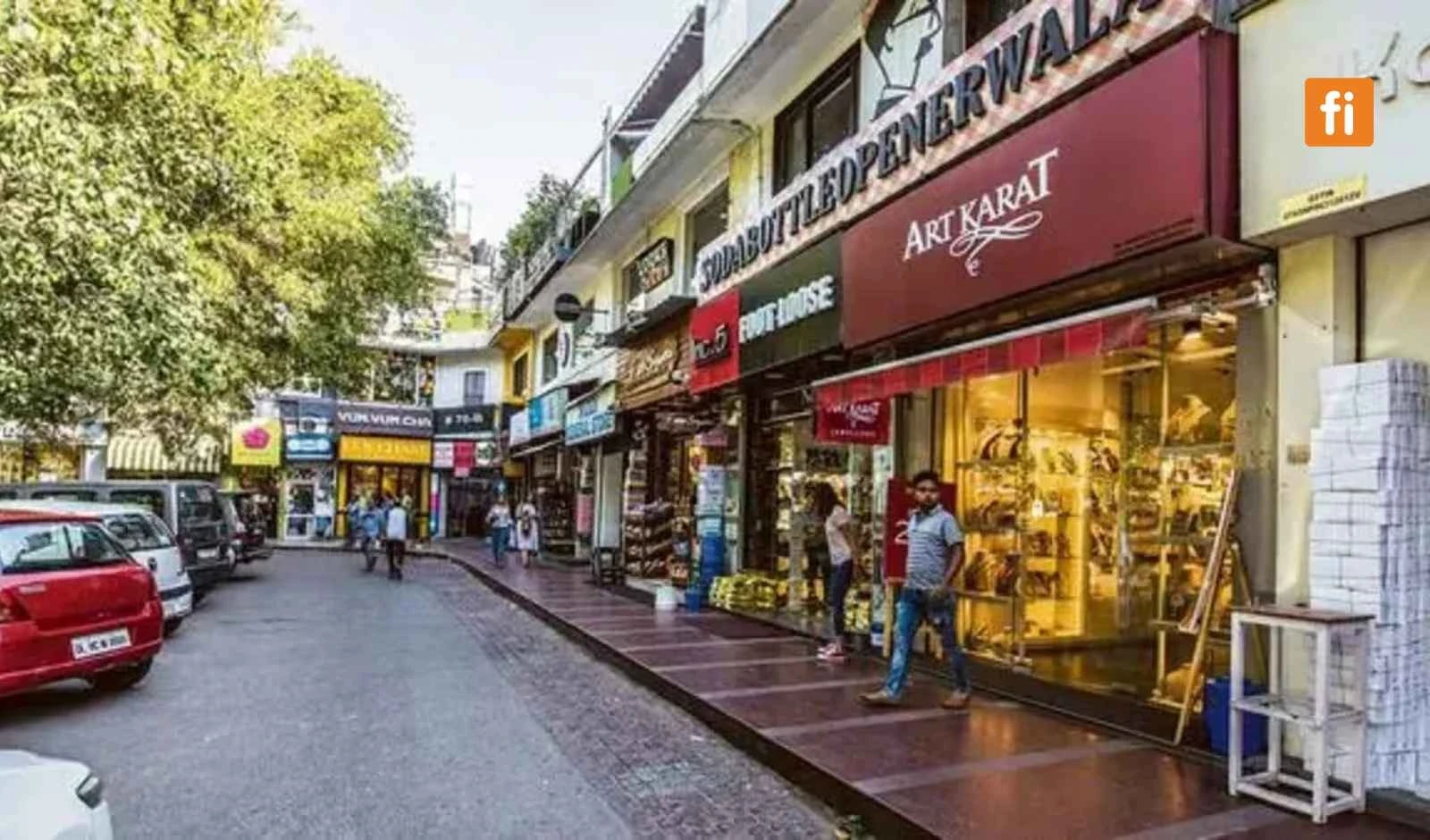
Delhi's Khan Market has retained its 24th position among the world's most expensive retail streets, according to Cushman & Wakefield's Main Streets Across the World 2026 report. It remains the highest ranked-Indian street and the only one in the global ranking. Headline rents at Khan Market increased 14% year-on-year to approximately US$ 238 per sq ft per year (INR 1,875 per sq ft per month), underscoring the continued strength of demand from retailers seeking presence in one of India's most prominent shopping locations.
The annual report, now in its 36th edition, examines headline rents across 147 leading retail locations globally.
The world’s most expensive retail streets
New York City's Upper Fifth Avenue has reclaimed its position as the world's most expensive retail street. Rents along the corridor increased 35% over the past year to $2,700 per square foot (psf) annually, moving the destination from third place in 2025 to first for the first time since 2023.
London's New Bond Street ranked second at $2,230 psf annually, followed by Milan's Via Montenapoleone at $2,160 psf. Both streets recorded flat rental growth over the past year after significant increases in prior years.
Across all locations, rents rose an average of 3.0% year-on-year in local currency terms, moderating from 4.3% in 2025. Nearly half of the streets surveyed (49%) recorded rental increases, compared with 19% that saw declines. The remaining 32% held steady.
"While rental growth has moderated globally, competition for space in the world's most established retail destinations remains intense," said Dr. Dominic Brown, Head of International Research, Global Think Tank at Cushman & Wakefield. "The return of Fifth Avenue to the top of the rankings demonstrates how quickly rents can accelerate when strong retailer demand meets limited availability. We are seeing similar dynamics across major global markets, where retailers continue to prioritize locations that offer international visibility, strong consumer spending and long-term brand value."
Retailers Continue to Compete for Limited Prime Space Globally
Despite a challenging global economic environment, leasing activity across the world's leading retail destinations remains strong. Cushman & Wakefield recorded more than 815,000 square feet of leasing activity across the top 30 retail streets, representing 153 new leases and store openings. More than 80% of that activity involved retailers new to their respective streets, while international brands accounted for approximately 90% of space leased.
In terms of category, Fashion retailers remained the largest source of demand, accounting for 50% of leasing transactions and 57% of space taken. However, health and beauty, personal goods, food and beverage, and experiential retail concepts are contributing to a broader mix of tenants in traditionally fashion-dominated locations.
India leads Asia Pacific on rental growth
Prime rents across Asia Pacific grew 3.1% year-on-year in the 12 months to Q3 2026, up from 2.3% a year earlier, making APAC the only region globally to witness an acceleration in rental growth. While retail destinations in Australia recorded positive rental growth and several Southeast Asian markets saw steady gains, rental declines remained largely confined to Greater China amid weaker domestic consumption. Against this backdrop, India emerged as the region's strongest-performing market, with several high streets recording double-digit rental growth.
In the APAC ranking, Khan Market was placed 25th, followed by Galleria Market, Gurgaon (28th), Connaught Place, New Delhi (29th) and Linking Road, Mumbai (33rd). Notably, Mumbai's Linking Road recorded the highest rental growth across Asia Pacific at 28% year-on-year, highlighting the strength of retailer demand for prime high-street locations in India.
Other Indian retail destinations featured in the rankings included Fort/Fountain and Kemps Corner in Mumbai, Vittal Mallya Road, Brigade Road and Indiranagar in Bengaluru, JM Road, MG Road and FC Road in Pune, Park Street and Gariahat in Kolkata, Jubilee Hills, Banjara Hills and Himayathnagar in Hyderabad, and Anna Nagar and Pondy Bazaar in Chennai.
Looking ahead, Cushman & Wakefield expects competition for limited prime retail space to remain a defining feature of the market. Retailers are also increasingly incorporating artificial intelligence into customer engagement, inventory management and store operations, further integrating digital capabilities with the physical shopping experience.
"The strongest retail destinations are continuing to evolve as brands rethink how they engage with consumers," Brown added. "While technology is changing how people discover and purchase products, physical stores remain essential to brand identity and customer experience. Locations that can support those objectives will continue to attract demand, even as economic conditions and consumer spending patterns shift."
Milin Rohinesh, Head of Retail-India, Cushman & Wakefield, said, “India's retail market continues to demonstrate strong fundamentals, supported by resilient consumption, sustained retailer expansion and increasing premiumisation. Khan Market's position among the world's leading retail destinations, alongside the significant representation of Indian high streets in the APAC rankings, underscores the growing global prominence of India's retail market and the depth of demand across key cities. Established high streets continue to attract healthy retailer interest, with limited availability of quality space supporting rental appreciation in prime locations. For retailers, this reinforces the importance of securing the right locations, while for landlords, it highlights the long-term value of well-positioned, high-quality retail assets.”