 25
/ 9
Min Read



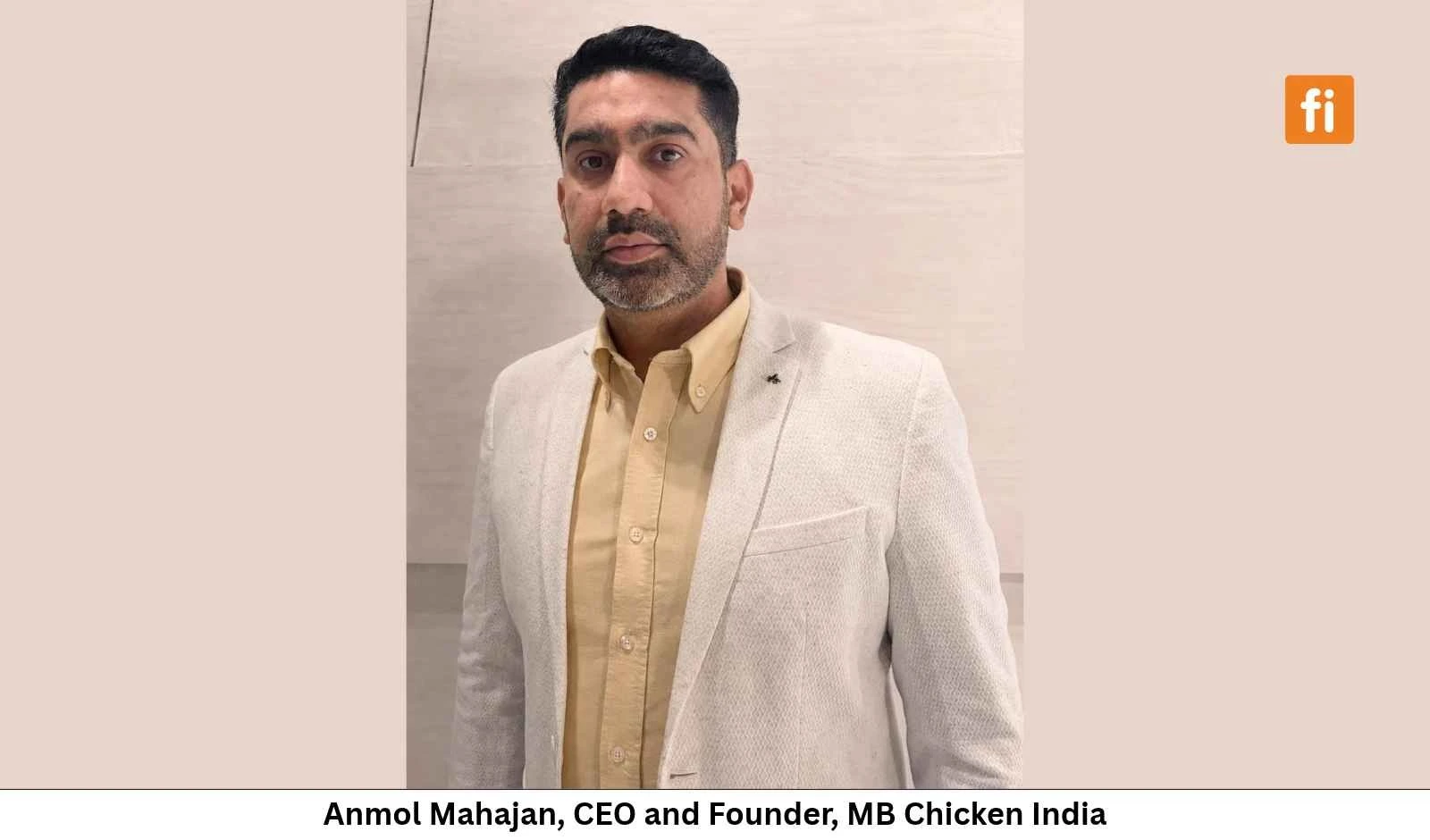
Bringing its Canadian QSR heritage to India, MB Chicken by Mary Brown’s is building its presence with fresh, never-frozen chicken and made-to-order offerings. In this interaction, Anmol Mahajan, CEO and Founder, MB Chicken India, discusses the brand’s differentiation, franchise-led expansion, HPCL partnership and ambition to reach 220 outlets by 2030.
What inspired Mary Brown’s Chicken’s entry into India’s QSR market?
I have been building restaurant brands in North America for nearly seven years, with Punjabi Chaap Corner and Vegholic now operating over 25 outlets across Canada and the US. During my visits to India, I repeatedly noticed a gap in the market. While India has a strong appetite for chicken and the organised QSR sector continues to grow, the fried chicken category has largely been dominated by one global brand for nearly two decades, with no other player achieving comparable scale.
Mary Brown’s has been serving fresh fried chicken in Canada since 1969 and enjoys a strong following there. I saw an opportunity to introduce Indian consumers to a brand with a rich heritage and a differentiated product offering. MB Chicken brings Canadian recipes and quality standards to India through a Master Franchise model, while adapting its offerings to local consumer preferences.
How will MB Chicken differentiate itself in India’s competitive QSR market?
While the overall QSR market is crowded, the fried chicken segment has relatively few credible challengers. Unlike burgers, pizza and coffee, where several established brands compete for consumers, fried chicken remains an underpenetrated category. This is the opportunity we identified for MB Chicken.
Consumers are also becoming more conscious of food quality, ingredients and value. They want to know whether the chicken is fresh, what oil is used and whether the portions justify the price. MB Chicken addresses these expectations through fresh, never-frozen chicken, hand-breaded in-store, no palm oil and generous portions at accessible prices.
Our positioning is simple: better quality does not have to come at a higher price. We are focusing on high-visibility, high-footfall locations, including malls, highways and fuel stations, with plans to explore airports as well. Our highway outlet in Doraha on the GT Road operates alongside leading global QSR brands and is currently our highest-grossing store, generating close to ₹20 lakh in monthly sales.
What is MB Chicken’s USP, and how is it adapting to Indian tastes?
Our core USP is built around fresh, never-frozen chicken, hand-breaded in our kitchens using Mary Brown’s original recipe and fried without palm oil. These standards are non-negotiable across all outlets. Mary Brown’s international training team also visits India regularly to train employees and audit operations to ensure consistency and quality.
While maintaining the brand’s core proposition, we are adapting the menu to Indian preferences without diluting its identity. Around 90% of our menu comprises Mary Brown’s signature offerings, including the Big Mary, fried chicken, Feast boxes, tenders and Taters. The remaining 10% focuses on locally relevant offerings. These include butter chicken sauce tossed with fillets, wings, tenders and Pop-Ins, regional spice variations as we enter new markets and festive limited-time offerings.
We have also developed a dedicated vegetarian range, prepared separately, keeping in mind India's mixed food preferences among families and groups. Going forward, we plan to introduce a grilled chicken range and MB Café, which will offer coffee and breakfast options.
What challenges arise in sourcing, pricing and maintaining quality across outlets?
The biggest challenge is maintaining freshness and consistency while scaling operations. Unlike frozen supply chains, our fresh-chicken model requires greater planning and coordination. We work with processing partners who supply chicken pre-cut to our specifications, ensuring consistent quality across outlets without requiring on-site butchery. As we expand into new regions, we plan to establish regional supply nodes to reduce transportation distances.
Pricing is another challenge, particularly due to imported equipment and lower initial volumes. To manage costs, we have localised key equipment in India, including breading tables, cookers and oil-filtration systems, significantly reducing new-store setup costs. Strategic supply partnerships have also helped us secure better commercial terms as we scale.
Maintaining consistency requires strong operational systems. We follow standardised recipes, station checklists, daily photo audits and digital outlet checklists. Our teams also use Mary Brown’s 'Learn MB' training platform, supported by an in-house trainer team certified across every operational station.
What drives MB Chicken’s HPCL partnership and fuel-station expansion strategy?
Highway and fuel-station dining in India is evolving rapidly, with travellers increasingly looking for branded, hygienic and quick-service food options. Drive-through formats are particularly suited to this demand. Our experience with highway outlets in Punjab has demonstrated the potential of this segment, making the partnership with HPCL a natural step in our expansion journey.
HPCL offers access to strategically located, high-traffic fuel stations across the country, while MB Chicken brings a recognised brand and a drive-through format designed for convenience and speed. Through this collaboration, we aim to develop dedicated drive-through dining destinations. The first locations have already been signed in Punjab and along the Delhi–Ambala highway, with openings planned from April 2027.
The HPCL partnership forms one of the three key pillars of our location strategy. The other two include malls and high streets in metros and major cities, along with airports and other travel hubs. Each format allows us to serve consumers across different dining occasions and locations.
What franchise model, investment and support does MB Chicken offer partners?
We follow a multi-format model:
- Territory partners: experienced, well-capitalised partners develop a defined state or region with committed outlet targets, under a long-term agreement. Sub-franchising isn't allowed, so we always know who's running the brand.
- Developer partnerships: with mall and food-plaza developers who co-invest in the outlet.
- Strategic partnerships: such as HPCL for fuel-station drive-throughs.
Partners get the full Mary Brown's system: site selection and feasibility support, store design, supply chain and approved vendors, SOPs and technology, pre-opening and on-going training, QA audits, and national marketing.
Profitability and standards go together. We sign sites only where the numbers work — rent discipline, right-sized formats and controlled food and labour costs. We audit every outlet against the same standards, whoever owns it.
How many outlets have you opened, and what are your expansion priorities?
We currently have five operational outlets across Punjab and Chandigarh, with Chandigarh being our first location, launched in 2025.
We plan to open five more outlets by December 2026 at Broadway Plaza, Banga; Whiteland, Sector 70, Gurugram; Inayat Kingston, Patiala; Pacific Mall, Dwarka, marking our first entry into Delhi; and H&S Mall, Greater Noida West. This will take our total network to 10 outlets by the end of 2026.
We also have a pipeline of 20 signed sites or locations under fit-out. From January 2027, we plan to open two outlets every month.
Our immediate focus is to strengthen our presence across North India, particularly Punjab, Delhi NCR and key highway corridors. In 2027, we plan to enter the Northeast and South India, followed by West India.
Our market selection is guided by four key factors: local chicken consumption and eating-out habits; the presence of an underserved market for organised fried-chicken brands; availability of suitable retail locations at sustainable rental costs; and supply-chain capabilities to ensure fresh chicken reaches every outlet.
What will drive MB Chicken’s 220-outlet, Rs 550-crore ambition by 2030?
Four drivers:
- Format diversity: malls, high streets, highway and fuel-station drive-throughs, and airports, so we're not dependent on any single real-estate type.
- Partnership leverage: HPCL, developer partners and territory partners let us grow faster without carrying all the capital ourselves.
- Regional depth: clustering outlets in each region builds brand awareness, supply-chain efficiency and management bandwidth.
- Sales per outlet: new dayparts (coffee and breakfast), delivery, local hero products and catering lift revenue per store.
Our expansion strategy will follow a balanced approach. Company-owned outlets in key metropolitan markets will establish benchmarks for brand experience and operational standards, while franchise and territory partners will drive regional expansion, particularly across South, West and Northeast India. Strategic partnerships, such as the one with HPCL, will help us strengthen our presence along key highway corridors. We are targeting approximately 30 outlets by the end of 2027, with expansion expected to accelerate thereafter.
Who is MB Chicken targeting, and how are consumer preferences shaping its strategy?
Our primary target audience is consumers aged 18–45, including college students, young working professionals and young families who frequently eat out and order food online. Highway travellers and families on the move from another important customer segment for our drive-through formats.
We see three key expectations shaping consumer choices: trusted food quality, value for money and convenience. To address quality concerns, we highlight our fresh chicken, palm-oil-free preparation and in-store hand-breading process. Our pricing strategy caters to different spending preferences, offering everything from affordable combos to sharing Feasts for groups and families.
Convenience remains central to our approach, with a focus on drive-throughs, online delivery and early-opening breakfast formats. Our marketing strategy relies largely on digital platforms, social media and local community activations rather than mass media. We also use CRM and loyalty programmes to build customer relationships and encourage repeat visits.
What are MB Chicken’s key business priorities for the next four years?
- Build the brand's foundation in India: be known as the fresh fried chicken brand and the credible alternative in the category.
- Expand our reach: from North India into the Northeast, South and West, with deep regional clusters rather than scattered outlets.
- Grow the partner network: territory partners, developers and strategic partners such as HPCL, backed by strong support systems.
- Add new formats: drive-throughs, airports, MB Café for coffee and breakfast, and catering and events.
- Run on systems, not heroics: supply chain, training, technology and audits that let us grow without diluting quality.