 89
/ 12
Min Read



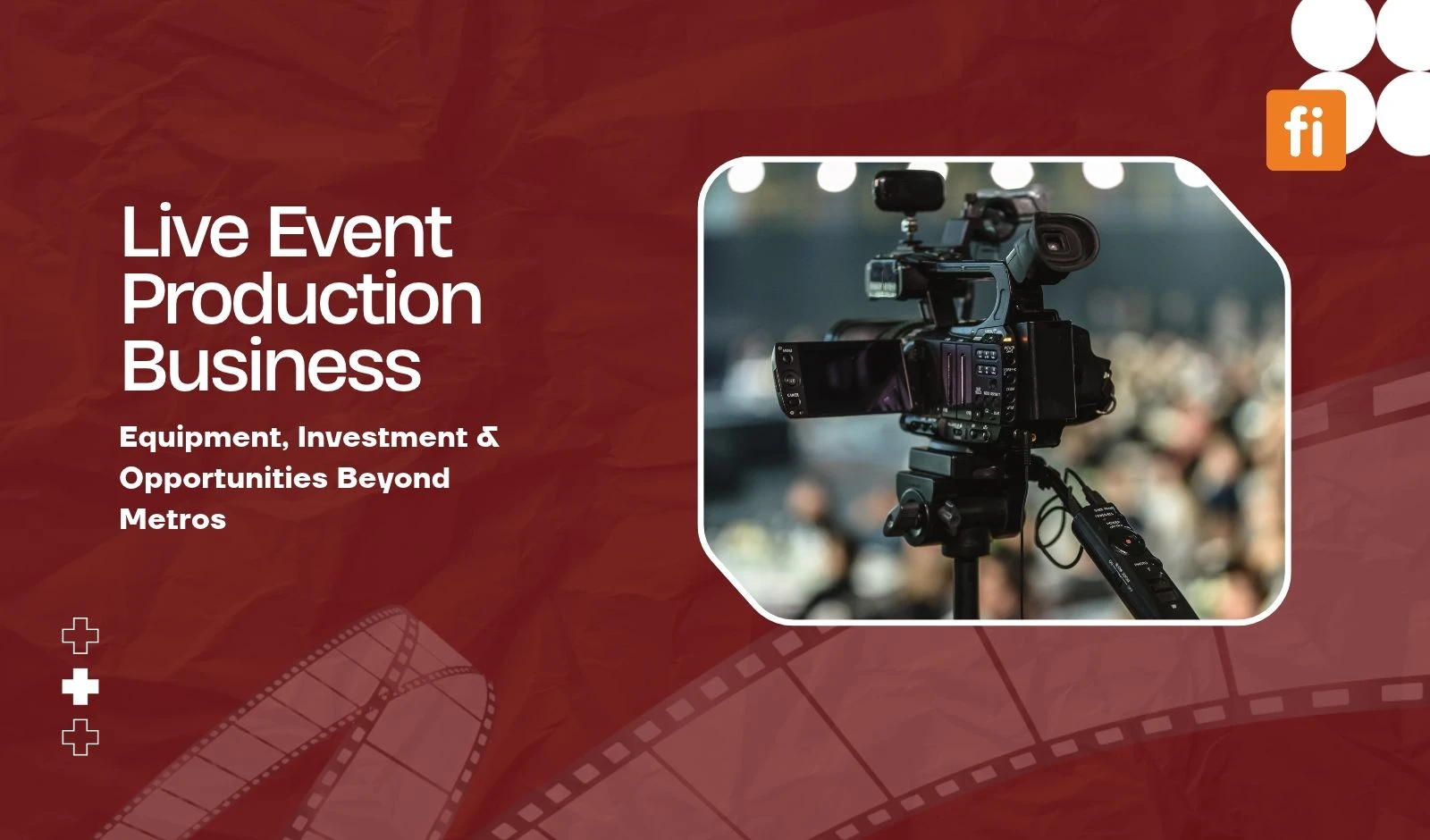
A concert, a wedding, or any other corporate event requires more than just a suitable location and an attractive set of artists. There are sound technicians, lighting technology, stage structures, LED screens, and much more, which helps to make all the shows come alive. With the live events going beyond the big cities of India, such services are creating a business opportunity for entrepreneurs.
A live event production business will give an entrepreneur the chance to join the industry via equipment rentals, technical services, or complete production services. In this article, we are going to look at various business models, equipment needed, investment required, revenues, licenses, and more.
Key Takeaways
- Multiple business models: Start with sound and lighting rentals, stage production, or complete technical event services.
- Flexible investment: Begin with essential equipment and hire additional assets when required.
- Beyond metros: Weddings, college festivals, corporate events, and cultural programmes create potential demand in smaller cities.
- Multiple revenue streams: Earn through equipment rentals, technical services, installation, and production contracts.
- Planning matters: Equipment maintenance, skilled technicians, safety compliance, and consistent bookings influence profitability.
What Is a Live Event Production Business?
The live event production firm offers the technical means and skills required for the successful staging of events. Unlike the event planner, which takes care of planning and scheduling the programme and coordination of vendors, the production firm takes care of the technical aspect of the event through the use of equipment.
The services provided by the firm include professional sound system, stage lighting, LED screen, staging, power supply and technical staff on site. Depending on the structure of the business, the entrepreneur may decide to offer one type of service or a number of production services in one deal.
The potential clients of such a firm may be wedding planners, colleges, corporate event firms, concert organisers, hotels and festival planners among others.
Why Tier 2 and Tier 3 Cities Offer New Opportunities
It is not confined to big-city places anymore for live entertainment. The need for professional sound and lighting services is created because of various occasions like weddings, college festivals, corporate events, small concerts, religious events, and cultural shows.
Entrepreneurs have several customer categories to target here, like:
- Events like weddings and parties: Requirement for sound system, stage lights, LED display, and temporary structures.
- Universities and colleges: Yearly festival, cultural shows, competition and graduation ceremony.
- Corporate companies: Product launch, conferences, dealer meets, and promotional activities.
- Local festivals and concerts: Local artists, cultural groups, and local celebrations.
- Event venues and planners: Consistent demand for equipment and technicians.
A local production company can compete with itself through provision of reliable services, fast delivery of equipment, and packages that cater for local budgets. Networking with banquet halls, hotels, universities, and event planners can also assist in getting recurring business.
Small markets also have some risks associated with them. There can be seasonal demand, customers can be sensitive to prices, and there can be expensive equipment unused between bookings. Before making large investments, entrepreneurs need to evaluate the volume of bookings, competitors' capacity, and equipment costs in the local market.
Business Models: Which Type of Production Company Should You Start?
Entrepreneurial ventures don’t have to provide all the services at once. The proper business model is determined by the capital at hand, the demand for events, technical skills, and availability of equipment.
| Business model | Main services | Target customers | Investment level |
|---|---|---|---|
| Sound system rental | Speakers, microphones, mixers, amplifiers, and audio technicians | Weddings, colleges, small concerts | Low to medium |
| Lighting services | Stage lights, controllers, lighting effects, and operators | Weddings, concerts, corporate events | Low to high, depending on equipment |
| Stage and truss production | Stage platforms, truss structures, installation, and dismantling | Festivals, exhibitions, large gatherings | Medium to high |
| LED screen rental | LED walls, display processors, video control, and operators | Conferences, concerts, product launches | Medium to high |
| Full-service production | Integrated sound, lighting, staging, visuals, and technical crew | Corporate clients, festivals, promoters | High |
| Production coordination | Technical planning, supplier management, crew coordination, and equipment sourcing | Event planners, venues, corporate clients | Low to medium |
Which model is best for beginners?
Starting out through a quality rentals business, lighting company or production coordination firm might prove more practical than purchasing equipment in different categories. Those individuals who have networks within their communities should be able to coordinate production services while obtaining specialised pieces of equipment.
Companies with higher capital may later consider getting into such fields as LED screens, stages and integrated production systems. Prior to starting such businesses, one needs to evaluate factors such as demand in the community, rental fees, costs of servicing and trained professionals. The aim here is to establish a viable service offering.
Equipment Required to Start a Live Event Production Business
The equipment that will be used will be dictated by the type of service that the firm intends to provide, its event sizes, and whether the firm possesses specialised equipment or not. An operator that runs a smaller firm will need to start with one type of equipment.
| Equipment category | Essential equipment | Primary use |
|---|---|---|
| Sound systems | Speakers, subwoofers, microphones, mixing consoles, amplifiers, and monitors | Delivering clear audio for speeches, performances, and concerts |
| Stage lighting | LED PAR lights, moving-head lights, lighting consoles, and controllers | Stage illumination and visual effects |
| Staging and rigging | Modular platforms, trusses, clamps, and suitable rigging accessories | Building temporary stages and supporting production equipment |
| LED screens and visuals | LED panels, video processors, switchers, and control systems | Displaying presentations, branding, and live visuals |
| Power equipment | Distribution boards, suitable cables, connectors, and backup arrangements | Supplying reliable power to production systems |
| Technical accessories | Stands, signal cables, protective cases, tools, and connectors | Equipment installation, operation, and maintenance |
| Safety equipment | Cable covers, barriers, appropriate protective gear, and inspection tools | Reducing hazards during setup and live operations |
Live Event Production Business Investment: Equipment, Setup and Working Capital
The amount of initial capital needed for launching an event production company is dictated by the types of equipment in possession, as well as the range of services provided. In case the company is specialised in technical coordination, it will require a smaller amount of initial funds compared to those possessing their own equipment.
| Startup model | Indicative initial investment |
|---|---|
| Technical coordination with outsourced equipment | ₹2–5 lakh |
| Small sound and lighting rental setup | ₹8–20 lakh |
| Mid-sized production setup covering multiple equipment categories | ₹25–60 lakh or more |
These are illustrative planning estimates, not verified market quotations. Actual costs depend on equipment specifications, brands, new versus used purchases, and local operating conditions.
How Does a Live Event Production Business Make Money?
The production company generates income from equipment rentals, technical services, and production deals. The amount of money earned will be determined by the number of bookings, deal amount, utilisation of equipment, and the cost of producing an event.
The main revenue streams include:
- Rental of equipment: Hire of audio systems, lights, LED screens, and stage equipment.
- Technical services: Payment for sound technicians, lights, technicians, and labour related to the above.
- Production package: Hire of sound, light, stages, and technical work together as a package deal.
- Installations and disassemblies: Charge for setup, removal, and related labour.
- Contracts: Offering regular production services to venues, colleges, corporates, and events.
Illustrative Monthly Earnings
Consider a small production company handling four events in a month.
| Particulars | Estimated amount |
|---|---|
| Four event contracts at ₹60,000 each | ₹2,40,000 |
| Equipment, crew, transport, and other direct costs | ₹1,50,000 |
| Contribution after direct costs | ₹90,000 |
| Storage, administration, marketing, and other overheads | ₹30,000 |
| Operating profit before interest, tax, and depreciation | ₹60,000 |
This is a fictitious case and does not represent any industry norm or returns. The profitability of such businesses is affected by many aspects like pricing strategies, ownership of the equipment, and collecting payments.
Good pricing strategy and effective utilisation of equipment can increase the profitability. Those production firms which manage to create good client relationships and get repeat business, in addition controlling maintenance and transport expenses, are more likely to succeed.
How to Find Clients and Get Regular Bookings
It is important to have a consistent client base for live events production. The entrepreneurs need to look into establishing connections with organisations that hold events on a regular basis rather than just occasional ones.
- Work with Event Planners: Network with Wedding planners, Concert Promoters, and Corporate Events Agencies that look for competent Technical Partners.
- Go to the Colleges and Universities: Work with them providing sound and lighting services and technical solutions for their Festivals, Culture and their Graduation Ceremonies.
- Make contacts with the Venues: Establish relations with Hotels, Banquet Halls, Convention Centres and Wedding Venues as they look for a competent partner.
- Approach Corporate clients: Approach companies providing conference services, product launch services, Dealer meet services etc.
- Contact local promoters: Get in touch with local artists, festivals committee and local culture groups.
- Portfolio: Maintain a Portfolio highlighting your past work with pictures, details of the equipment used etc.
Make clear quotes concerning equipment, staff needed, transportation, installation, disassembly, and extra charges. Good performance, fair prices, and prompt deliveries will make customers trust your business and book you again.
In smaller towns, good local connections and a trustworthy image may become major competitive advantages.
Licences, Registrations and Safety Requirements
The operations of a live event production company include both business-level and event-level compliance. Compliance requirements vary according to the services being provided, the venue, the location, and the type of the event.
Key areas to address include:
- Business registration: Select the right business type and register accordingly. Udyam registration is offered for eligible MSMEs via the government online website.
- GST regulations: Determine the registration requirements, invoicing procedures, and taxation according to the business operations and the business turnover.
- Permissions for events: Identify the permissions that need to be taken from the local authorities, police, traffic department, and municipal authorities for the event in question.
- Fire and Electrical Safety: Ensure that all temporary setups, power distribution, cabling, stage setups, and other equipment meet appropriate safety regulations.
- Sound Rules: Adhere to applicable sound levels and restrictions on loudspeaker and public address system usage.
- Rights to Music: Seek appropriate permission for any copyright music used.
- Safety of Workers: Appropriate safety gear for the tasks should be available along with suitable safe working methods.
The live events model adopted by the Ministry of Information and Broadcasting, and the official India Cine Hub website can serve as good points of reference regarding event permissions and the concept of the single window approach. However, an entrepreneur should make sure that the conditions applicable to each place and event are confirmed.
Prior to signing a contract, it should be clear who will be in charge of permissions and safety.
Challenges and Ways to Manage Them
Financial planning is important for an event production company. Those that plan for trouble will be better prepared to protect their equipment, control costs, and maintain a good relationship with their clients.
- Fluctuations of demand: There will be peak times when weddings and festivities happen, but there may be quiet seasons as well. Develop connections with corporate clients, universities and venues to balance your bookings on the seasonal level.
- Expensive equipment: Make sure not to buy too much equipment until you have a customer base. It should only be what you need and the rest should be rented.
- Damages of the equipment and its malfunction: It is crucial to conduct inspections of the equipment regularly and keep the spare parts handy.
- Competition on price levels: Distinguish your enterprise by offering high quality equipment, professional technicians, quotation, service.
- Delayed payment issues: It is helpful to use written agreements and milestone payments for that matter.
- Scarcity of the workforce: Create a reliable pool of professional technicians and freelance workers.
Careful equipment selection, strong supplier relationships, and disciplined financial management help businesses handle fluctuating demand while building a foundation for sustainable growth.
FAQs
1. Is it possible to start a live event production company without having any technical skills?
Yes. One can develop business, handle clients, and operate the company while hiring competent sound engineers, lighting technicians, and production specialists. It is important to have a trustworthy technical team in order to provide quality services and ensure safety.
2. Should one buy new or used equipment for live event production?
One can get new equipment that will allow using modern technology and receive manufacturer's support or buy used equipment in order to save money. Before purchasing used assets, one should make sure about their condition, performance, maintenance history, and the availability of spare parts.
3. How do live event production companies get large orders?
It usually requires experience, technical proposals, reliable staffing, safety measures, and installation abilities. New companies can gain trustworthiness by handling small orders and collaborating with other production companies.
4. When should a production business expand its equipment inventory?
Expansion makes sense when existing equipment is booked regularly, clients frequently request additional services, and the business has sufficient cash reserves. Reviewing booking records, rental expenses, maintenance costs, and expected demand helps entrepreneurs identify which equipment purchases are commercially justified.
Conclusion
Opportunities exist for the entrepreneurs in the industry of production for the live events in various ways such as specialised rental of audio/visual equipment or complete production facilities and more due to increasing needs for wedding parties, corporate parties, campus fests, regional entertainment, et al., even outside of the major metros of India.
The right product mix coupled with the right equipment investments and relationships with the clients can enable entrepreneurs to sustainably run a business and for those willing to develop knowledge and capabilities in technology, small cities make an attractive choice for them.
To find out more opportunities, do visit franchiseindia.com.