
 169
/ 9
Min Read
169
/ 9
Min Read


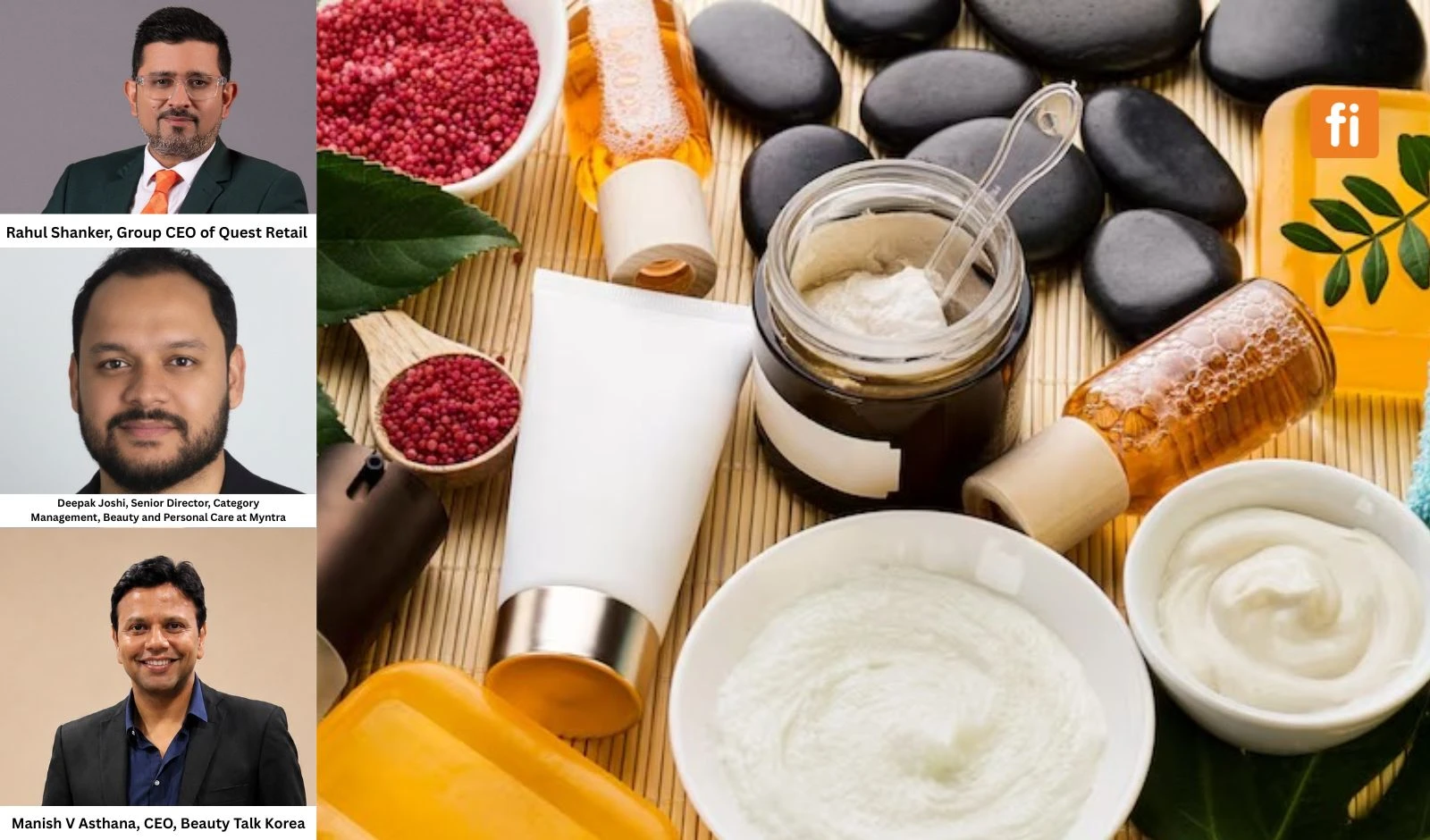
Industry estimates project India's beauty and personal care market to reach nearly $39 billion by 2030 with the online beauty segment expected to touch $8 billion. Behind this growth is a new generation of consumers who read ingredient labels before price tags, follow K-beauty routines on social media and expect brands to be transparent effective and ethical while delivering personalised experiences.
India's beauty and personal care industry is entering a new phase of growth powered by premiumisation K-beauty conscious consumption omnichannel retail and AI-led innovation. Consumers today are more informed, digitally connected and willing to invest in products that deliver efficacy transparency and value. As global and homegrown brands compete to capture this demand trust technology and customer experience are emerging as the biggest differentiators.
The industry is no longer defined by lipstick shades and festive discounts. It has evolved into one of the country's fastest-growing consumer sectors where global brands are expanding aggressively homegrown platforms are investing in AI-powered personalisation and shoppers in Tier II and Tier III markets are embracing global beauty trends almost as quickly as their metro counterparts.
To understand what's really fueling this boom, how business models are evolving and where the industry is headed next, we turned to the leaders steering this transformation, from Myntra's category leadership in beauty, to The Body Shop's India operations, to the management at Beauty Talk Korea.
From Occasion-Led to Everyday: The New Beauty Consumer
For years, beauty purchases in India were tied to occasions; weddings, festivals, parties. That is changing fast. According to Deepak Joshi, Senior Director, Category Management, Beauty and Personal Care at Myntra, beauty is now woven into daily self-care rather than reserved for special moments. He points to strong momentum across skincare, derma-led formats, sunscreens, serums, actives and barrier-repair products as evidence of this shift toward routine-based consumption.
Gen Z is leading this change. Joshi notes that this cohort makes up a majority of Myntra's beauty customers, with sunscreens, lip balms, serums and masks seeing particularly strong traction among younger shoppers; categories that barely registered as everyday essentials a decade ago.
What's striking is that this isn't a metro-only phenomenon anymore. Tier-II and Tier-III markets are contributing meaningfully to category growth as awareness of global beauty trends, K-beauty and preventive skincare spreads beyond big cities. The Body Shop's India leadership echoes this. Rahul Shanker, Group CEO of Quest Retail (which operates The Body Shop in India), shares that approximately 35% of the brand's business now comes from Tier-II cities and beyond, a number that reflects genuine aspiration for trusted, high-quality beauty brands well outside India's traditional metro strongholds.
The K-Beauty Effect: More Than a Trend
“If there is one global influence that has reshaped Indian skincare shelves and shopping carts, it's K-beauty, highlights Manish V Asthana, CEO, Beauty Talk Korea. He further informs, “Consumers have embraced concepts like skin barrier repair, hydration layering and the pursuit of "glass skin", a marked shift away from the fairness-obsessed marketing of previous decades toward a preventive, health-first approach to skin.”
Myntra has responded by scaling its K-beauty catalogue to 111 brands, catering to what Joshi describes as consumer appetite for innovation-led, routine-based formats. It is not an isolated bet, multiple industry voices point to Korean beauty as one of the strongest single influences on how Indian consumers now think about skincare, from ingredient philosophy to multi-step routines.
Business leaders see this as an opportunity that extends well beyond product assortment. There is growing conviction that the next phase of beauty retail growth in India will be built around curated Korean beauty discovery, bringing authentic K-beauty brands, personalised consultations, and experiential retail formats into markets that currently lack access to organised, curated beauty retail. Notably, this opportunity is seen as particularly strong in smaller cities, where consumers are adopting global trends almost as quickly as metro shoppers through social media, even though access to curated retail remains limited, a gap that spells opportunity for organised players.
Ethics, Clean Labels and the Trust Economy
Alongside the K-beauty wave, there is a parallel and arguably deeper, shift happening around ethics and transparency. Indian consumers, industry leaders say, have become significantly more informed and discerning, evaluating ingredients, efficacy, sustainability and product authenticity rather than making decisions based solely on price or brand recognition.
Demand for clean formulations, cruelty-free products, vegan alternatives and transparent ingredient disclosures is rising sharply, particularly among Gen Z and millennials, with social media and beauty influencers playing an outsized role in accelerating this education. Global movements like K-beauty have not just introduced new products, they have raised the bar for what consumers expect in terms of transparency and continuous innovation across the board.
For heritage ethical-beauty brands, this shift is being described as validation of a positioning they have held for decades. The Body Shop's leadership frames it as proof that beauty must be effective, ethical and purpose-driven and argues that as modern consumers increasingly align spending with personal values, trust has become one of the biggest differentiators in India's crowded beauty market.
Interestingly, this does not mean price sensitivity has disappeared. Value-conscious shoppers continue to look for affordability, but there is a growing willingness to pay a premium for products that demonstrably perform, a nuanced consumer who wants both value and validation.
Premiumisation and the International Brand Rush
Perhaps the most visible sign of India's beauty maturation is the sheer scale of international brands entering, or expanding, in the market. Myntra Beauty now hosts more than 4,500 brands and roughly 2.5 lakh SKUs, including 20,000 styles from over 360 international brands. According to Joshi, the platform's international beauty portfolio is growing at 2.5 times the pace of the broader online luxury beauty market, with luxury fragrances also posting strong, consistent growth.
This premiumisation trend is not confined to e-commerce. The Body Shop has been executing a strategic pivot in the opposite direction, making global ethical beauty more locally accessible through a targeted price reset across its core portfolio, a stronger push toward local manufacturing and culturally relevant innovations introduced under its "India Edit" line. It's a reminder that premiumisation in India does not always mean importing global pricing wholesale; increasingly, it means adapting global brand equity to local price sensitivities and cultural context.
Both approaches, Myntra's aggressive international brand curation and The Body Shop's localisation strategy, point to the same underlying reality: global beauty brands see India as a strategic growth market and they are experimenting with different playbooks to capture it.
Business Models: Physical Retail Meets Quick Commerce
Even as e-commerce platforms report explosive growth, physical retail remains far from obsolete if anything, it is being reframed as essential infrastructure for building consumer trust in beauty. Industry leaders consistently point out that beauty is inherently experiential: consumers want to test shades, understand textures and receive personalised consultations before committing to a purchase, particularly for skincare where matching the right product to the right skin type matters enormously.
The Body Shop currently operates over 200 physical stores across India, layered with an omnichannel ecosystem spanning e-commerce and quick commerce.
Meanwhile, on the digital side, immediacy has become a competitive battleground. Myntra's M-Now service now offers faster access to nearly 2,000 beauty and personal care SKUs for routine and replenishment needs, reflecting how quick commerce is reshaping expectations even in a category once thought to require considered, research-heavy purchase journeys.
Technology-led personalisation is the other major lever. Tools like AI-powered skin analysers, virtual try-on features spanning thousands of styles and creator-led shopping communities, Myntra counts over 100,000 active beauty shopper-creators on its platform, are being used to help consumers navigate an increasingly overwhelming amount of choice with more confidence.
According to Asthana, physical retail continues to play a pivotal role in the beauty industry, as consumers often prefer to experience products firsthand before making a purchase. "Despite the rapid growth of e-commerce, the in-store experience remains highly relevant, enabling customers to explore products, seek expert guidance, and make informed buying decisions," he said.
Highlighting the importance of franchising in driving offline expansion, Asthana added, "Franchising is emerging as the preferred model for entering smaller cities, as it combines local entrepreneurial expertise with curated retail experiences. It offers an asset-light approach to scaling our physical presence while reducing the capital intensity associated with company-owned stores."
Who's Buying and Who's New to the Category
One of the more understated shifts in India's beauty market is who is participating. Industry leaders note growing engagement not just from young urban women, but from men, first-time skincare users and consumers in smaller cities, signalling that beauty is becoming a more inclusive, mainstream category than it has ever been in India.
What's Next: Wellness, Science and Omnichannel Convergence
Looking three to five years ahead, the consensus among industry leaders is that India's beauty growth will be driven by three intertwined forces: accessibility, conscious innovation, and deeper consumer trust. Categories like dermocosmetics, functional skincare, scalp health, sun protection and beauty supplements are expected to see strong momentum alongside established skincare and makeup segments, as consumers increasingly view beauty as an investment in health and confidence rather than a discretionary indulgence.
The convergence of beauty and wellness is a recurring theme. Consumers are moving from basic grooming toward holistic self-care, and brands that can straddle both categories credibly, backed by science and transparency, are expected to be best positioned for the next wave of growth.
Omnichannel retail is also set to deepen, with consumers moving fluidly between online research and offline purchase and personalisation, powered by AI recommendations and loyalty ecosystems, becoming a key battleground for customer engagement and retention.
Key Takeaway
India's beauty industry is at an inflection point where global trends, local aspiration, and business-model innovation are converging at unusual speed. International brands are no longer testing the waters cautiously, they are building dedicated portfolios, price strategies and retail formats specifically for Indian consumers. Meanwhile, Indian shoppers, armed with more information and higher expectations than ever before, are pushing every player, from marketplaces to heritage ethical-beauty brands, to compete not just on product, but on trust, transparency and experience.
If the current trajectory holds, the next five years of Indian beauty won't just be about bigger revenue numbers. They will be about a fundamentally more sophisticated market, one where K-beauty routines, clean-label scrutiny, wellness convergence, and hyper-local retail expansion all compete for the same, increasingly discerning consumer.