


 2017
/ 6
Min Read
2017
/ 6
Min Read


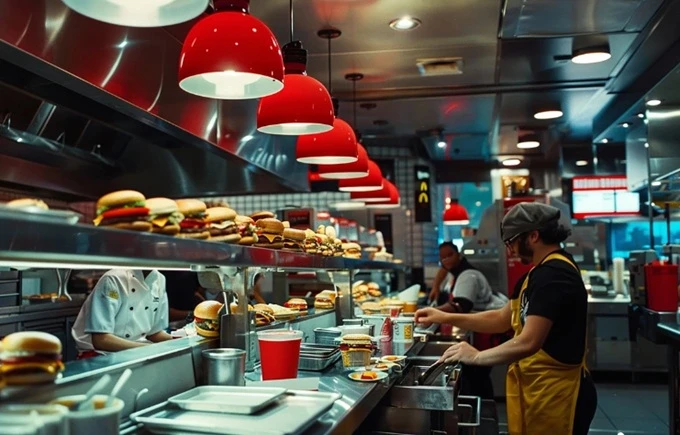
For a new generation of Indian entrepreneurs, the dream of owning a restaurant no longer begins with massive floor plans and heavy investments. Instead, it starts with a compact kiosk, a few staff members, and a bold idea.
Across India—from college streets to metro stations and petrol pumps—small-format quick service restaurants (QSRs) are transforming how we think about food and business. These mini-outlets serve everything from noodles to vada paos, burgers to coffees, all designed for speed, efficiency, and scale.
What’s truly exciting? This isn’t just a shift in business models—it’s a revolution in ownership. Small formats are giving thousands of young and first-time entrepreneurs a real shot at entering India’s ₹2-lakh-crore QSR market.
Perfect Entry for First-Time Founders
The organised food-service sector in India is growing at nearly 18% CAGR through 2026, with the QSR segment leading the charge. The market—valued at USD 26 billion in 2024—is expected to almost double by 2032, according to Credence Research.
A big reason behind this boom is the delivery-first economy. With 40% of QSR sales now coming from online orders, location and size matter less than speed and efficiency. Why build a 2,000 sq ft restaurant when your customers are ordering from their phones or grabbing a snack on the go?
Add to that India’s young population, rising disposable incomes, and a love for quick bites, and it’s clear: small-format QSRs are the new gateway for entrepreneurs ready to hustle.
Learning from the Leaders
- Berco’s’ Strategy Behind the Small Shift
For many of us looking to scale smartly, Berco’s journey is a playbook. When this iconic Pan-Asian brand decided to embrace small format, it wasn’t just cutting costs—it was creating space for new partners.
As Co-Founder Kabir Advani puts it, “Berco’s decision to embrace the small-format model is rooted in three strategic pillars: capitalising on the booming delivery segment, improving financial performance, and broadening market reach through accessible franchising.”
Their model focuses on:
- Cost Control Meets Delivery Economy
With delivery now contributing almost 40 % of sales, Berco’s saw less need for large, expensive dine-in areas. “By focusing on smaller footprints, we manage rentals and overheads better, aligning real-estate costs with actual customer traffic,” Advani explains. The result? Higher profitability per square foot.
- Faster Financial Returns
Berco’s small formats are also a key tool for expansion into Tier 2 and 3 towns. “Smaller stores mean lower rent and lower CAPEX,” says Advani. “That reduces payback time and improves ROI dramatically.”
- Empowering New Entrepreneurs
Perhaps the most transformative impact lies in franchising. “A lower entry barrier means more young entrepreneurs can join the Berco’s family,” he notes. The result is a wider, more inclusive growth network—proof that small formats can fuel big dreams.
- The Burger Company’s PICO Revolution
Entrepreneurs like Neelam Singh, founder of The Burger Company (TBC), are proving that starting small can be a superpower. Her PICO format—compact, tech-enabled burger kiosks—thrives in high-footfall, low-rent areas like college zones and Tier-3 towns.
“PICO allows us to reach places big chains ignore—college streets, transport hubs, and local markets—at a fraction of the cost,” Singh explains. Each PICO outlet is sleek, digitally connected, and built for quick turnover. The goal: affordable burgers, fast service, and strong franchise economics.
“It’s more than just a business model—it’s our way of contributing to the Make in India movement by driving affordable entrepreneurship and job creation,” she adds.
For franchise partners, it’s a plug-and-play system: low investment, fast payback, and built-in digital marketing support. And because the brand is youth-driven, social media engagement turns every outlet into a local sensation.
“Our PICO partners are not just franchisees—they’re young Indians turning passion into business.”
TBC’s ambitions match its appetite. The brand is targeting ₹100 crore in revenue next year, driven by both existing outlets and new PICO stores. With repeat customer rates of over 40 %, Singh believes innovation, social-media engagement, and youth-oriented design will keep TBC relevant for years to come.
- Nestlé’s Micro Cafés: Partnering for Growth
Even global players are thinking small—and collaborating with local entrepreneurs to do it.
Nestlé’s Maggi Hotspots and Nescafé Corners inside petrol stations and public spaces let small business owners run branded kiosks with high visibility and minimal risk. The genius of this model lies in co-location: tapping into existing infrastructure with high footfall but low incremental cost.
Nestlé provides the brand power, the entrepreneur brings the local know-how. Together, they reach customers where they already are.
- Big giants of small format, Jumbo King & Goli Vada Pao
Before “small-format” became a buzzword, Jumbo King and Goli Vada Pao had already proven the model. They took a humble Indian snack, standardized it, and scaled it nationally using compact stores and low-cost franchises. Each outlet created local jobs and turned everyday Indians into successful business owners.
Their success laid the foundation for the new generation of micro QSR entrepreneurs now sweeping the country.
Why Small Works?
For young entrepreneurs, compact formats are more than a trend—they’re a lifeline. Here’s why:
- Low Investment, High Ownership: Start a brand-backed outlet with as little as ₹10–25 lakh.
- Faster Payback: Break even within 18–24 months instead of 3–5 years.
- Local Flexibility: Adapt menus and pricing to local tastes while keeping national credibility.
- Scalable Growth: Once you master one outlet, replicate success across locations.
Big Future for Small Format
Small-format QSRs aren’t only about selling food—they’re about building independence. They’ve given young Indians the power to be business owners, job creators, and community changemakers.
As Kabir Advani says, “Right-sizing makes franchising more inclusive—it opens the door for those who once thought the restaurant business was out of reach.”
And Neelam Singh sums up the spirit of current generation, “We’re not just flipping burgers—we’re building India’s next wave of entrepreneurs.”
As India’s QSR industry races toward the USD 50 billion mark, the future won’t belong only to big outlets and fancy food courts. It will thrive in college lanes, metro corridors, petrol stations, and neighborhood corners—places where young entrepreneurs bring food and opportunity closer to everyone. Because for the driven foodpreneurs of today, small isn’t a limitation—it’s a launchpad.

