189
/ 3
Min Read
189
/ 3
Min Read



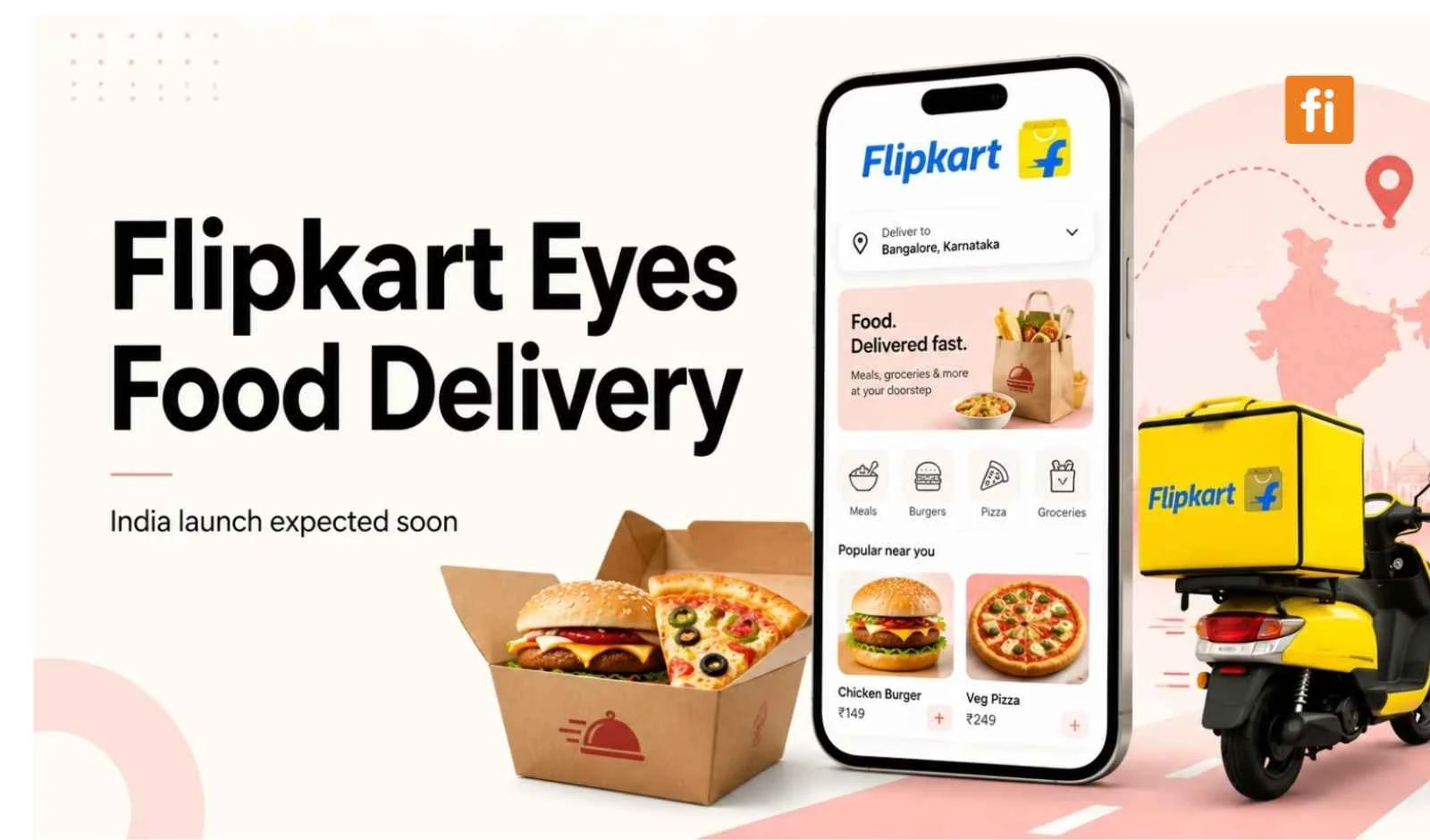
Flipkart is widening its consumer services portfolio with a food delivery foray and a separate app for its quick-commerce business. The company has launched Eat, its food delivery service, in partnership with the Open Network for Digital Commerce (ONDC), while working on a lower commission model for restaurants.
The service is currently being piloted among Flipkart employees in Bengaluru, according to people familiar with the matter. The company is expected to extend Eat to all employees by 15 September before opening it up to consumers in the city.
The employee-first rollout will give Flipkart an opportunity to test the platform, fine-tune its operating model and assess restaurant onboarding and delivery operations ahead of a wider launch. Its lower commission approach could put Eat in competition with players such as Zomato, Swiggy and Rapido-backed Ownly, which has promoted a zero-commission model for restaurants.
Flipkart’s entry comes as competition in food delivery is intensifying, with both established companies and newer entrants experimenting with commissions, pricing and alternative operating models to attract consumers and restaurant partners.
The company has also launched Minutes as a standalone quick-commerce app ahead of the festive shopping season and its Big Billion Days sale. Together, the two initiatives indicate Flipkart’s broader push to increase the frequency of consumer interactions with its platforms, particularly as quick commerce continues to capture routine purchases.
Data shared by Satish Meena, Founder, Datum Intelligence, show that Flipkart and Myntra together accounted for 35 per cent of monthly active users (MAUs) among key ecommerce platforms in CY25 and CY26 year-to-date, compared with 39 per cent in CY23 and CY24 and 38 per cent in CY22.
Meanwhile, quick-commerce platforms, including Blinkit, Zepto, BigBasket, Swiggy Instamart and JioMart, accounted for 16 per cent of MAUs in CY26 year-to-date, according to Meena. The numbers point to the growing competition for consumer attention and everyday purchase occasions that have traditionally been served by ecommerce platforms.
The shift is particularly visible in metros, where around 80 per cent of quick-commerce gross merchandise value (GMV) comes from eight cities, Meena said. Frequent grocery and top-up purchases made by households several times a week are increasingly moving towards quick-commerce platforms.
The rise of these high-frequency use cases is encouraging ecommerce companies to broaden their consumer propositions. For Flipkart, food delivery and quick commerce could provide additional reasons for consumers to engage with its platforms more often, while helping the company respond to changing purchase habits and intensifying competition for ecommerce users.