


 1055
/ 6
Min Read
1055
/ 6
Min Read


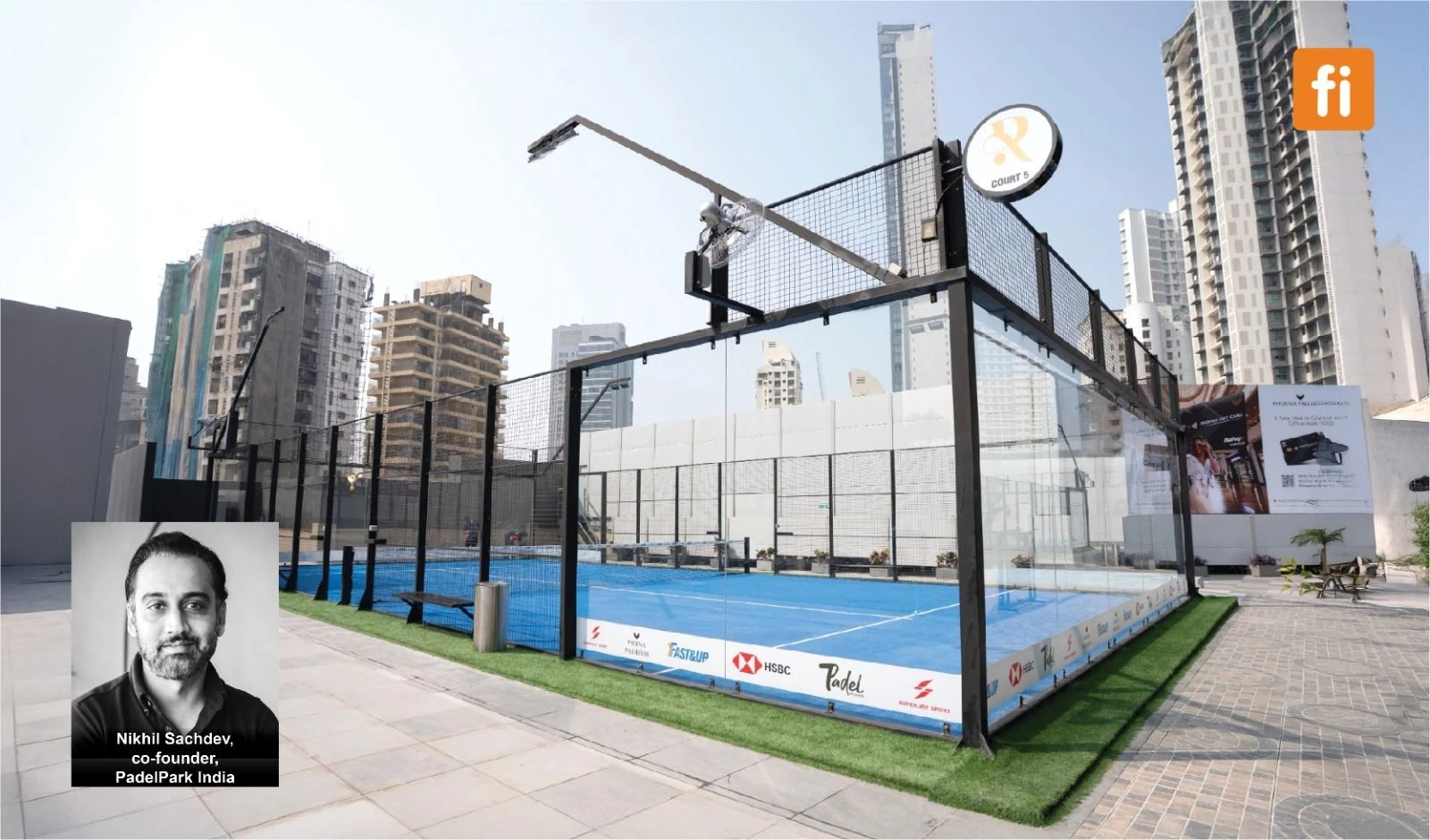
- Tell us a bit about your entrepreneurial / professional journey.
My background has largely been in building consumer facing businesses where behaviour change is required, not just demand fulfilment. I’ve always been drawn to sectors where India is a few years behind global trends, because that’s where thoughtful execution really matters. Padel fit that lens perfectly; it was globally established, but still undefined in India. That gap is what eventually led to the creation of PadelPark.
- When and how did PadelPark India start? How has the experience been so far?
When I first came across padel, I was cautious. With any emerging sport, the big question is whether it will sustain or fade as a passing trend. That hesitation disappeared the moment I stepped onto the court. Once you start playing, you realise how addictive padel is — not just because of the game itself, but because of its inherently social nature.
Since then, the journey has been incredibly validating. We’ve been involved in the construction of over 220 padel courts across India, and what we’re seeing on the ground mirrors global trends. Padel is currently one of the fastest-growing sports in the world and India is clearly following that trajectory.
- According to you, what has been the biggest milestone for the brand?
Two milestones stand out- one is receiving backing from Parth Jindal, and the other is MS Dhoni coming on board as a partner. Their involvement was a strong validation of both the sport and our long term vision for padel in India. When individuals of that stature choose to associate with an emerging ecosystem, it signals that padel has moved beyond being a niche curiosity and is being recognised as a serious, scalable sport. For us, that marked a shift from early belief to broader institutional confidence.
- When did PadelPark start franchising? How has that journey been?
We began franchising only after operating company owned centres and refining our playbook. It was a conscious decision to scale responsibly. Franchising for us isn’t about rapid expansion; it’s about alignment. Our franchise partners in cities like Mumbai and Bengaluru spent time understanding the sport itself, not just the asset.
- What is your management mantra?
Focus on unit economics first, brand second and scale third. If a single centre works well operationally and culturally, scaling becomes far easier and far less risky.
- How many courts are company-owned, and how many are franchise-led?
We currently operate a hybrid model. There are about nine company owned locations and five franchise led centres. This allows us to maintain strong operational control while partnering with local entrepreneurs who deeply understand their markets.
- Name the top three important markets for PadelPark in India.
Mumbai, Bengaluru and Chennai are our top markets today. These cities have strong sporting cultures, high repeat participation and a growing appetite for structured recreational sports.
- What are PadelPark’s expansion plans for FY26?
FY26 is about deepening our presence rather than expanding indiscriminately. Our focus areas include improving court utilisation, strengthening structured leagues and adding more depth to our coaching programs.
A key priority is grassroots development, especially junior and youth participation. Introducing players to padel at a younger age creates a far stronger long-term ecosystem, both recreationally and competitively. At the same time, we’re investing in higher quality training exposure for advanced players to ensure growth happens across all levels, not just at the top.
- Where do you see the brand five years from now?
In five years, I see PadelPark as the most credible and comprehensive padel ecosystem in India. Our role goes well beyond infrastructure. We want to support the entire player journey — from someone picking up a racket for the first time to athletes competing at high performance levels.
As the sport matures in India, it’s important that players, coaches and centres aren’t operating in isolation. Alignment with international standards, coaching philosophies and exposure will be key to raising the overall quality of the sport. We want to be the platform that enables that progression in a consistent and credible way.
- How has the recreational sports market evolved over the last five years?
The market has matured significantly. There’s been a clear shift away from unstructured fitness toward organised, experience-led sports that offer community, competition and progression. Many recreational sports are now developing a semi-professional layer, where players aren’t just playing casually but training with intent.
Padel fits squarely into this evolution. We’re already seeing players across metros investing time in coaching and consistency. That’s usually the first signal that a sport is moving from novelty to sustainability.
- How do you see it evolving over the next five years?
Recreational sports will become more organised and tech enabled. Structured leagues, performance tracking and clearer progression pathways will grow, driven largely by player demand. As participation deepens, expectations around quality — coaching, facilities and global standards — will rise.
Brand partnerships will also evolve. Instead of being limited to visibility, brands will increasingly support access, infrastructure and experiences that help sports scale sustainably. This combination will push adoption beyond metros and into Tier II cities, making recreational sports more durable long-term categories.
- How do you plan to cater to Tier II and Tier III cities?
We’re adapting our model for these markets by lowering entry barriers and partnering with local entrepreneurs. Tier II centres may start with fewer courts but stronger community programming before scaling.
Grassroots initiatives are critical — junior programs, school-linked activities and beginner friendly leagues help build familiarity and trust. The goal isn’t just to introduce padel, but to embed it into the local sporting culture so growth happens organically.
- Three key trends in recreational sports right now?
First, community led leagues are replacing casual play as the primary driver of engagement. Second, short format sports with fast learning curves are seeing the strongest adoption, particularly in urban markets. Third, brands are increasingly entering sports as long-term ecosystem partners rather than short-term sponsors, especially around youth development and structured training pathways.
- How important has franchising been to the industry? How do you see it evolving?
Franchising has been essential for scaling sports infrastructure. Going forward, it will evolve from pure asset ownership to active partnership, where franchisees are deeply involved in marketing, community building and day-to-day operations; not just capital expenditure.
- How does PadelPark support its franchisees?
We support franchisees across the entire lifecycle. i.e. from location and feasibility assessment to court design, vendor management, coach recruitment, training and structured league programming.
- How does the brand choose its franchisees?
We look for partners who are hands-on, understand hospitality and sports operations and are aligned with long-term brand building. We consciously avoid purely financial investors with no operating intent.

