


 1030
/ 7
Min Read
1030
/ 7
Min Read


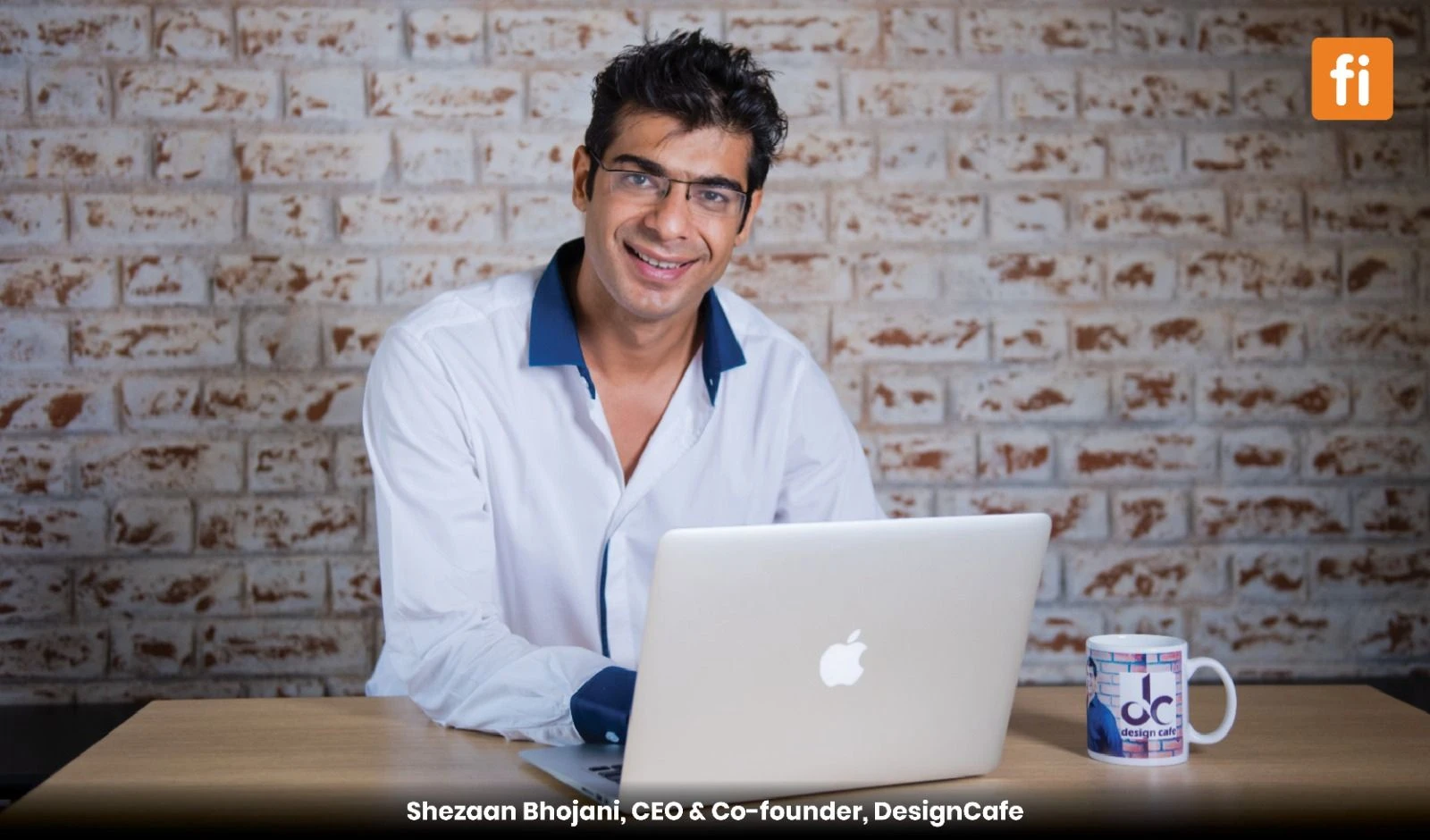
DesignCafe CEO and co-founder Shezaan Bhojani shares insights on the company’s journey, franchise-led expansion strategy, and how technology is reshaping the future of home design in India.
- Tell us about your entrepreneurial and professional journey.
I trained as an architect and later completed my MBA at Columbia Business School, which helped me combine creativity with strategic and operational thinking. My early experience in architecture and design gave me a deep understanding of customer expectations, execution challenges, and the importance of quality and discipline in building spaces.
Since co-founding DesignCafe in 2016, my focus has been on building a customer-first, scalable business in the home interiors space. From strengthening technology-led processes to building strong design and operations teams, the goal has been to deliver consistent, high-quality experiences. I firmly believe good design should not be a privilege for a few, and DesignCafe was built to make premium, personalised interiors accessible to Indian homeowners at scale.
- When and how did DesignCafe start? How has the journey been so far?
DesignCafe was founded in 2016 in Bengaluru by Gita Ramanan and me, with the vision of making high-quality, personalised home interiors accessible to Indian homeowners. Even before starting the company, we had collaborated on architectural projects and won a design competition together, which showed us how complementary our skills were and inspired the idea for DesignCafe.
At the time, homeowners had limited choices—either expensive bespoke designers or unorganised local contractors, often with little transparency or reliability. We saw an opportunity to create an organised, technology-backed platform that could deliver quality design at scale.
Since then, DesignCafe has delivered over 15,000 homes across 13 cities. A key milestone was our merger with HomeLane in 2024, which significantly expanded our reach while preserving DesignCafe’s brand identity. The journey has reaffirmed our belief that scale and quality can coexist.
- What has been the biggest milestone for the company so far?
Scaling the business while maintaining positive unit economics in a traditionally fragmented category has been a major achievement. Another defining milestone was the 2024 merger with HomeLane, which strengthened our leadership position in India’s organised home interiors market.
Becoming profitable at scale and being part of one of the very few organised interior groups in the country has also been a significant milestone for us.
- When did DesignCafe start franchising, and how has the journey been?
We introduced franchising after building a strong, repeatable operating model in our core markets. Today, DesignCafe operates through a mix of six COCO (Company-Owned, Company-Operated), 13 FOCO (Franchise-Owned, Company-Operated), and two FOFO (Franchise-Owned, Franchise-Operated) stores.
The journey has been disciplined and positive, with FOCO emerging as our preferred model as it allows faster expansion while retaining control over design quality, customer experience, and execution standards. All new stores are now franchise-owned and company-operated, with store-level break-even achieved in approximately three months and positive cash flows from month three to four.
- What is your management mantra?
Clarity, discipline, and ownership. We focus on simplifying complex problems, empowering teams with clear accountability, and building scalable processes without compromising quality. Staying close to execution and leading by example is central to our culture.
- How does DesignCafe balance online and offline presence?
We follow an omnichannel approach. Digital platforms drive discovery, consultations, design visualisation, and project tracking, while Experience Centres allow customers to physically engage with designs and materials. Online channels offer convenience and scale, while offline centres build trust for high-involvement decisions. The key challenge is seamless integration, which we address through strong technology and aligned processes.
- What are DesignCafe’s top three markets in India?
Bengaluru remains one of our strongest and most mature markets. The Mumbai Metropolitan Region has emerged as a key growth driver, delivering strong scale and traction. Hyderabad is another important market where we see consistent demand for premium home interior solutions.
- What are DesignCafe’s expansion plans for FY26?
FY26 will focus on franchise-led expansion supported by our proven store model. We currently operate 21 Experience Centres and will reach 22 by the end of this month. Over the next year, we plan to scale to 33 stores, adding roughly one new store every month.
About 70% of growth will come from new store additions, while 30% will be driven by improved performance of existing centres. New stores typically break even within three months and begin generating positive cash flows soon after.
Geographically, we will deepen our presence in metros like Mumbai and enter new cities such as Lucknow, Ranchi, Nagpur, Jaipur, Indore, and Kochi. Financially, we have grown from an annual order-book run rate of around ₹200 crore at the time of the merger to approximately ₹360 crore today, with a target of crossing ₹500 crore in the next financial year.
- Where do you see DesignCafe five years from now?
Our ambition is to become one of India’s largest and most trusted organised home interiors brands. We aim to scale to over 100 Experience Centres in the next two to three years, building a strong pan-India presence.
From a business standpoint, the goal is to reach approximately ₹500 crore in revenue from the DesignCafe brand itself, driven by technology-led execution, franchising-led expansion, and a consistently high-quality customer experience. From a capital markets perspective, the group is preparing for an IPO within the next 12–18 months, preceded by a pre-IPO fundraise.
- How has the home interior market evolved over the last five years?
The market has seen a clear shift from unorganised local players to branded players. Customers now recognise that for such a large life expense—often among the top three spends of their lives—the transparency, reliability, and quality assurance offered by organised brands are worth it.
- How do you see the market evolving over the next five years?
The shift toward organised players will continue. Companies like ours are making significant investments in technology and manufacturing to improve customer experience, which will further accelerate the movement of market share away from unorganised players.
- How has technology supported DesignCafe’s growth?
Technology is central to our operations. Our proprietary in-house platform, SpaceCraft, enables real-time 3D visualisation, end-to-end project tracking, and transparent communication across the design-to-delivery journey, significantly improving designer productivity.
Backed by a 65,000 sq. ft. in-house factory, over 400 designers, and a 51-point quality checklist, SpaceCraft ensures consistency and timely delivery. Its space-optimisation capabilities can deliver up to 20% extra usable area, while zero-percent EMI options help make premium interiors more accessible.
- How are you approaching Tier II and Tier III markets?
Tier II and III cities are a key growth focus. We plan to enter these markets primarily through FOCO and FOFO models, supported by centralised design, technology platforms, and manufacturing. Cities such as Ranchi, Chandigarh, Guwahati, Nagpur, Indore, and Jaipur are seeing increasing awareness and readiness for organised interior solutions.
- What are three key industry trends right now?
There is rising demand for space-efficient and multifunctional designs as urban homes become more compact. Premiumisation is another strong trend, with homes increasingly reflecting personal aspirations. Finally, consumers are shifting decisively toward organised brands offering transparent pricing, timelines, warranties, and reliable after-sales support.
- How important is franchising to the industry’s future?
Franchising is a critical enabler for scale in the organised home interiors industry. It allows brands to expand rapidly while giving local entrepreneurs attractive opportunities. Given the large ticket sizes and strong demand tailwinds, home interior franchises offer some of the best payback periods in the industry.
We believe franchise partners will remain integral to our growth—we will likely need 100 times more franchisees in the next decade than we had in the last.
- How does DesignCafe support its franchisees?
We offer a brand-led franchise model with end-to-end support, including marketing, lead generation, in-house design expertise, proprietary technology, and centralised manufacturing and quality control. Franchise partners receive structured onboarding, training, and ongoing operational support, ensuring consistency across all Experience Centres.
- How does DesignCafe select its franchise partners?
We take a selective approach. Beyond financial capability, we look for partners aligned with our customer-first philosophy, operational discipline, and long-term mindset. Cultural alignment, commitment to quality, and the ability to execute at scale are critical to maintaining a consistent brand experience nationwide.

