



 4601
/ 12
Min Read
4601
/ 12
Min Read


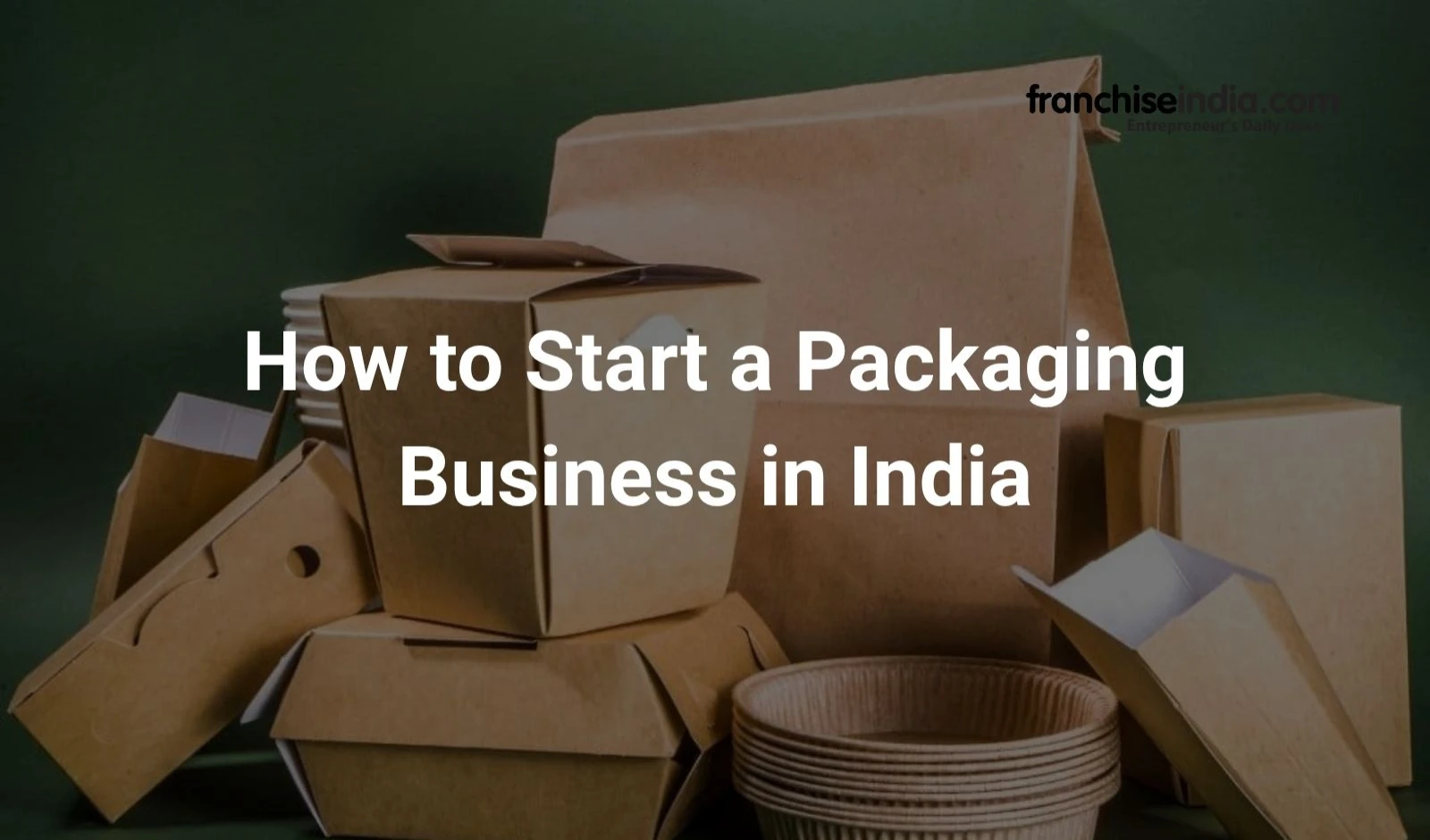
Starting a packaging business in India looks like a smart move these days. Demand’s booming, thanks to all the action in e-commerce, food processing, FMCG, and pharma. The first thing you need to do is pick your niche—think paper bags, corrugated boxes, flexible pouches, or PET bottles, or go green with eco-friendly packaging. Your choice really depends on your budget and what people around you are actually buying.
Once you’ve got your product in mind, you’ll need to register the business, get a GST number, pick up any factory or trade licenses, and check if you need pollution control or BIS certificates. It sounds like a lot, but most of it’s pretty standard. Set up your unit in an industrial area with three-phase power, enough room to store materials, and decent access for trucks. Machinery costs can start around ₹5 lakh for small paper bag setups and go up to ₹30 lakh or more if you’re going for bigger stuff like corrugated boxes or PET bottles. You’ll want to lock in good suppliers for kraft paper, laminates, or plastic resins, and hire folks who know what they’re doing. Building strong relationships here makes everything smoother.
When it’s time to find customers, focus on selling to other businesses—local shops, online retailers, or through trade networks. Platforms like IndiaMART and TradeIndia help too.
Also read: How to Start a Food Processing Business in India
Steps of Starting a Packaging Business in India
1. Why start a packaging business now?
 (1).jpg)
India’s packaging industry is expanding at a remarkable pace, supported by rising consumption in food processing, FMCG, and e-commerce sectors. Industry analyses indicate strong double-digit growth, positioning the market as a multi-billion-dollar opportunity with a high projected CAGR over the next five years. This rapid expansion continues to fuel consistent demand for a wide range of packaging solutions, including corrugated boxes, flexible pouches, paper bags, PET bottles, and sustainable packaging alternatives. As businesses increasingly prioritize efficient, durable, and eco-friendly packaging, the sector’s growth prospects remain robust. These trends make the packaging industry an attractive and stable space for entrepreneurs and manufacturers looking to enter or expand within a high-potential market.
2. Choose your niche
 (2).jpg)
Selecting the right product line is crucial, as it directly influences your space requirements, machinery investment, and working capital needs. Paper and Kraft bags? They’re pretty straightforward, need less investment, and you can start in a space about the size of a small shop. Corrugated boxes take more room and cash, but nothing too wild. Flexible packaging—like pouches and laminates—gets a bit more technical, and you’ll need more space. PET bottles and rigid containers cost more to set up, and you’ll need a cleaner environment. If you want to go into vacuum or MAP packaging for food, you’ll need special sealing machines. Eco-friendly and compostable stuff is growing fast, and you can often charge a premium for it. The key is to match what you make with what’s actually in demand locally—e-commerce hubs love corrugated boxes, food processors want pouches, and retail shops rely on paper bags.
3. Market research & business model
 (3).jpg)
Your customers will probably be FMCG brands, food producers, bakeries, online sellers, pharma companies, and local retailers. To reach them, you’ve got options: direct B2B sales, distributors, online marketplaces, or even contract packaging for bigger brands. Business models differ—manufacturing brings higher margins but costs more to start, while trading or distribution is lighter on the wallet. Contract packaging fits somewhere in the middle. Before you go all in, do a quick local market study: list out 20 potential buyers, figure out how much packaging they’ll need each month, and work out your break-even point. This way, you’ll have a clearer idea of your pricing, capacity, and sales targets.
4. Legal, statutory & compliance basics
 (5).jpg)
Setting up a packaging business in India requires several registrations and approvals, depending on your scale and product type.
- Registering your company costs anywhere from ₹2,000 to ₹20,000, depending on the structure you pick.
- GST registration is a must once you hit ₹40 lakh turnover, and it’s free if you do it online.
- Factory or trade licenses usually run ₹5,000–₹50,000, depending on the state.
- If you’re using plastic or PET, pollution control clearance is a must, and that usually costs ₹10,000–₹50,000.
- Registering as an MSME/Udyam is free and opens up doors for loans and subsidies.
- For food-grade packaging, BIS or similar certifications are needed, and those range from ₹25,000 to ₹1 lakh.
Don’t forget about trademark registration—expect ₹4,500–₹9,000 per class. Stick to the rules with labeling, safety, and plastic EPR standards. Skipping out on compliance just isn’t worth the headaches or the fines.
Also read: How to Start a Cupcake Business at Home
5. Location, space & infrastructure

Selecting the right location is crucial for a packaging unit, and most businesses benefit from operating in industrial estates, warehousing hubs, or areas close to major clients to reduce logistics costs. Space needs depend on what you’re making, and paper bag units usually get by with 500 to 800 sq ft. Corrugated box setups need more, about 1,000 to 2,500 sq ft. Flexible packaging plants fall somewhere around 1,500 to 3,000 sq ft. PET bottle lines? You’re looking at over 2,000 sq ft, easy. Don’t forget the basics: three-phase electricity, steady water (some processes need a lot), and a solid waste-management setup. You’ll probably need to budget ₹50,000 to ₹1.5 lakh for electrical upgrades and another ₹1 to ₹5 lakh for basic construction work. Rents for industrial or warehouse spaces usually run ₹20,000 to ₹80,000 a month, depending on where you are. And you’ll need room for all the raw stuff—like paper reels or laminates—plus storage for finished products before they head out.
6. Machinery & equipment
 (6).jpg)
Machinery takes the biggest bite out of your startup budget, and prices swing a lot based on what you’re making. You’ll want quotes from suppliers before you buy anything. For corrugated boxes, you typically need a single-facer or corrugation machine (think ₹4–15 lakh), along with cutters, slitters, rotary die cutters, and stitching gear. All in, a small or medium setup could cost ₹15–30 lakh just for machines. Paper bag units are cheaper: semi-automatic machines cost ₹5–8 lakh, while fully automatic lines run up to ₹25–40 lakh. Flexible packaging plants get expensive—extruders, laminators, printers, and pouch machines together cost anywhere from ₹45 lakh to ₹1.5 crore. PET bottles and blow-molding lines need ₹25–70 lakh, depending on automation. If you’re looking at eco-friendly disposables, machines start at ₹1 lakh and go up to ₹20 lakh. On top of all that, set aside another 5–10% of your machinery spend for installation, setup, and operator training.
7. Raw materials & suppliers
 (7).jpg)
Key raw materials in packaging include kraft paper, corrugated sheets, laminates, inks, adhesives, plastic resins such as PET/PP, and biodegradable inputs. Monthly consumption varies by unit size and product type: a small paper bag unit usually needs ₹1–2 lakh worth of materials every month. A corrugated box plant? ₹3–8 lakh. Flexible packaging operations spend even more—₹5–20 lakh isn’t unusual. To keep things running smoothly, line up solid supply contracts and always keep a buffer stock for one to three weeks. Otherwise, delays or price swings can throw a wrench in your plans.
8. Staff & operations
 (8).jpg)
A small factory usually gets by with a team of three to eight helpers and operators.
- Helpers earn ₹8,000–12,000 a month; skilled operators make ₹15,000–25,000.
- You’ll also want a supervisor or quality lead (₹18,000–30,000) and an accountant or admin person (₹12,000–25,000).
- If you’re looking to grow and land more clients, bring in a sales or business development exec—expect to pay ₹15,000–40,000, plus some incentives.
- Add it all up, and payroll usually comes in between ₹50,000 and ₹1.5 lakh a month, depending on team size and where you’re based. Good training in machine handling, maintenance, and safety really makes a difference in how smoothly things run.
9. Financing options & government support
 (9).jpg)
- Self-funding/bank loans: Prepare a project report with cash flow, debt servicing capability, and working capital needs. Banks typically ask for detailed projections and promoter contributions.
- PMEGP / PM Employment schemes: Government credit schemes for manufacturing units; PMEGP offers assistance and has project cost limits and collateral guidelines—e.g., projects up to certain amounts may be collateral-free, and model projects are provided on the portal. Maximum project cost and collateral provisions are defined in PMEGP guidelines.
- CGTMSE: Collateral-free loans for eligible MSMEs (subject to bank participation).
- MSME subsidies: State and central incentives vary; register as Udyam to access benefits.
Always compare bank term loans, equipment finance (vendor tie-ups), and government schemes to optimize cost of capital.
Also read: 11 Business Ideas in Delhi with Low Investment
10. Production process & quality control
 (10).jpg)
A typical corrugated box production workflow begins with paper reels that move through the corrugation or single-facer process, followed by gluing and lamination to form the board. Next, cut and crease the boards to spec, print and slot them for the final look, then stitch and check everything before shipping. Quality control is a big deal and you check raw materials for weight and glue quality, then keep an eye on box size, print registration, and glue strength as you work. Finished boxes get tested for compression and edge crush strength to make sure they’ll hold up. Keep good records with batch numbers and traceability, especially if you’re selling to other businesses. As you grow, basic lab gear—like moisture meters or tensile testers—helps you meet industry quality standards.
11. Packaging, labelling & EPR compliance
 (11).jpg)
- If producing food-grade packaging, follow food safety standards and use printing inks suitable for food contact.
- For plastic packaging, Extended Producer Responsibility (EPR) rules apply and converters must meet recycled content and collection obligations (track regulations for current EPR requirements). Stay compliant with state pollution boards and EPR registries. (See industry news on EPR and recycling developments.)
12. Sales, distribution & marketing
 (12).jpg)
- Sales strategy: Start with local micro and small customers (bakeries, kiranas, e-commerce sellers) and move to larger brands. Offer sample packs and quick lead times.
- Channels: Direct sales, distributor network, online B2B platforms (IndiaMART, TradeIndia), and trade fairs.
- Marketing: Simple website, catalogues, LinkedIn outreach, WhatsApp Business for order-taking, and participation in packaging and food expos. Initial marketing budget: ₹50,000–1 lakh for a small unit.
Build trust via consistent quality and reliable delivery—packaging clients value punctuality as much as price.
13. Revenue & profitability
 (13).jpg)
- Small paper bag unit: monthly revenue ₹3–7 lakh, margins 15–20% → monthly profit ₹50,000–1.2 lakh.
- Corrugated box unit: monthly revenue ₹10–25 lakh, margins 12–18% → monthly profit ₹1.5–4 lakh.
- Flexible packaging plant: monthly revenue ₹30 lakh–₹1 crore, margins 18–30% → monthly profit ₹5–20 lakh.
Profitability depends on raw material sourcing, utilization, machine uptime, and value-added services (printing, custom sizes). These are indicative numbers—do your own financial projections before investing.
14. Risks and mitigation
 (14).jpg)
Raw material prices jump around a lot, and that can eat into your margins fast. Locking in long-term contracts and working with different suppliers helps you manage risk. Power cuts and breakdowns slow everything down, so regular maintenance and having backup generators keep things moving. And with rules around EPR and plastic use changing all the time, you’ve got to stay sharp—switching to recyclable or biodegradable materials helps you stay compliant and competitive.
High logistics costs can be managed by positioning the unit closer to major customers or partnering with reliable third-party logistics providers. Additionally, competition from larger manufacturers is common, but small and mid-sized units can stand out by offering faster turnaround times, custom box sizes, and high-quality printed or value-added packaging solutions tailored to specific client needs.
15. Scaling up and value-added plays
 (15).jpg)
To improve profitability in the packaging business, adding services such as flexo or offset printing and varnishing can significantly enhance product value and margins. Margins go up, and when you roll out the full package—design, prototyping, production—SME clients come looking for you because you’re making their lives easier; that’s a big deal for them.
Switching to sustainable materials like bagasse, PLA, or recycled kraft paper? That’s not just for the planet; it puts you in front of customers who want eco-friendly options and are willing to pay for them, the demand’s only going to grow. You can also get into contract packaging or co-packing for FMCG brands. That’s steady work—less stress about where your next order’s coming from. And if you’ve got the chops, start thinking about exports. Specialty packaging can really pay off if you handle all the certifications and customs stuff.
Conclusion
Starting a packaging business in India right now is a huge opportunity. E-commerce, FMCG, food processing, exports—the demand just keeps climbing. If you plan smart, stay on top of regulations, and invest wisely, you can build something that lasts. The trick is to pick the right niche, never compromise on quality, and always deliver on time. That’s how you get clients to stick around.
Sustainability is more than a buzzword—it actually sets you apart. Eco-friendly materials and creative packaging make your brand stand out. Lean into government schemes, keep your equipment updated, and build strong B2B connections. Even small players can become heavyweights. If you stay disciplined, market yourself well, and keep quality at the center of everything, the packaging business isn’t just possible—it’s a real, solid opportunity for anyone willing to put in the work.
You might also like: 21 Profitable Business Ideas in Hyderabad in 2026

