


 4954
/ 15
Min Read
4954
/ 15
Min Read


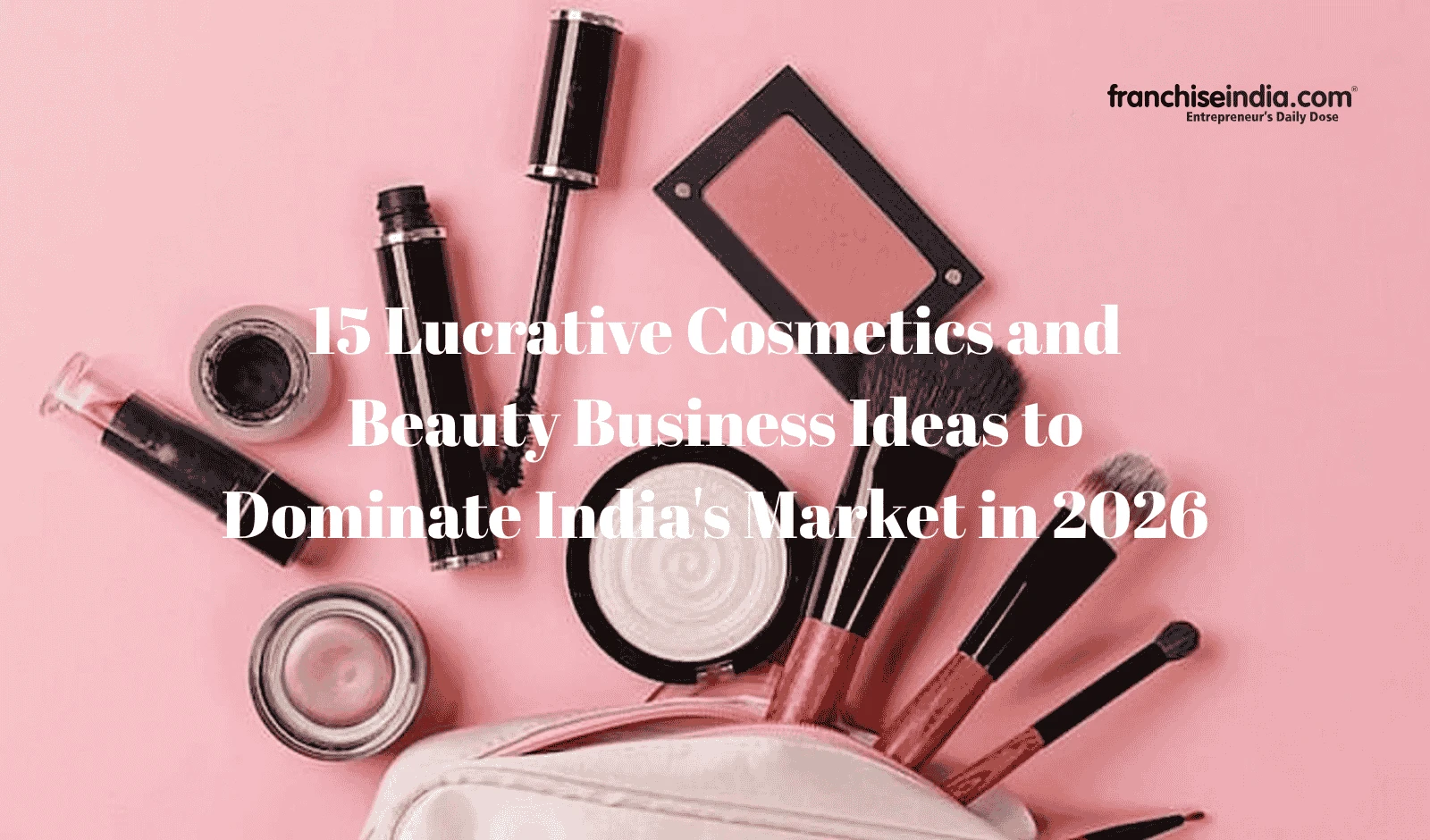
The beauty and personal care market is set to blow past ₹1.5 lakh crore by 2026, riding a 10–12% annual growth rate. People have more money to spend, they care more about how they look and feel, and tech is changing everything. Natural, eco-friendly, and tech-powered beauty products are in demand, and male grooming is on the rise. Wellness skincare and influencer-driven brands aren’t just trends—they’re shaping the future.
Think luxury beauty stores, skincare spas, private-label manufacturing, eco-conscious brands, influencer incubators, and professional academies. Each one taps into what Indian consumers actually want, combining digital and offline power. If you’re an entrepreneur, this is your chance to mix innovation with real storytelling and build something big—something that defines where Indian beauty goes next.
This article covers 15 lucrative cosmetics and beauty business ideas that will dominate India's market in 2026 including the investment and CAGR growth, as well as challenges and risk factors.
Read also: 7 Profitable Beauty & Wellness business ideas in 2025
1. Natural & Ayurvedic Skincare Brand
.png)
Starting a natural or Ayurvedic skincare brand in India looks like a smart move right now. People here are leaning hard toward clean, plant-based, cruelty-free beauty products, and the numbers back it up. The Ayurvedic personal care market already sits above ₹50,000 crore, and it’s only getting bigger—expected to grow 15–18% every year until 2026. That’s thanks to a growing focus on wellness and a demand for transparency in what goes into products. If you’re an entrepreneur, you can tap into India’s rich botanical history with ingredients like turmeric, neem, aloe vera, and sandalwood. Just make sure you partner with trusted manufacturers who follow BIS and FSSAI standards.
Building a direct-to-consumer online shop, mixing in some retail tie-ups and influencer marketing, helps you reach both big-city and smaller-town customers. You’ll need anywhere from ₹10 lakh to ₹50 lakh to get started, depending on how many products you launch, how you package them, and how much you spend on marketing. What really matters? Use real, authentic ingredients, stand out from the crowd, and stay on top of all the regulations. If you get that right, you’re looking at one of the hottest opportunities in India’s beauty scene by 2026.
2. Men’s Grooming & Cosmetics
.png)
Men’s grooming and beauty is another space that’s picking up serious momentum in India’s personal care market. Urban men are paying more attention to how they look and feel, which has pushed the men’s grooming market to about ₹16,800 crore in 2023—and it’s set to keep growing by around 11–13% a year through 2026. There’s plenty of room to offer everything from skincare basics and beard-care kits to men’s concealers and tinted moisturisers.
The trick is to make products that really work for men—think oilier skin, bigger pores, and shaving issues. Your marketing should talk about confidence, performance, and convenience. Mix up your approach with e-commerce, salon partnerships, and influencer tie-ups. Depending on whether you’re building an online brand or opening physical grooming spaces, you’re looking at an investment of ₹15 lakh to ₹75 lakh. Sure, convincing men to try new beauty products isn’t always easy, but with strong branding and a smart, down-to-earth approach, you can build real loyalty as this segment grows.
3. Beauty & Cosmetic Subscription Box Service
.png)
If you’re looking for something a little different, launching a cosmetics and skincare subscription box business taps right into India’s booming beauty and e-commerce world. This really speaks to Gen Z and millennials who love the thrill of discovering new products. You can curate boxes every month or quarter—think “Summer Glow,” “Monsoon Care,” or “Men’s Grooming Essentials.” Thanks to digital adoption and trends set by influencers, these boxes help brands keep customers coming back, build steady revenue, and turn samplers into full-size buyers.
The beauty subscription market in India is growing fast, around 10–12% a year through 2026. To stand out, team up with up-and-coming or niche brands and use social media unboxing videos to go viral. You’ll need to invest between ₹10 lakh and ₹40 lakh, depending on your logistics, packaging, and marketing. The real challenge? Keep things fresh, deliver good value, and make sure your fulfilment is smooth—do that, and you’ll keep people hooked.
4. Customised / Personalised Beauty Products
.png)
Personalised beauty and skincare is another big trend catching on in India. More and more people want products made just for them. The personalised beauty segment is expected to grow 12–15% a year through 2026, with Gen Z and millennials leading the charge. You can offer things like custom serums, moisturisers, or haircare, using AI skin analysis or online quizzes to tailor products to each person. Extras like print-on-demand packaging, personalised scents, or DIY formula kits make your brand stand out and keep customers engaged.
You’ll need an investment of ₹20 lakh to ₹80 lakh, depending on how much you put into tech, research and development, and small-batch production. Sure, custom products are more complex and come with extra costs, but if you blend science, personalisation, and sharp digital marketing, you can build a loyal customer base and earn a premium spot in India’s beauty industry.
5. Beauty & Cosmetics Retail Franchise in Tier II/III Cities
.png)
Opening a cosmetics retail store or franchise in India’s Tier II and Tier III cities is a move worth considering. Beauty demand is no longer just a metro-city thing—smaller towns are now driving the next wave of growth. With incomes rising and people wanting more out of life, the beauty retail sector is set to grow 10–12% a year through 2026.
You can open stores that mix affordable mass-market products with mid-premium brands, making sure you cater to what local shoppers actually want. Pick busy spots—malls or high-street locations—and offer options like online ordering with in-store pick-up. Personalized, local-language service makes a real difference. The investment typically ranges from ₹25 lakh to ₹1 crore, depending on size and brand association. Success relies on effective local marketing, inventory control, and staff training, making this a scalable retail model for India’s emerging beauty markets.
Read also: How to find the best beauty franchise opportunities in India?
6. Beauty Tech – Virtual Try-On & AR/VR Application
.png)
Tech is shaking up beauty in India. Virtual try-on and AR-powered tools are changing how people shop for cosmetics. More folks have smartphones now, and digital-first shopping is the norm. AI and AR aren’t just buzzwords anymore—they’re everywhere in beauty retail. Around the world, AR makeup and skincare are catching on, and India’s right behind, with the market expected to grow at about 14–16% a year until 2026. There’s a big opening for entrepreneurs here. Think mobile apps or smart kiosks where people can try out lip colors, foundations, or even entire skincare routines without touching a tester. It’s fun, boosts confidence, and pushes people toward buying.
These tools work for salons, stores, and e-commerce platforms, too—offer them on a subscription or pay-per-use basis. Sure, you need to nail the tech for accurate color matching and make sure people actually use it, but the payoff is huge. Starting up will cost anywhere from ₹40 lakh to ₹1.5 crore, depending on the tech, features, and how deep you go with retail partners.
7. Cloud Kitchen / Beauty Café & Makeup-Studio Hybrid
.png)
Picture a beauty café and makeup studio rolled into one. It’s like a cozy café where you can sip coffee and get a quick makeover or a mini-facial—perfect for India’s young, social crowd. This kind of place is a magnet for millennials and Gen Z. The beauty services market is set to grow 10–12% a year, and cafés aren’t far behind at 8–9%.
Combine the two, and you get a business with double the revenue streams. If you want to make it work, set up in a busy city spot, offer memberships, and design spaces that basically beg to be posted on Instagram. Investment runs between ₹40 lakh and ₹1.5 crore, depending on your space and style. Juggling food and beauty isn’t simple, but get it right and you’ll see loyal customers, frequent visits, and a seriously strong brand.
8. Men’s Barbershop + Skincare Lounge
.png)
Men’s grooming lounges are catching on fast, too. Guys in India are paying more attention to their looks than ever. The men’s grooming market was worth over ₹16,800 crore in 2023 and is growing at 11–13% a year.
These lounges ditch the old salon vibe and offer something that feels more like a private club—haircuts, beard trims, facials, and even a shop for men’s products, all in one stylish spot. Memberships and subscription plans keep revenue steady. You’ll need ₹30 lakh to ₹1 crore to get started, depending on your location and design. The key? Skilled staff, top-notch service, and strong branding that speaks to style-conscious men.
9. Premium/Luxury Cosmetics Boutique
.png)
There’s the luxury side of beauty—a high-end cosmetics and skincare store. Even though luxury makes up just 4% of India’s beauty market, it’s growing strong at 10–11% a year. As more Indians aspire to global brands and luxe experiences, there’s real potential here. Set up shop in an upscale mall or posh neighborhood, stock exclusive brands, and offer personal consultations and VIP events like masterclasses.
Digital marketing, influencer tie-ins, and loyalty programs help build buzz and loyalty. You’re looking at an investment between ₹75 lakh and ₹3 crore, depending on where you set up and which brands you carry. But you’ve got to keep the experience polished—great curation, excellent service, and a premium feel are non-negotiable.
10. Beauty Wellness & Spa Centre (Integrating Skincare Treatments)
.png)
A wellness spa focused on skincare is another big opportunity. Indians are getting serious about self-care and skincare. The market’s set to grow 12–15% a year through 2026. A spa offering advanced treatments—LED therapy, chemical peels, custom facials—with skilled estheticians or dermatologists can really stand out. Sell skincare products, offer memberships, and create packages for repeat visits to keep revenue flowing.
Add digital booking and CRM tools to make life easier for both you and your clients, and you’ve got a winning formula. The investment typically ranges from ₹50 lakh to ₹2 crore, depending on scale, interiors, and equipment. While ensuring consistent service quality and hygiene standards is crucial, this segment promises high margins and strong repeat clientele in India’s evolving wellness landscape.
Read also: Top 15 Healthcare and Wellness Businesses to Consider in India
11. Cosmetics Manufacturing & Private Label/Contract Manufacturing
.png)
Setting up a beauty and cosmetics manufacturing unit is a smart way to tap into India’s booming personal care market. This industry keeps growing—think 10–12% a year, at least until 2026. The government’s pushing hard for local manufacturing, with incentives and PLI schemes, and that’s driving up demand for private label and OEM services.
A lot of new D2C brands want solid partners to handle their production, so there’s room for entrepreneurs who specialize in skincare, haircare, or men’s grooming. Just make sure you’re following India’s Cosmetics Rules and have certifications like ISO and GMP sorted out. The beauty of this model? You can manufacture for other brands and launch your own label at the same time. But you can’t cut corners—consistent quality, fresh formulations, and tight cash flow management really matter. Setting up shop usually costs anywhere from ₹1 crore to ₹5 crore, depending on how big you want to go and how much you automate. Still, for the right person, it’s a way into India’s fast-growing beauty scene with plenty of long-term upside.
12. E-commerce Beauty Marketplace & Social Commerce Platform
.png)
Starting an online beauty platform—whether it’s a marketplace or a social-commerce app—is another way to ride the wave of India’s e-commerce beauty boom. This sector’s exploding, growing at 25–30% a year. More people are buying beauty products online, thanks to digital adoption, influencer buzz, and live shopping. If you build a mobile-first platform with live product demos, influencer drops, and exclusive launches, you can reach everyone from city shoppers to Tier-II users. Throw in loyalty programs, sample kits, and support for regional languages, and you make things even more engaging.
Launching this kind of business usually takes between ₹30 lakh and ₹1.5 crore, depending on how fancy your tech is, plus logistics and marketing. Yes, competition is tough and margins are tight, but if you offer curated picks, real brands, and smooth delivery, you’ll stand out in India’s growing online beauty market.
13. Beauty Product Recycling/Sustainability Services
.png)
If you’re thinking green, a sustainable beauty business just makes sense in today’s India. Eco-friendly packaging, refillable bottles, and recycling programs—these ideas fit perfectly with the country’s growing focus on the environment. Younger buyers especially want brands that stand for something.
The eco-cosmetics space here is growing fast, about 15–18% a year. You could start a refill-based skincare brand or set up a collection and recycling service for used beauty packaging through salons and stores. Position yourself as an “eco-luxury” or ethical brand, and you can charge a premium while standing out from the crowd. Investments usually run from ₹20 lakh to ₹1 crore, depending on your production and packaging ideas. Sure, eco-friendly materials and logistics can be a pain, but if you’re transparent, educate your customers, and actually walk the talk on sustainability, you’ll build loyalty in India’s new green beauty economy.
14. Beauty Influencer/Creator Studio & Brand Accelerator
.png)
There’s also a big opportunity in building a creator-focused beauty brand incubation service. Influencers in India want their own lines, and the beauty market’s growing at 10–12%. This model brings brand creation, R&D, and content production together. Set up a studio where creators can shoot content, test products, and design packaging. Handle everything from concept to e-commerce launch—including influencer marketing.
You make money through service fees and by sharing revenue with successful creators. Setting up costs anywhere from ₹50 lakh to ₹2 crore, depending on how high-tech your studio is. Juggling multiple clients and keeping up with regulations isn’t easy, but this setup helps bridge the gap between influencer creativity and the business side, helping launch the next big beauty brands in India.
15. Beauty & Cosmetics Education/Training Institute
.png)
Opening a beauty and cosmetology training academy is a solid bet in India’s growing beauty and wellness industry (again, 10–12% annual growth). Salons, spas, and beauty stores are popping up everywhere, especially in Tier II and III cities, and they all need skilled, certified pros. You can create a training center that covers makeup artistry, skincare, beauty therapy, salon management, and retail—mixing hands-on classes with online learning.
Team up with top brands to offer certifications, internships, and placements. That kind of credibility brings in students who want to jumpstart careers in beauty. The investment typically ranges from ₹25 lakh to ₹1 crore, depending on location, infrastructure, and accreditation. Success depends on high-quality curriculum, practical training facilities, and continuous updates to reflect emerging beauty trends, making this a sustainable business model in India’s growing wellness education ecosystem.
Read also: 10 Low Risk Business Ideas for Women in India
Challenges & Risk Factors
- Regulation & compliance: The Indian cosmetics market has rules around claims, labeling, and safety; non-compliance can lead to penalties.
- Supply chain & quality: For natural/organic products, sourcing high-quality ingredients consistently is challenging.
- Market saturation: Many brands are entering the beauty space; differentiation becomes harder.
- Margins & discount culture: Particularly in online sales, heavy discounting can erode margins.
- Consumer behavior: Indian buyers are price-sensitive; premium pricing must be justified with perceived value.
- Logistics in India: Reaching remote pin codes and managing returns and cash-on-delivery still involve cost.
- Talent shortage: For high-end service/spa/grooming models, finding trained professionals may be a bottleneck.
Conclusion
India’s beauty and cosmetics scene in 2026 is buzzing with opportunity. There’s so much happening—new products, smarter services, tech upgrades, and even fresh approaches to beauty education. People aren’t just buying what’s on the shelf anymore. They want natural ingredients and beauty that feels personal, and, yes, guys are getting in on it too. Digital-first brands and experiences are taking off, and the businesses that move fast and try new things are winning big. Success now comes down to understanding what Indian consumers want (and they’re changing fast), delivering a brand experience people remember, and building something that can actually scale across India’s wildly different markets. If you’re jumping in, focus on creating a brand that stands out, mix online with on-the-ground presence, and stay flexible—you’ll need to keep up as trends shift. With the industry expected to grow at over 10% a year, there’s never been a better moment to launch and innovate, as long as you have a clear plan and keep the consumer at the center.
You might also like: Top 15 MSME Business Ideas In India For 2025-26

