



 17096
/ 15
Min Read
17096
/ 15
Min Read



Rural India is rapidly evolving, fueled by increasing digital penetration, better infrastructure, and a renewed government focus on grassroots entrepreneurship. For aspiring entrepreneurs, the village economy, or the Gramin Bazaar, presents a massive, untapped opportunity. Starting a business in a village or rural area means leveraging local resources while embracing modern technology. Many of these business ideas require low initial investment and can be scaled quickly, often with support from government schemes like the PM Vishwakarma Scheme or PMEGP (Prime Minister’s Employment Generation Programme).
In this comprehensive guide, we will explore 21 viable business ideas in India you can consider for 2025-26. We will explore the investment required, growth, and tips to succeed.
Also read: 15 Most Profitable Food Business Ideas in India
1. Organic farming & value-added produce
.png)
In India, organic farming—growing fruits, vegetables, or flowers without the use of chemicals and selling them fresh or processed to urban markets is becoming a lucrative and sustainable industry. The demand for organic vegetables is rising quickly due to growing health awareness and preference for natural foods. According to IMARC Group, the Indian organic food industry is expected to grow at a compound annual growth rate (CAGR) of almost 20% from its 2024 valuation of approximately USD 1.9 billion to USD 10.8 billion by 2033.
To start this business, you will need an initial investment of around ₹50,000 to ₹2 lakh for land preparation, seeds, and basic irrigation. You can further scale this by creating value-added products like organic jams, pickles, and juices.
2. Dairy farming & value-added dairy products
.png)
The dairy industry continues to be one of the most dependable and lucrative rural industries. With consistent daily demand for milk, curd, paneer, and ghee, dairy farming provides stable income prospects due to the regular daily needs. The IMARC Group estimates that the dairy industry in India would increase at a compound annual growth rate (CAGR) of around 12.3% from its 2024 valuation of about ₹18.97 lakh crore to about ₹57 lakh crore by 2033.
To start a small-scale dairy unit generally requires an investment of around ₹1 lakh to ₹5 lakh. Entrepreneurs can also enhance their profit by moving beyond raw milk to value-added products, which offer high margins.
3. Poultry farming (eggs & chicken)
.png)
Setting up a poultry unit in or near a village offers a promising rural business opportunity, taking advantage of India's growing demand for chicken and eggs. The Indian poultry market was valued at approximately ₹2,304 billion in 2024 and is projected to reach around ₹8,430 billion by 2033, growing at a CAGR of about 12.6%. Rural locations provide cost advantages, including less labor and land prices that are easily available to feed chicks.
Starting small and scaling gradually is a practical approach. In order to prevent disease outbreaks, poultry farming must maintain strict hygiene and biosecurity protocols and establish trustworthy relationships with nearby wholesalers and marketplaces to ensure consistent sales. By focusing on one of these aspects, poultry businesses may take advantage of a developing market while ensuring sustainability and profitability.
4. Handicrafts & rural arts
.png)
Villagers with traditional craft skills, including weaving, ceramics, bamboo work, or jute weaving, have the potential to turn these skills into scalable businesses with comparatively low investment. The Indian handicrafts industry, which was valued at about ₹45.65 billion in 2024, is predicted to increase at a compound annual growth rate (CAGR) of 6.39% to reach around ₹81.99 billion by 2033. With digital platforms like Amazon Karigar, Meesho, Etsy, and Craftsvilla, artists are able to reach a wider audience.
Key success factors include maintaining high product quality, using attractive packaging, and upholding the integrity of traditional methods. Leveraging e-commerce and social media marketing allows artisans to display their creations to both national and international audiences, increasing exposure and revenue. By combining traditional skills with modern marketing channels, rural areas can transform indigenous craft techniques into viable and profitable enterprises.
5. Agarbatti (incense sticks) & candle manufacturing
.png)
Starting a small-scale business in rural areas, such as making candles, paper plates, or incense sticks, can be a profitable venture with steady demand. The Indian incense sticks market was valued at around ₹12,000 crore in 2024 and is projected to grow at a CAGR of 8.17% through 2032. Similarly, the for candles and paper plates are expected to have estimated CAGRs of around 6% and 9.4%, respectively.
Starting this business will require an initial investment that usually falls between ₹2 lakh and ₹3 lakh, depending on the scale and machinery required. The business works well in rural areas due to low-tech requirements, access to affordable local labor, and proximity to raw materials.
6. Mini flour mill / grain processing

A profitable rural enterprise that enhances the value of unprocessed agricultural products is turning locally grown grains into flour, semolina, or multi-grain mixes. Small-scale milling units typically require an initial investment of ₹2–3 lakh depending on the equipment and capacity. While prepared flour mixes are anticipated to increase at a CAGR of 9.3% from 2020 to 2027, the Indian wheat flour market was valued at approximately ₹8.5 billion in 2024 and is projected to reach ₹11.9 billion by 2033, growing at a CAGR of 3.6%.
This firm is successful because the majority of the product is now sold raw, and local processing reduces transportation costs, increases shelf life, and enhances profitability. Key success factors include sourcing grains locally, maintaining strict quality control and investing in appealing and safe packaging, and selling products through local merchants.
7. Animal-feed or poultry-feed wholesale supply
.png)
With the increasing expansion of livestock and poultry farming in India, providing animal feed and nutritional supplements is a promising rural business. The Indian animal feed market was valued at approximately ₹1,110 billion in 2024 and is projected to reach ₹2,025 billion by 2033, growing at a CAGR of 6.9%. The company gains from the government assistance, including schemes like the National Livestock Mission, which provides capital subsidies up to 50% for establishing feed units.
Entrepreneurs can succeed by sourcing products from reliable manufacturers, maintaining proper storage to preserve quality, and building trust with local farmers through tailored solutions.
Also read: 21 Small Business Ideas with High ROI in Kolkata
8. Solar energy solutions (installation & maintenance)
.png)
Establishing a solar energy business in rural India is a promising opportunity due to unstable grid connectivity and the growing demand for renewable energy. The Indian off-grid solar power market was valued to be worth ₹88.73 million (USD 88.73 million) in 2024 and is expected to increase at a compound annual growth rate (CAGR) of 10.37% to reach ₹215.6 million (USD 215.6 million) by 2033.
Rural areas often face inconsistent electricity supply, creating strong demand for alternative energy solutions. Government initiatives like PM KUSUM and PM Surya Ghar offer financial assistance and incentives, which lower the cost and increase the accessibility of solar systems. With careful planning, quality products, and effective maintenance services, solar businesses can meet the energy needs of rural communities.
9. Agro-tourism / rural homestays
.png)
In India, using rural locations for tourism is an increasingly profitable business due to the rising desire for genuine, experience-based travel. The Indian travel and tourism market was valued at approximately ₹22.47 billion in 2024 and is projected to reach ₹38.12 billion by 2033, growing at a CAGR of 6.1%. Investment requirements vary depending on land acquisition, infrastructure development, and amenities.
Government initiatives such as Swadesh Darshan 2.0 provide financial support for infrastructure marketing, making tourism in rural areas more accessible. For success, it is required to maintain the basic facilities and sanitation, offer authentic local experiences like guided tours and craft workshops, and create an online presence through platforms like Airbnb or MakeMyTrip.
10. Bike/motor-vehicle servicing & repair shop
.png)
Establishing a local car service and repair business offers a dependable and lucrative potential given the growing number of motor vehicles in rural India. The Indian automotive service market is projected to reach USD 70 billion by 2030, growing at a CAGR of 5.54%, driven by increasing vehicle ownership and demand for convenient maintenance services. Starting a small-scale repair shop typically needs an initial investment of ₹1.5 lakh and ₹5 lakh.
Many rural residents currently travel to nearby towns for vehicle repairs, so a local service facility offers convenience, saves time, and lowers transportation expenses. To succeed in this business, you need to hire skilled mechanics and maintain an inventory of essential spare parts. By providing dependable, prompt, and superior repair services, business owners can build a loyal customer base while tapping into a steadily growing market in rural areas.
11. Grocery/Kirana store with modern format

A great business opportunity is opening up a local store in rural India that offers daily essentials with modern upgrades. At a compound annual growth rate (CAGR) of 10%, the retail industry in India is expected to rise from its 2024 valuation of ₹81.58 lakh crore (about $952 billion) to ₹137.10 lakh crore (almost $1.6 trillion) by 2030. Investment for a modern local store typically ranges between ₹5 lakh to ₹10 lakh, depending on location, shop size, and merchandise.
Villagers prefer easy access to essential goods, and a modern store format differentiates through organized layouts, better product display, and an improved shopping experience. Store owners may increase convenience and client retention by offering digital payment options, loyalty programs, and home delivery.
12. Stationery & school-supplies wholesale/retail
.png)
In rural India, providing school supplies like notebooks, pencils, and backpacks to schools is a useful and lucrative business. According to the IMARC Group, it is estimated that the Indian school stationary supplies market was valued at USD 2.5 billion in 2024 and is expected to reach USD 3.98 billion by 2033, growing at a CAGR of 5.03%.
Starting such a business requires a low to moderate investment of ₹2 lakh to ₹5 lakh which covers inventory and storage expenses. Entrepreneurs can strengthen their position by partnering with regular supply contracts with nearby schools and branching out into services like bookbinding, photocopying, and printing.
13. Eco-friendly packaging/jute bags manufacturing

The demand for environmentally friendly substitutes like jute, paper, and cloth bags is rising rapidly. Rural areas have natural advantages as they can source raw materials while catering to both domestic and export markets. The Indian jute bags market, valued at around USD 98.06 million in 2024, is projected to reach USD 204.17 million by 2033, growing at a CAGR of 8.49%, while the paper bags market is estimated to expand from USD 759.7 million in 2024 to USD 1,122.6 million by 2033 at a CAGR of 4.21%.
Entrepreneurs can start small with an initial investment of ₹2–6 lakh, which will cover supplies, packaging, etc. Focusing on quality, eco-friendly branding, and partnerships with urban retailers or e-commerce platforms can ensure stable demand and increased profit margins.
14. Medicinal-plant cultivation & herbal products
.png)
In India's quickly expanding market for herbal and wellness products, producing medicinal plants like ashwagandha, aloe vera, and tulsi and turning them into oils, powders, or extracts offers a profitable potential. The Indian herbal extract market was valued at approximately USD 5.24 billion in 2023 and is projected to reach USD 9.95 billion by 2030, growing at a CAGR of 9.6%. Similarly, the Ayurvedic products market is expected to expand from INR 875.9 billion in 2024 to INR 3,605 billion by 2033, reflecting a CAGR of 16.17%.
A low-moderate amount of investment of ₹10–20 lakh is usually enough, which covers land, cultivation, and basic processing equipment. Rural areas provide a natural advantage due to access to raw materials and traditional knowledge of medicinal plant cultivation.
15. Fish farming/aquaculture
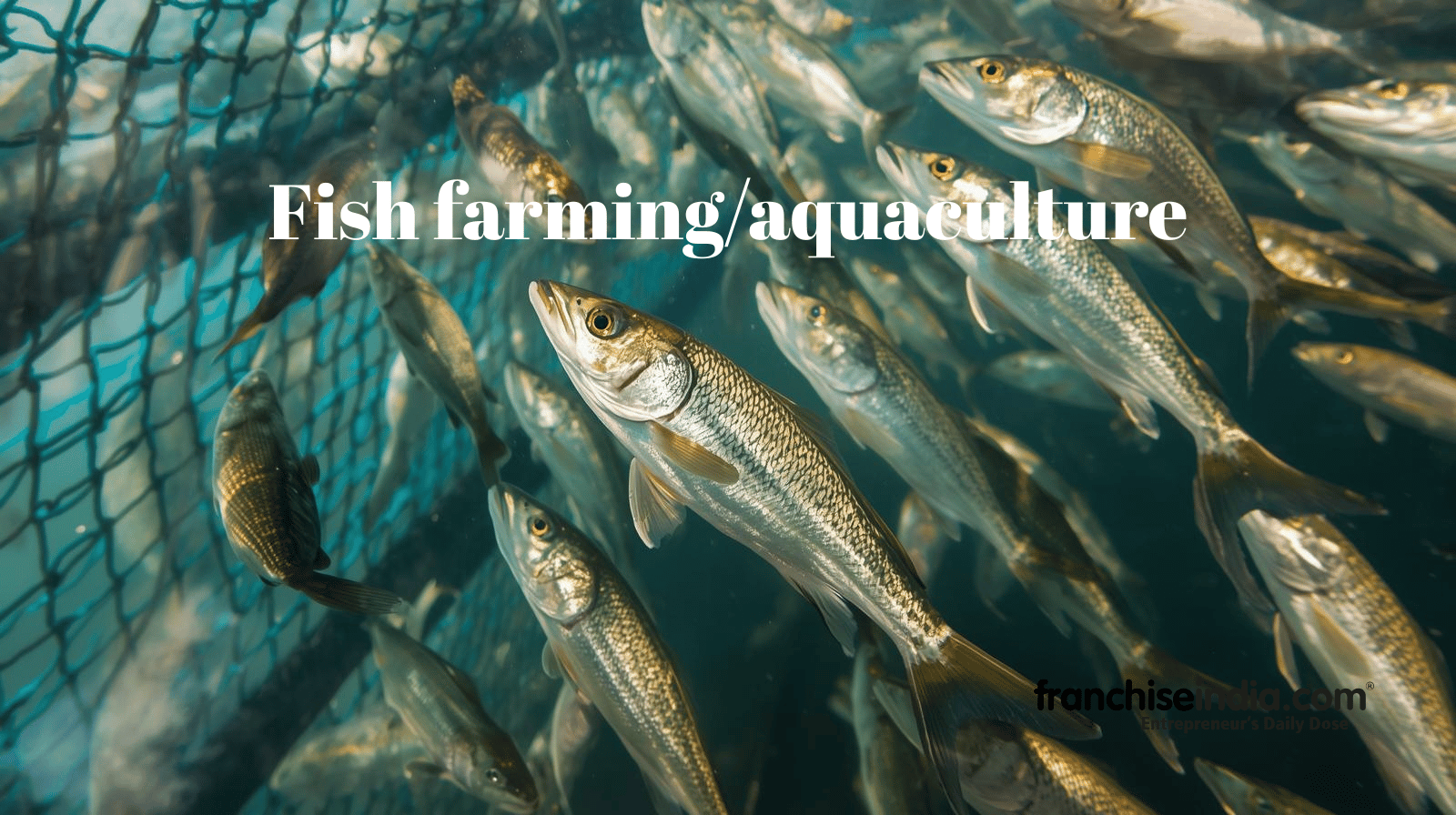
Fish farming in India is a profitable venture, especially in rural regions where there are lakes, ponds, etc. The Indian fish farming market was valued at approximately USD 10.5 billion in 2024 and is projected to reach USD 20.1 billion by 2033, growing at a CAGR of 7.4%. The growth is driven by rising domestic demand for fish and government programs like the Pradhan Mantri Matsya Sampada Yojana (PMMSY).
Starting a small-scale fish farm typically costs between ₹50,000 to ₹2 lakh, including land development, stocking, and feed. Entrepreneurs should focus on prioritizing high-demand species, maintaining water quality, and establishing strong local market connections.
16. Vermicomposting & organic fertiliser production
.png)
Composting organic waste into nutrient-rich fertilizers is a low-investment, eco-friendly business with strong growth potential in India. The organic fertilizer market was valued at ₹4,800 crore in 2024 and is expected to reach ₹7,800 crore by 2031, with a CAGR of 7%. The initial investment of ₹20,000–30,000 using locally sourced kitchen scraps.
Entrepreneurs may increase profits by producing value-added products like vermiwash or worm tea, teaching farmers about organic fertilizers, etc. You can also partner with agricultural cooperatives and nurseries to expand market reach, making composting both sustainable and profitable.
Also read: Top 15 MSME Business Ideas In India For 2025-26
17. Digital marketing / online services centre
.png)
Setting up a digital service center in rural India is a low-investment business. The Indian digital transformation market was valued at USD 26.7 billion in 2024 and is projected to reach USD 126.8 billion by 2033, growing at a CAGR of 17.5%. MSMEs are looking for more and more digital solutions to improve business operations and expand their reach. A small-scale setup typically requires an investment of ₹20,000–30,000 to start, which may include a laptop, internet connections, and basic skills training.
Entrepreneurs can offer services including website development, digital marketing, online payment solutions, and social media management, starting with local clients and gradually expanding to nearby towns. Also, leveraging government programs and digital literacy initiatives can provide a steady stream of clients.
18. Bakery or snack manufacturing (rural specialities)
.png)
Starting a small-scale food business is a lucrative business opportunity, especially for catering to both rural and nearby urban markets, producing local snacks, baked goods, and packaged sweets. You can start this business with the moderate amount of investment of ₹50,000 to ₹2,00,000. The Indian snacks market, valued at USD 22.78 billion in 2024, is expected to reach USD 33.49 billion by 2030 with a CAGR of 6.7%, while the bakery market is projected to grow from USD 13.8 billion in 2024 to USD 31.5 billion by 2033 at a CAGR of 9.12%.
Similarly, the healthy snack segment is also growing at 8% CAGR. This business thrives due to consistent demand and cultural appeal to expand into urban markets. Success depends on strict food safety compliance, strong branding, and profitability.
19. Construction‐material supply (bricks, sand, steel rods)
.png)
As the rural infrastructure development is increasing, supplying construction materials to villages has become a highly promising business opportunity. Starting this business requires a moderate amount of investment of ₹2 lakh to ₹10 lakh, which will be required to establish inventory, transportation, and distribution networks. The Indian construction materials market was valued at USD 90 billion in 2024 and is projected to reach USD 156.8 billion by 2033, growing at a CAGR of 3.2%.
The continuous development of homes, roads, and other infrastructure is supported by government initiatives like the Smart Cities Mission and Pradhan Mantri Awas Yojana. Businesses that want to prosper should guarantee on-time delivery and keep a sufficient amount of necessary materials like aggregates, steel, and cement on hand, and cultivate a solid rapport with regional builders and contractors.
20. Coaching/tuition center/skill-training institute
.png)
Due to rising demand for high-quality education and employment skills, there is a significant commercial opportunity to establish local education and skill development centers in rural India. You can start this business with a moderate amount of investment of ₹50,000 to ₹2,00,000, which includes rent, basic equipment, and trainer fees. The Indian personal development market was valued at USD 2.46 billion in 2024 and is projected to reach USD 3.64 billion by 2030, growing at a CAGR of 6.8%, highlighting strong market potential.
In rural areas, only 47% of schools offer skill-based courses, with just 29% of students participating, indicating a significant gap. If you want to succeed in this sector, you’ll need to collaborate with local schools, offering flexible evening classes and delivering quality time.
21. Auto/mobile repair & servicing for rural vehicles/tractors
Setting up a service center for tractors and farm vehicles in rural India is a lucrative business opportunity. Starting this business will require a moderate investment of ₹2,00,000 to ₹10,00,000, in which entrepreneurs can establish a workshop equipped with essential tools, space, and skilled mechanics. The Indian tractor market, valued at USD 8.8 billion in 2024, is projected to reach USD 15.8 billion by 2033, growing at a CAGR of 6.37%, while the agricultural tractor segment is expected to grow at a CAGR of 9.3% through 2030, indicating strong market potential.
Success in this niche requires hiring certified technicians, stocking commonly used spare parts, and forming partnerships with local OEMs or authorized agents.
How to choose the right one & succeed
Here are some guiding principles to pick and execute the right idea:
- Market fit: Make sure this idea works in your specific village environment.
- Investment vs. returns: Understand what a startup cost is and the expected margin of the type of business you are thinking about. For example, organic farming: ₹50,000-₹2 lakh.
- Leverage local strengths: Use available resources like the land, labor, etc.
- Digital/connectivity advantage: Use internet, mobile payments (UPI), and online marketing to expand reach beyond the village.
- Government support & subsidies: Check available schemes, subsidies, and training programs.
Start small, test, optimize, and then scale up. - Quality and trust: Especially when targeting urban markets or exports, quality, consistency, and branding matter.
Partner with local farmers/co-ops, link to urban markets, and join e-commerce platforms.
Conclusion
The rural business landscape in India in 2025-26 is brimming with opportunities. As an entrepreneur, the best approach is simple: start with just one or two ideas that play to your strengths, your money, and the resources immediately around you. Just jot down a simple plan, weigh your expected returns against your investment, give it a small test run, and then slowly scale up. Businesses based in the village do so much more than just give you a steady income; they can genuinely change lives and help that community grow stronger. Whether it’s organic farming, dairy, handicrafts, solar solutions, or local services, the key is to align your business idea with local needs, manage costs wisely, and connect your offerings to broader markets.
The most successful rural businesses combine traditional strengths with modern solutions—producing value-added goods, offering essential digital services, or adopting sustainable practices. By using what's already there, being obsessed with quality, and using those government schemes wisely, you can see real growth and, at the same time, play a huge role in bringing India’s rural economy back to life. Now is the perfect time to invest, innovate, and make a lasting impact in the heart of India.
You might also like: Top 10 profitable business ideas in Uttarakhand

