



 6656
/ 14
Min Read
6656
/ 14
Min Read


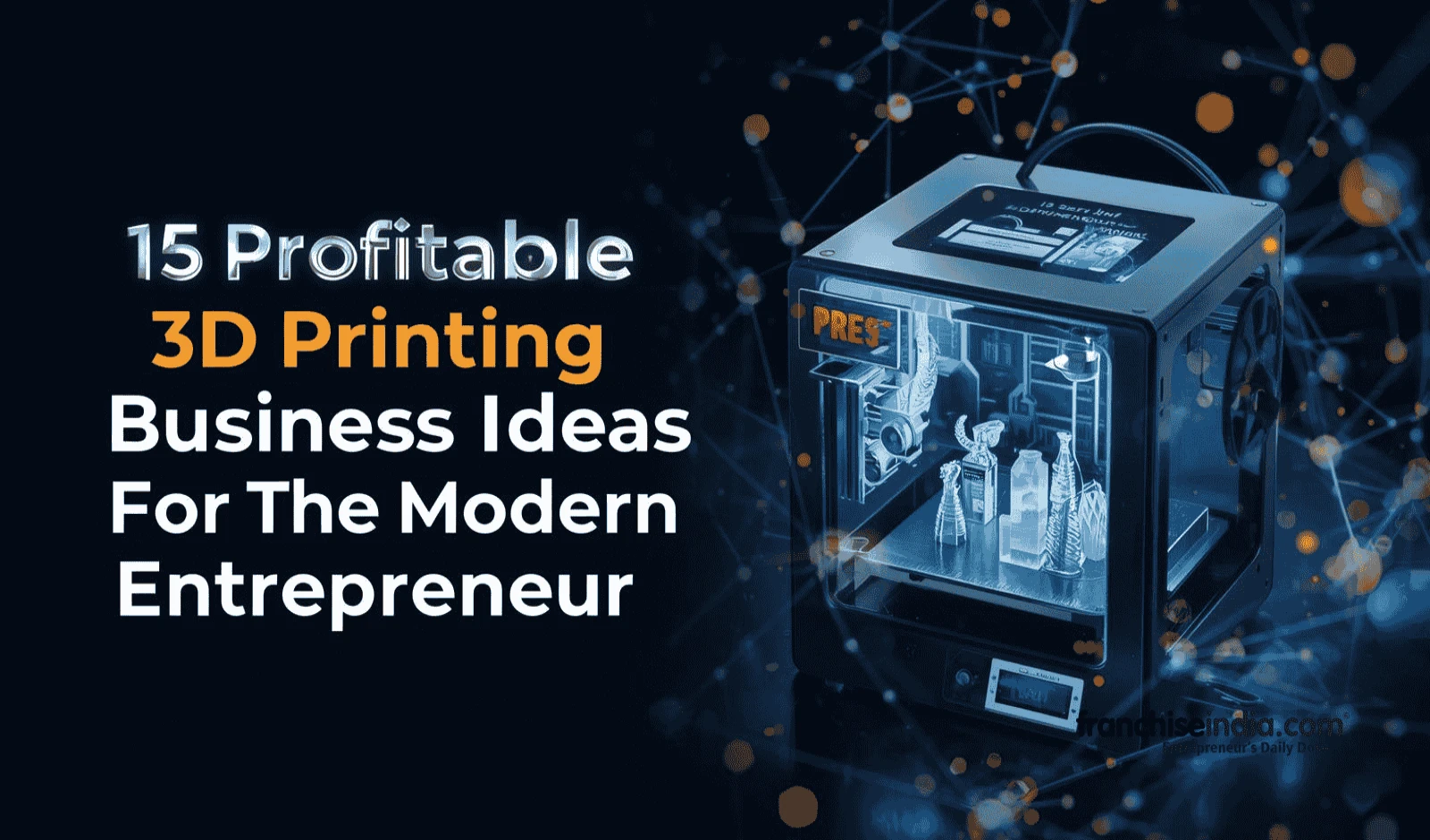
A 3D printer works by printing objects, not just with the normal ink that a regular printer uses, but with more substantive materials such as plastic, metal, rubber, and others. A product that is derived from the 3D printer is intricate, durable, and functional and can be called a real-world equivalent. The world of business opportunities is shifting fast, and one of the most exciting areas is 3D printing. The global 3D printing market was projected to grow at a robust CAGR of around 24.3% till 2029. The high growth means the demand is rising for custom parts and niche services. Because the technology cost is falling, entry costs are lower than before, meaning more entrepreneurs can participate.
In this article we will cover the overall market outlook and what it means for you, investment, and how to start (step-by-step) in these 15 profitable 3D printing business ideas that you can start today.
Also read: Top 7 Car Dealership Businesses to start in India
1. Custom Consumer Products & Gifts
.png)
Starting a custom consumer products and gifts business using 3D printing is a promising low-investment venture in 2025. Entrepreneurs can use 3D printing to design and produce unique items such as personalized phone cases, figurines, keychains, decorative items, and customized jewelry. With rising demand for customization and personalized products, you can charge a premium while maintaining moderate setup costs.
Starting this business will require an initial investment of ₹3–5 lakhs to purchase desktop 3D printers, finishing tools, and build an e-commerce presence. According to industry reports, the global consumer 3D printing market is projected to grow at a CAGR of around 16–18% (2025–2033), driven by the rising popularity of personalization and affordable printing technology. As the market expands, small creators and startups can easily scale operations.
2. Rapid Prototyping & Product Development Service
.png)
Launching a rapid prototyping and product development service through 3D printing is one of the most lucrative business ideas for 2025. They offer 3D printing services to inventors, startups, designers, and engineering firms. The global 3D printing for prototyping market was valued at around USD 11.7 billion in 2025 and is projected to reach USD 24.2 billion by 2030, growing at a CAGR of about 15–16%. Starting a business may require an initial investment of ₹10–20 lakhs covering the cost of necessary equipment.
Success depends on maintaining quality, precision, and material variety and also building relationships with local design/engineering firms for securing consistent, high-value projects.
3. Custom Medical Devices & Dental Models
.png)
Launching a custom medical devices and dental models business using 3D printing is a great business opportunity. You can use 3D printing to create dental molds, surgical guides, orthopedic implants (if certified), hearing aid shells, prosthetics, etc. The global 3D printing medical devices market was valued at approximately USD 2.7 billion in 2022 and is projected to reach USD 6.9 billion by 2028, growing at a CAGR of 17.1%. In India, the market is expected to expand from USD 145.34 million in 2024 to USD 680.92 million by 2034, at a CAGR of 16.7%.
Starting this business will require an investment of ₹20–30 lakhs, covering necessary equipment. Key factors will include compliance with health standards, certifications, biocompatible materials, stringent quality, and partnerships with dental clinics/hospitals.
4. Architecture & Scale Models

Starting a 3D-printed architectural model business is a lucrative opportunity in 2025, which caters to real estate developers, and architects enable faster production. The global 3D printing market was valued at approximately USD 20.37 billion in 2023 and is expected to reach USD 88.2 billion by 2030, growing at a CAGR of 23.5%.
Depending on the size and location, producing a 3D model typically costs ₹2,000–5,000 in India.
Starting this business, you will need an investment of ₹8–15 lakhs for desktop and medium-sized printers, finishing equipment, and marketing. Success requires good finishing, precision, color printing, and building a large enough volume to make models cost-effective, and also good photography for a portfolio.
Also read: Top 15 MSME Business Ideas In India For 2025-26
5. Custom Manufacturing of Spare Parts & End-Use Components
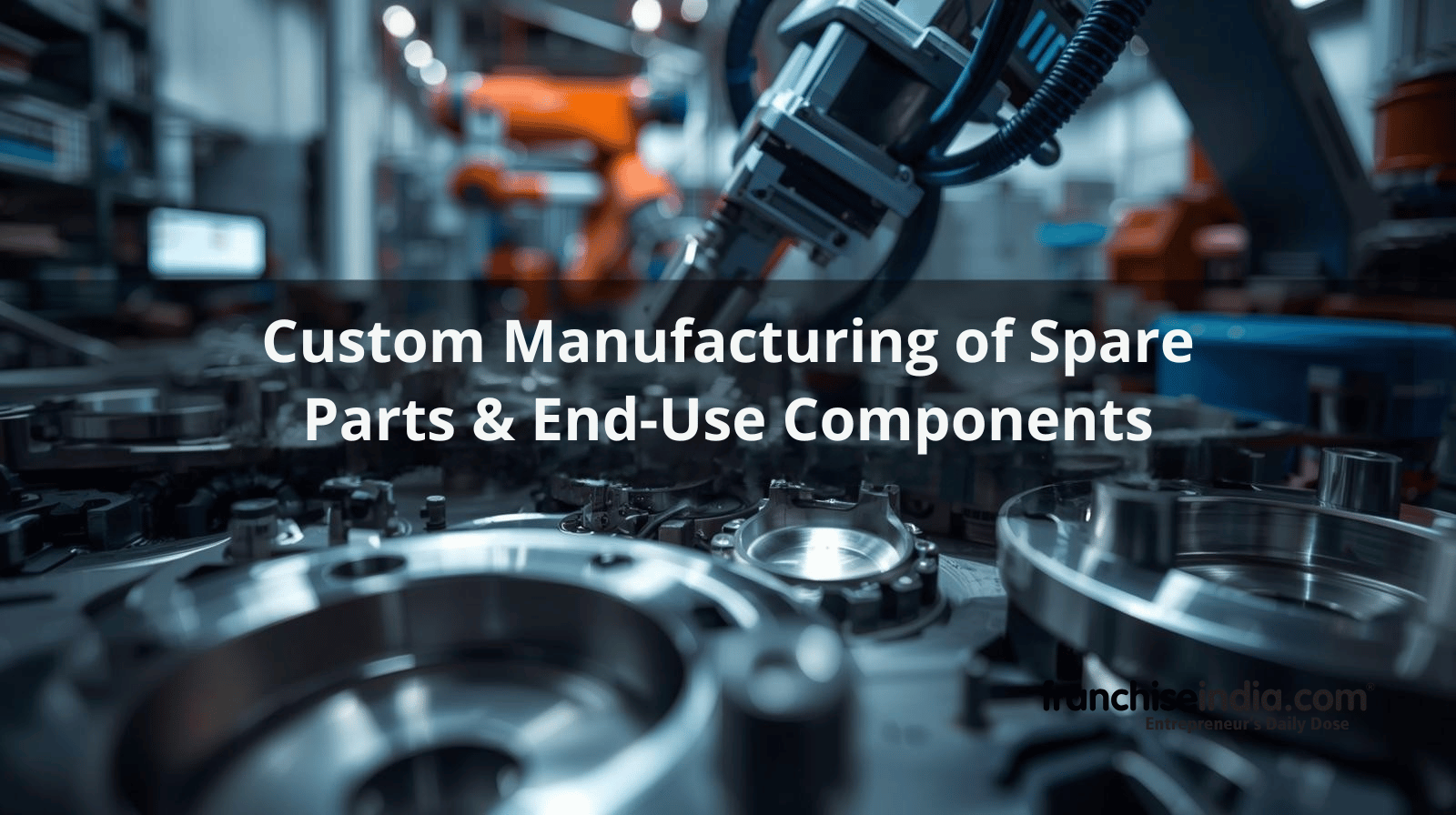
Starting a 3D printing firm for spare parts and custom components offers a lucrative opportunity in 2025. 3D printing enables the quick creation of small batches with high precision, filling gaps in the market for obsolete components. The 3D printing market was valued at USD 20.37 billion in 2023 and is projected to reach USD 88.2 billion by 2030, growing at a CAGR of 23.5%.
Starting a business in India typically requires an investment of ₹15–40 lakhs depending on printer capabilities and materials. Key considerations include material strength, certification if parts are load-bearing, the supply chain for materials, turnaround time, and good inventory/ask process.
6. Jewellery 3D Printing Service
.png)
The 3D-printed jewelry business is expanding rapidly, propelled by innovations in additive manufacturing, rising consumer demand for personalized designs, and the luxury sector's preference for intricate, customizable pieces. The global market, valued at around USD 5 billion in 2023, is projected to reach USD 30.95 billion by 2033, growing at a CAGR of 20%, fueled by technological innovation, sustainability trends, and the increasing popularity of personalized and complex jewelry designs.
Initial investment required for starting a business venture typically ranges between ₹10–20 lakhs for resin or wax printing, while metal 3D printing requires higher capital. Key considerations for success include finishing quality, surface polish, post-processing, and collaborations with jewelry designers and houses.
7. Educational Kits & STEM Learning Tools
.png)
The 3D printing industry in India is quickly growing, with projections indicating a CAGR of 21.7% from 2025 to 2033, reaching an estimated USD 4.3 billion by 2033. This growth is fueled by the increasing acceptance of additive manufacturing in a variety of industries, including education, as well as the growing need for hands-on STEM learning tools. The Indian educational toys market, which was valued at USD 2.83 billion in 2023, is predicted to rise at a 14% CAGR through 2030.
Entrepreneurs can enter this market with a moderate investment of ₹5–8 lakhs to acquire printers, materials, and design software. Key factors for success include developing attractive designs and packaging them well. You can even establish both online and offline distribution channels to reach schools, colleges, and hobbyists.
8. Home Decor & Interior Items
.png)
The Indian home decor industry is quickly developing, projected to grow from USD 17.2 billion in 2024 to USD 27.6 billion by 2030 at a CAGR of 8.4%, while the 3D printing market is expected to reach USD 314 million by 2030, growing at a CAGR of 26.3%. This business provides a promising possibility for businesses to sell 3D-printed home decor items such as lamp shades, vases, wall panels, and customized furniture parts.
Starting this business may need a moderate investment depending on the size of the pieces; you may need medium-sized printers and finishing, which may require an investment of ₹8–12 lakhs. Key success considerations include designing aesthetics, material selection, and online marketing/Instagram visuals to reach customers seeking distinctive, customized home decor solutions.
Also read: Top 7 Most Successful Businesses to start in 2025-26
9. 3D Printed Fashion & Accessories

The global market for 3D-printed fashion accessories is growing rapidly, projected to reach USD 5,165.33 million by 2032 at a CAGR of 14.77% from 2025 to 2032. This growth is driven by increased customer demand for personalized and unique fashion items, including shoes, bags, accessories, and 3D-printed textile pieces. Entrepreneurs may leverage this trend by providing customized items that fetch premium prices and appeal to niche markets.
Starting such a business needs a moderate amount of investment of around ₹10–15 lakhs, depending on materials and production scale. Success is basically dependent on selecting durable and wearable materials, ensuring high-quality finishes, and collaborating with designers to produce unique goods. By integrating creativity, technology, and strategic marketing, businesses can have a presence in the 3D printing and accessories market.
10. Miniature & Gaming Figures / Custom Figurines

The Indian 3D printing market is experiencing rapid growth, projected to reach USD 4.3 billion by 2033 at a CAGR of 21.7% from 2025 to 2033, driven by increasing demand for personalized and unique products. One of the most custom figurines for gamers, board game hobbyists, and collectibles, as people who are enthusiastic about them are willing to pay a premium price for them.
Establishing such a business requires a low investment of around ₹4–8 lakhs for 3D printers, finishing tools, and design software. Key success factors are good design skills, community engagement, online marketing, and optional painting. By leveraging these strategies, businesses can tap into the growing market for customized 3D printing collectibles.
11. Drone and Robotics Components
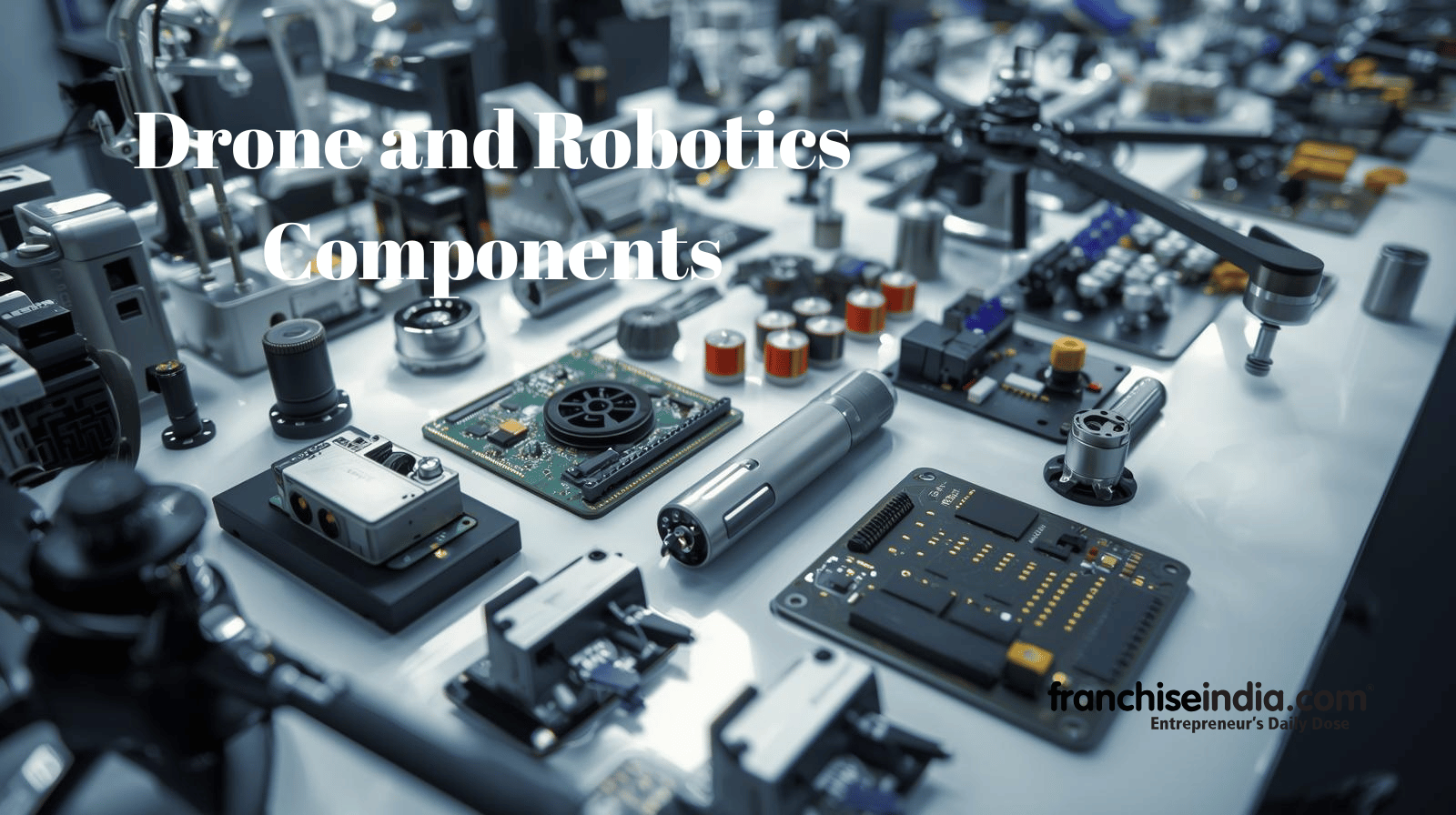
The Indian 3D printing market is rapidly expanding, projected to reach USD 4.33 billion by 2033 at a CAGR of 21.7% from 2025 to 2033, driven by increasing demand for rapid prototyping and customization across sectors such as aerospace, defense, and robotics. Entrepreneurs can establish this business and enter this segment with a moderate investment of ₹10–20 lakhs.
Key factors for success include ensuring material strength and durability, engineering knowledge, and collaboration with robotics/startups/universities and enthusiasts to deliver innovation.
Also read: Top 7 Label and Packaging Business Ideas in India
12. Customized Automotive & Motorbike Accessories

The Indian automotive aftermarket is expanding rapidly, projected to reach USD 21.6 billion by 2030, growing at a CAGR of 7.2% from 2025 to 2030, fueled by increasing vehicle ownership, rising disposable incomes, and a growing demand for personalized vehicles. This trend creates a strong opportunity for entrepreneurs to offer custom 3D parts. The custom automotive market is really huge, and people who love cars and bikes pay to customize these elements.
Establishing this business venture requires an investment of ₹15–30 lakhs for advanced printers capable of handling durable plastics and composites. Key success factors include material and durability specifications, regulatory/safety issues for road-use parts, and distribution to enthusiasts or shops.
13. Architectural Construction / Building Components

The Indian 3D concrete printing industry is rapidly expanding, with a CAGR of 57.2% from 2025 to 2033. It is expected to rise from USD 112.9 million in 2024 to USD 6,603.32 million. This spike is being driven by the construction industry’s increasing demand for faster and cheaper methods. Using 3D in construction has big growth potential, enabling the production of building components such as complex structures, reducing the labor costs and construction time.
However, starting this business required high investment due to large equipment, logistics, and materials, which is best for joint ventures or scaling up later. Success depends on huge capital, regulatory issues, a skilled team, a project pipeline, and material testing.
14. Spare Components & Aftermarket for Industrial Equipment
.png)
Launching a 3D printing service for industrial replacement parts in 2025 offers a high-potential business opportunity in sectors like manufacturing and agriculture, where equipment downtime can be costly. The global industrial 3D printing market is projected to grow from USD 4.31 billion in 2025 to USD 24.03 billion by 2034, at a CAGR of 21.04%, while the metal 3D printing market is expected to reach USD 20.17 billion by 2030, growing at a CAGR of 15.84%.
Setting up a venture in India requires an investment of ₹20–40 lakhs, depending on printer capabilities and materials. Certification, durability, supply chain, etc., are some key considerations on which success depends.
15. On-Demand 3D Printing Service Bureau
.png)
Starting a 3D printing service bureau in 2025 is a scalable and successful business opportunity, catering to a diverse range of clients, including designers, engineers, hobbyists, and small manufacturers. In this model, clients upload their CAD/design files, and you print parts for them (virtually like printing-as-a-service). The worldwide 3D printing service bureaus market was valued at USD 13.9 billion in 2025 and is expected to reach USD 55.1 billion by 2032, increasing at a 21.8% CAGR.
In India, starting this venture will require approximately ₹8–15 lakhs, covering a few printers, materials, and initial marketing. A web portal or easy ordering system, a variety of materials, a good turnaround, a pricing model, logistics for delivery, and customer support are some key considerations.
Also read: Top AI-Powered Business Ventures You Can Start Now
How to Start a 3D Printing Business—Step-by-Step
Here’s a practical roadmap you can follow to move from idea to operations.
Step 1: Define your niche & business model
Start by deciding on your niche; pick the ideas that you are passionate about and that match your skills, budget, and market opportunities. Also decide whether you will produce your own products or will offer services to other businesses.
Step 2: Plan your investment & costs
After deciding on your niche, you need to choose your required equipment, like printers, materials, software, and designing skills. Take an estimate of your initial investment, ongoing costs, and also your revenue model, like the price per unit/service, expected order volume, etc.
Step 3: Acquire skills, equipment & workspace
After taking an estimate of your cost, you will need to decide what type of printer depending on the quality and material you want; this is a really important step. If your budget is low, you can even lease equipment or consider second-hand printers to reduce CAPEX if you are starting a small business. After deciding on this, you must take the necessary training on 3D design (CAD), printing parameters, and finishing processes.
Your workspace should be well-ventilated and appropriate for materials with storage.
Step 4: Develop your offering & value proposition
If you’re focusing on consumer or decor products, you can start by designing a product line and creating prototypes and durability. It’s crucial to build a strong portfolio that showcases your capabilities through printed samples, case studies, and quality assurance. You can create your brand identity, website/portal, pricing packages, and shipping logistics. Lastly, establish strict quality control and ensure consistent print quality, finishing, and customer satisfaction.
Step 5: Marketing and sales
Building an online presence is a very important step, as if you don’t market your product or service, you won’t reach your targeted audience. For this you must build your online presence through a website and social media (Instagram, LinkedIn) and by listing them on platforms. You can also offer introductory promotions like discounted first prints, free shipping, and design consultation. Attending trade shows, fairs, and industry events can also contribute to marketing.
Step 6: Operations and scaling
To ensure steady growth and efficiency in your 3D printing business, it is essential to track key performance indicators such as the number of jobs, average ticket size, and material cost per job. Optimize your workflow from designing to uploading to printing queue to finishing and shipping, and automate where possible to improve speed and accuracy. You can tap into new market segments by scaling your equipment base by adding more printers or upgrading to higher-grade equipment for new segments. Above all, keep innovating: experiment with new materials and new applications, and stay ahead of technology.
Tips for Success in 3D Printing Business
- Focus on quality: smooth finish, correct dimensions, strong material. Poor quality kills reputation.
- Material choice is strategic: some materials cost more, some prints take longer; match materials to application.
- Design matters: good CAD/design skills or good collaboration with designers help.
- Marketing is key: many 3D printing businesses fail because they produce good prints but can’t sell.
- Stay updated: new printers, new materials, and new finishing methods appear constantly; staying ahead helps.
- Legal/compliance: especially for medical, automotive, or critical parts, you might need certifications/regulations; research early.
The world of 3D printing is no longer confined to prototypes and hobbyist projects; it’s rapidly transforming into a powerhouse of innovation and profitability across multiple industries. The 3D printing business market is projected to grow at a CAGR of over 20% during 2025-2033, which makes today the perfect time to invest in this. These 3D printing business ideas highlight the vast potential this technology holds, from customized jewelry and home decor to large-scale construction and industrial spare parts. Entrepreneurs who combine innovation with strategic execution can turn these opportunities into scalable, high-margin ventures and shape the future of manufacturing in the process.
You might also like: Top 10 E-commerce Business Ideas In Bangalore

